Greece has overhauled the way it defines and identifies energy-poor households with the adoption of a revised Action Plan to Combat Energy Poverty, approved by the Ministry of Environment and Energy. The new framework replaces the 2021 plan and marks a significant shift in national policy, moving away from a narrow income-based approach toward a more comprehensive assessment of households’ real living conditions and energy needs.
At the core of the updated plan is a broader and more dynamic definition of energy poverty. Rather than focusing primarily on income levels, the new methodology evaluates whether households are actually able to secure essential energy services—such as adequate heating, cooling, hot water, lighting, and the operation of basic electrical appliances—in a way that ensures decent living standards and protects health. The definition aligns fully with European legislation, notably Directive 2023/1791/EU, and reflects a growing consensus across the European Union that energy poverty cannot be measured by income alone.
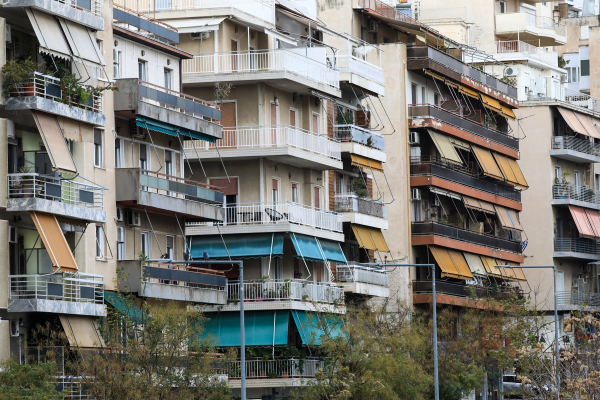
Under the revised framework, classification as energy poor will depend on a combination of factors. Authorities will examine disposable household income, actual energy expenditure, and evidence of an inability to meet minimum energy needs. In practical terms, this includes assessing whether a household’s annual energy spending falls short of what is required to cover basic energy services and whether its net income lies below the nationally defined relative poverty threshold. The condition and energy performance of the dwelling also play a central role, as poorly insulated or inefficient homes tend to impose disproportionately high energy costs on occupants.
One of the most notable changes is the explicit inclusion of cooling needs in the definition of energy poverty. This reflects the increasing frequency of extreme temperatures and the growing impact of climate change, particularly in southern Europe. Until now, energy poverty assessments in Greece, as in many other countries, focused primarily on heating, overlooking the health and welfare risks associated with inadequate cooling during heatwaves.
The new Action Plan also introduces a more systematic use of administrative and statistical data, drawing on official sources such as national statistics and tax records. This data-driven approach is designed to ensure that the identification of energy-poor households is objective and regularly updated, allowing the system to respond to changes in energy prices, household incomes, and broader economic conditions.
Crucially, the revised framework is the first in Greece to explicitly factor in the expected impact of the EU’s forthcoming expansion of carbon pricing under the so-called ETS 2. This system will extend emissions trading to heating fuels and road transport, a move widely expected to increase fuel and energy prices. According to the Action Plan, these additional carbon costs risk hitting vulnerable and energy-poor households hardest, particularly those that rely on fossil fuels for heating and lack the financial capacity to invest in energy efficiency upgrades.
In response, the plan stresses the importance of early impact assessments and the introduction of compensatory measures to cushion the social effects of ETS 2. The stated aim is to ensure that Greece’s transition toward a low-carbon economy does not deepen existing social inequalities, but instead combines climate ambition with stronger social protection for those most exposed to rising energy costs.