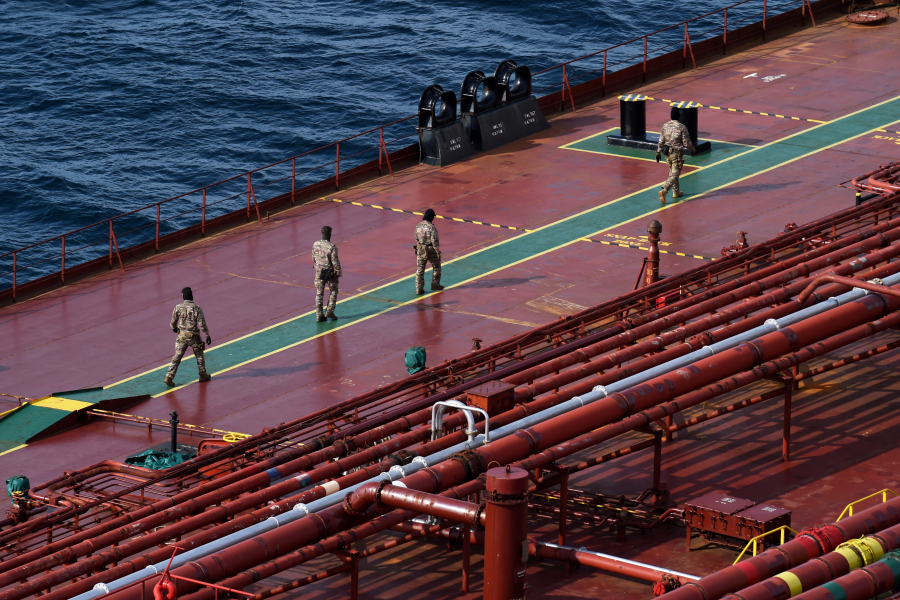

A growing number of Greek-owned shipping interests are watching political developments in Venezuela with mounting concern, as the country appears to be entering a new phase of governance under stronger U.S. influence following the arrest of Nicolás Maduro. What is emerging could soon become a landscape of strict oversight, including retroactive investigations into alleged violations of U.S. sanctions—placing major actors across the global maritime supply chain, including operators linked to the so-called dark fleet, in a position of heightened exposure.
For several years, tankers controlled by Greek shipping companies were involved, directly or indirectly, in the transport of Venezuelan crude oil to international markets, despite the sanctions regime imposed by Washington and its allies. These operations were often routed through an intricate network of shell companies, intermediaries, flag changes and ship-to-ship transfers, creating opaque trade corridors. If these activities now come under renewed scrutiny by U.S. authorities, they could result in significant legal and political consequences for those involved, far beyond Greece’s borders.
A central figure in the unfolding developments is expected to be Delcy Rodríguez, Venezuela’s vice president and until recently the main architect of the country’s oil policy. According to well-placed sources, Rodríguez is positioning herself to assume a leading governing role with the tolerance—or even the tacit approval—of Washington, a shift that could radically alter the balance of accountability for past transactions.
As the political authority overseeing the state oil company Petróleos de Venezuela (PDVSA), Rodríguez played a decisive role in shaping and executing crude-export strategies during a period when Venezuela was struggling to generate revenue under intense U.S. and European sanctions. Her name has long been linked to oil-marketing mechanisms that operated at the edges, or outright beyond, the formal embargo framework. This track record explains why she has for years remained on sanctions lists maintained by both the United States and the European Union.
The key question now is whether Rodríguez will choose—or be compelled—to provide U.S. authorities with full access to documentation and shipping contracts between PDVSA and maritime companies, many of which have already attracted the attention of American sanctions enforcement agencies. If such disclosures occur, they could expose shipping executives who profited handsomely from the movement of Venezuelan crude to serious legal jeopardy.