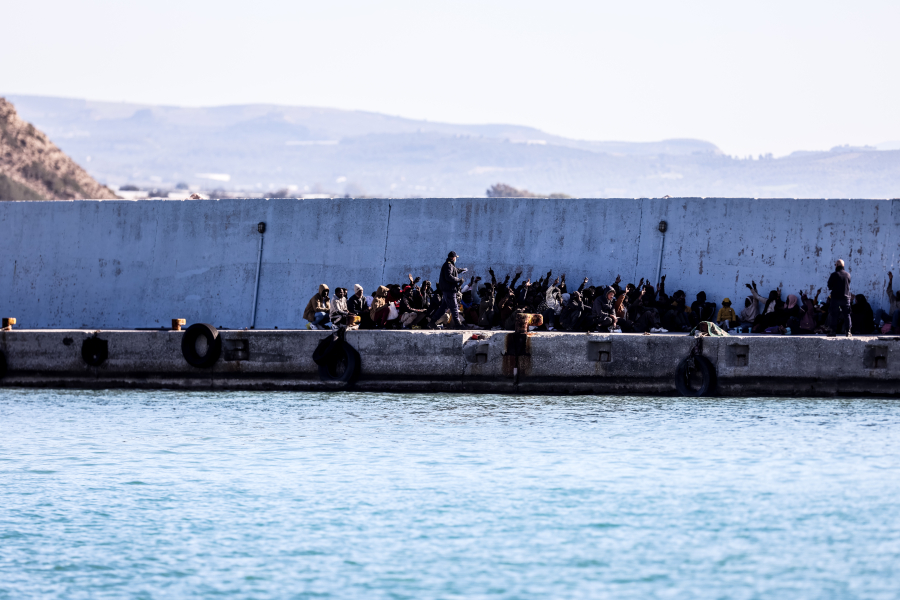

According to official figures from the Hellenic Coast Guard, nearly 20,000 migrants reached Greece through Libya between January and late December this year, compared with fewer than 5,000 over the same period in 2024—an increase of more than 400%.
The impact has been most visible on Crete and the nearby island of Gavdos. In December alone, around 3,000 migrants arrived on the two islands, up from just 299 in December last year. Over a three-day span from 26 to 28 December, Greek authorities recorded a dozen separate incidents involving roughly 1,000 arrivals.
Greek Coast Guard officials attribute the recent spike largely to calm weather conditions in the southeastern Mediterranean, which allowed smugglers to operate more easily. When winds strengthened in recent days, arrivals temporarily slowed, suggesting that crossings remain highly dependent on weather patterns.
Rescue operations underscore the scale and organization of the flows. Migrants rescued at sea reported departing from eastern Libyan ports and paying fees of around €2,500 per person for the journey.
While Egyptians have long featured among arrivals, Greek authorities say there has been a notable increase in migrants from Bangladesh in recent weeks, many of whom were among large groups rescued south of Gavdos.
Efforts to stem departures at their source have so far had limited success. Greek officials acknowledge that diplomatic contacts with Libya’s rival governments and training programs for Libyan coast guard personnel have not reduced flows. Libya’s own maritime patrol capacity remains severely constrained, with key vessels reportedly out of service.
Greek authorities also point to the broader regional dimension, noting that smuggling networks previously active in the eastern Aegean have shifted operations westward. Several officials argue that the influence of Turkey in Libya, and the involvement of Turkish-based smuggling networks, is an increasingly important factor in the evolving migration landscape.