As the cost-of-living crisis tightens its grip on households, farmers’ protests in Greece are shedding light on a deeper and more structural problem: the impasse facing the country’s primary production sector. Beyond the immediate demands voiced on the streets, the mobilizations point to a broader economic paradox. Agricultural output is weakening and production costs are rising, while consumers are paying increasingly high prices for basic foodstuffs—without farmers seeing a corresponding improvement in their incomes.
Recent data from Eurostat underscore the scale of the challenge. Agriculture continues to play a disproportionately large role in the Greek economy, accounting for 3.2% of GDP, the highest share in the European Union. Rather than reflecting strength, however, this figure highlights Greece’s continued reliance on a sector that has struggled to modernize and adapt. Climate change, escalating input costs, and an ageing workforce are placing growing strain on agricultural activity, exposing long-standing structural vulnerabilities.
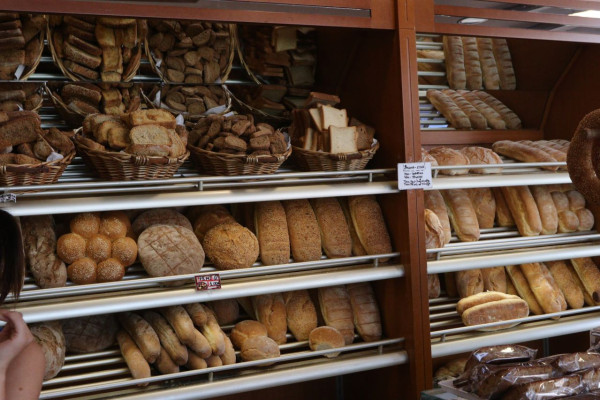
Extreme weather events have compounded these pressures. Prolonged droughts, heatwaves, and episodes of heavy rainfall have sharply reduced yields in key crops over recent years. Across Europe, cereal production fell by 5.1% in 2024, a decline that directly affected Greece by increasing its dependence on imports and driving up the cost of animal feed. These developments quickly filtered through to consumers, pushing up prices for staple foods such as bread, pasta, and meat.
Livestock farming has been particularly hard hit. Rising energy, transport, and feed costs have squeezed producers’ margins to the breaking point. Although farm-gate prices have risen in some cases, the increases have not been sufficient to offset losses. As a result, many small-scale operations have shut down, accelerating the decline of the rural population and deepening the imbalance between urban centers and the countryside.
Demographic trends add another layer of concern. More than one third of farm managers in the European Union are over the age of 65, and Greece is among the countries where ageing in the agricultural workforce is most pronounced. Younger generations are reluctant to enter the sector, deterred by low and unstable incomes, high risks, and inadequate infrastructure. The outcome is a self-reinforcing cycle of fewer producers, shrinking domestic output, and growing reliance on imported food.
Meanwhile, food prices continue to rise for consumers. In 2024, Europeans spent on average 7% more on food and beverages than the previous year, with the impact more severe in Greece due to comparatively lower household incomes. Olive oil offers a striking example. A cornerstone of the Mediterranean diet, it has seen dramatic price increases over the past two years, driven by poor harvests and international market pressures.
Despite higher prices on supermarket shelves, farm incomes remain heavily dependent on subsidies under the European Union’s Common Agricultural Policy. Eurostat notes that imbalances along the food supply chain limit the share of the final price that reaches producers, with much of the added value captured by intermediaries. The result is a system in which consumers face rising costs, while farmers remain financially vulnerable.
These structural problems are evident in specific sectors. Domestic production of soft wheat has declined sharply over the past decades, increasing dependence on imports. In livestock farming, beef prices have risen by as much as 50% within a single year, even as production has fallen significantly. Long-standing market distortions—including the mislabeling of imported products as domestic, fragmented land ownership, and weak cooperative structures—continue to undermine competitiveness and transparency.
Taken together, these trends explain why farmers’ protests resonate beyond national borders. They highlight not only the pressures facing Greek agriculture, but also the broader challenges confronting food production systems in an era of climate instability, rising costs, and uneven distribution of value along the supply chain.