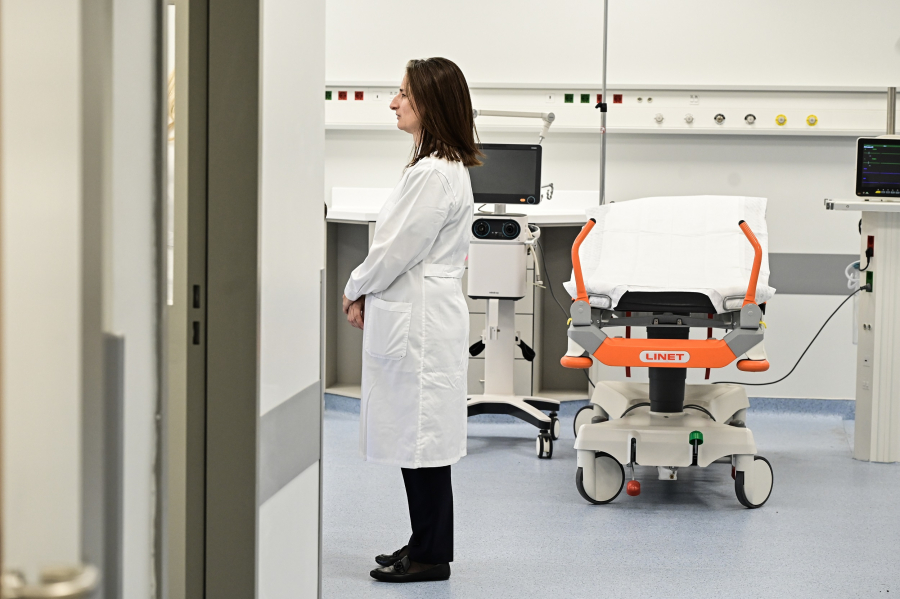
In sharp contrast to the triumphant rhetoric of Greece’s Health Minister, Adonis Georgiadis, about the state of the country’s National Health System (ESY), a new OECD report, «Health at a Glance 2025», paints a far more sobering picture. While Greece’s public health system today benefits from improved equipment and a highly skilled medical workforce - reflected in comparatively low rates of treatable mortality - it continues to suffer from limited access, chronic underfunding and severe shortages in key personnel, particularly nurses.
The OECD’s comprehensive assessment evaluates population health and health-system performance across its member states, drawing on the latest comparable national statistics. Despite the Greek government’s emphasis on reform, infrastructure upgrades and improved emergency department wait times, the study reveals deep structural weaknesses that significantly undermine the country’s claims of progress.
One of the most troubling findings concerns access to care. More than 12 percent of Greeks report unmet medical needs, almost four times the OECD average. Although patient ratings of hospital services are relatively high once individuals enter the system, only 27 percent of the population expresses satisfaction with the overall availability of quality healthcare - far below the OECD average of 64 percent. Limited access, long waiting times and uneven service distribution appear to be major contributing factors.
Financial strain also remains a defining feature of healthcare in Greece. Only 61 percent of total health spending is publicly financed, compared with an OECD average of 75 percent. As a result, a large share of healthcare costs is paid out-of-pocket, placing a heavy burden on households and weakening the ESY’s role as a universal social service.
Staffing shortages present another critical vulnerability. Greece has just 3.8 nurses per 1,000 inhabitants, the lowest ratio among OECD countries and less than half the continental average. The gap is even more dramatic in long-term care, where Greece employs only 0.2 workers per 100 people aged 65 and over, compared with an OECD average of 5.0. This shortfall highlights the country’s limited capacity to care for an aging population.
Preventive care metrics also place Greece at a disadvantage. Only 15 percent of women aged 50 to 69 undergo screening for breast cancer, compared with 55 percent across the OECD. Meanwhile, Greece records nearly double the average rate of antibiotic consumption, raising concerns about prescription practices and antimicrobial resistance.
Still, the OECD report notes some areas where Greece performs strongly. Universal coverage remains a reality, with 100 percent of the population entitled to a basic package of services. Childhood vaccination rates for DTP also exceed the OECD average. Greece stands out for its large number of physicians - 6.6 per 1,000 residents, one of the highest rates among member states - and for its extensive availability of diagnostic imaging technologies. The country also maintains a hospital bed capacity in line with the OECD average.
Taken together, the findings reveal a complex picture: a system with strong medical expertise and modern equipment, but hampered by persistent structural weaknesses that limit access and strain both patients and health workers. For all the government’s upbeat messaging, the OECD report suggests that the ESY’s fundamental challenges remain unresolved - and in some areas, increasingly urgent.