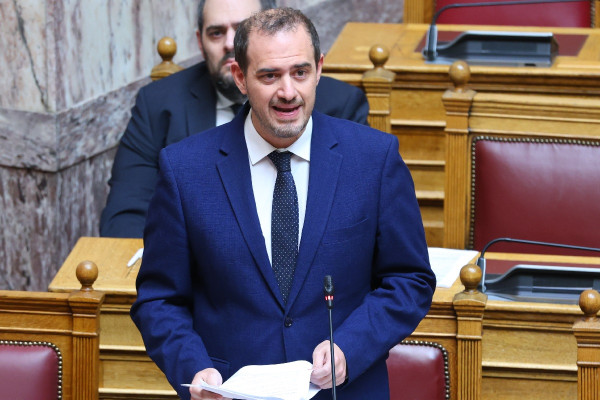

The event unveiled the Group’s new organizational structure and, most notably, the appointment of Christos Gavallas, formerly Chief Treasury & Investor Relations Officer, as the company’s new CEO. As part of Metlen’s alignment with the UK Corporate Governance Code, Mytilineos will now focus exclusively on his role as Executive Chairman.
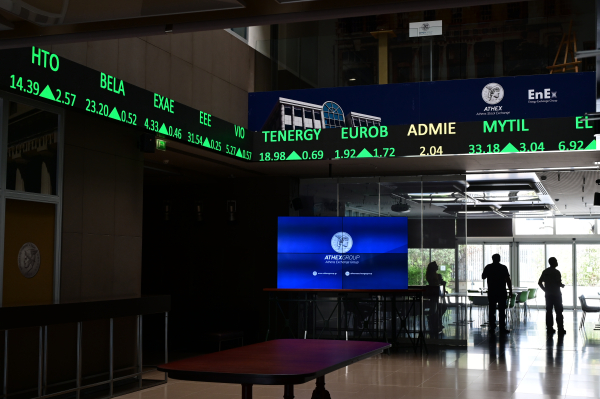
The presentation proved news-heavy, as Mytilineos addressed every topic raised, including an unusually direct reference to the company’s share price. His remarks came on a difficult trading day for Metlen, with the stock sliding 5.87% to €43 following its removal from the MSCI Greece Standard Index and its reclassification into the MSCI UK Small Cap.
Opening the event, Mytilineos revealed that he had been encouraged to postpone the presentation due to the anticipated market reaction to MSCI’s reshuffling. He insisted on proceeding as planned, arguing that the exit of short-term capital does not reflect Metlen’s underlying fundamentals. “I have no regrets about how things turned out. He who laughs last laughs best,” he said. “Those who sold will be the first chasing the stock when it enters the MSCI UK Standard Index.”
Mytilineos also revisited the stock’s behavior after its London listing, noting that the market had become overly enthusiastic despite unchanged fundamentals. The listing triggered a €5–10 premium, pushing the share price from €47 to €51 on the first day and then to €57 soon after. “I wasn’t excited,” he said, “because when I saw this sudden jump without substance, I knew what would follow.”
New Group CEO Gavallas struck a similarly calm tone, describing the recent market turbulence with a maritime metaphor: “When you leave the Mediterranean for the Atlantic, there’s turbulence.” He expressed confidence that future capital inflows—once the stock enters the MSCI UK Standard Index—will be significantly larger.
Beyond market movements, Mytilineos’ most striking revelations concerned the strong interest of the United States in Metlen’s gallium production and the rapid development of the company’s defence manufacturing activities. He noted that senior American officials, currently visiting Greece and including the new U.S. ambassador to Athens, Kimberly Guilfoyle, proposed that Metlen sign a 10- to 15-year gallium supply contract for the U.S. Department of Defense. While Europe, he said, “snubs gallium,” the United States has already expressed clear interest in Metlen’s facility, which is expected to produce 50 tons annually.
Mytilineos highlighted the company’s accelerating expansion in defence manufacturing. Six months ago, Metlen operated two plants; today, five new metallurgical defence-production units are underway as part of the company’s new defence hub, with a sixth likely to follow. He also mentioned having just returned from Rome, where he took part in a working meeting on a defence program, though he offered no further details.
He emphasized that Europe’s major defence manufacturers are operating at full capacity and are now seeking partnerships to offload portions of their contracts—an opportunity Metlen aims to seize.