
The need for a strategic realignment of Europe—centered on resilience, innovation, and competitiveness—was the dominant theme at Thursday’s event in Athens marking the 20th anniversary of Bruegel, the influential Brussels-based think tank. The conference, co-hosted under the auspices of Greece’s Ministry of National Economy and Finance, brought together economists, policymakers, and academics for a three-hour discussion inspired by Bruegel’s director, Jeromin Zettelmeyer.
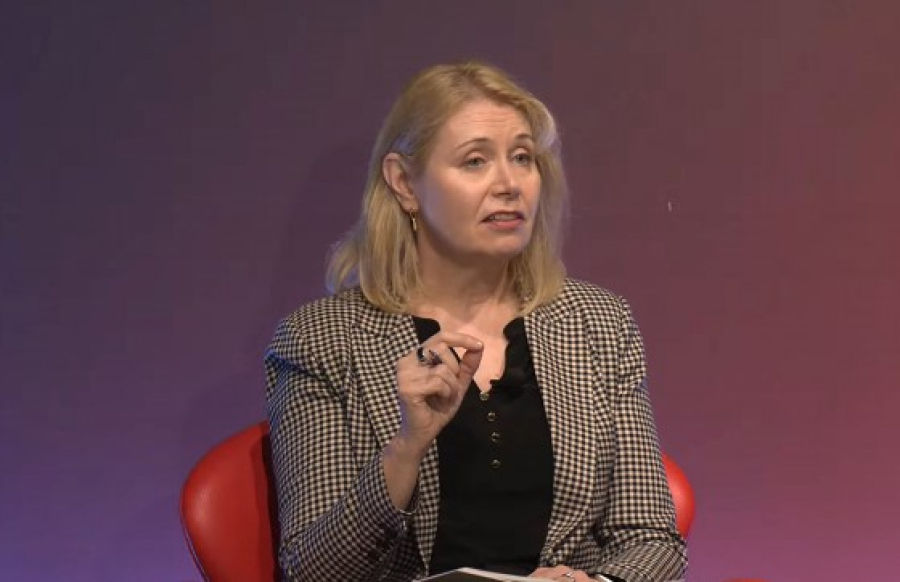
Among the speakers, Leena Mörttinen, Finland’s Permanent Under-Secretary for International and Financial Markets, delivered one of the most striking interventions. She painted a candid picture of the challenges facing European economies amid rising geopolitical tension, rapid technological transformation, and intensifying demographic pressures. Using Finland as a case study, she described her country as emblematic of the difficulties confronting small, open Nordic economies in adapting to a shifting global landscape.
Mörttinen recalled the aftermath of the so-called “Nokia shock” — the abrupt decline of the telecom giant in the early 2010s that left deep economic scars in Finland — compounded by the effects of the global financial crisis. “It is a limbo situation. We remain stuck. We cannot lift the economy off the ground,” she admitted, referring to the prolonged stagnation that has gripped the Finnish economy despite its high educational standards and vibrant startup scene.
The problem, she argued, is not a dramatic collapse like that experienced by Greece during its debt crisis, but something more insidious: a slow drift into long-term economic inertia. With public debt approaching 90% of GDP, an ageing population driving up social spending, and defense costs rising sharply following Russia’s invasion of Ukraine, Finland’s fiscal space is shrinking fast. “We have no time for delays — we must act now and act smart,” she urged, stressing that Europe must adapt to a world defined by resource scarcity and fiercer global competition, where the old assumptions of globalization no longer hold.
For many in attendance, Mörttinen’s warning resonated far beyond Finland’s borders. Her remarks were also seen as a cautionary message for Greece — a country that has already endured a deep crisis and painful adjustment. While Greece has emerged from its period of austerity and regained a measure of stability, the Finnish example highlights a different but equally dangerous risk: that of “quiet stagnation,” where an economy no longer collapses but also fails to take off sustainably, despite reforms and abundant talent.
As Greece seeks to transform itself from a “champion of adjustment” into a sustainable, high-value European economy, Mörttinen’s message was unambiguous: the real test begins after the crisis ends. It is then that a nation’s capacity to avoid complacency — and to build resilient, competitive growth for the future — truly determines its success. And in that challenge, as she implied, Europe still has a long way to go.