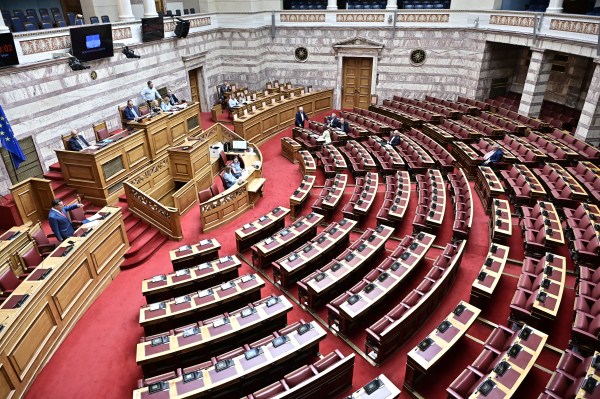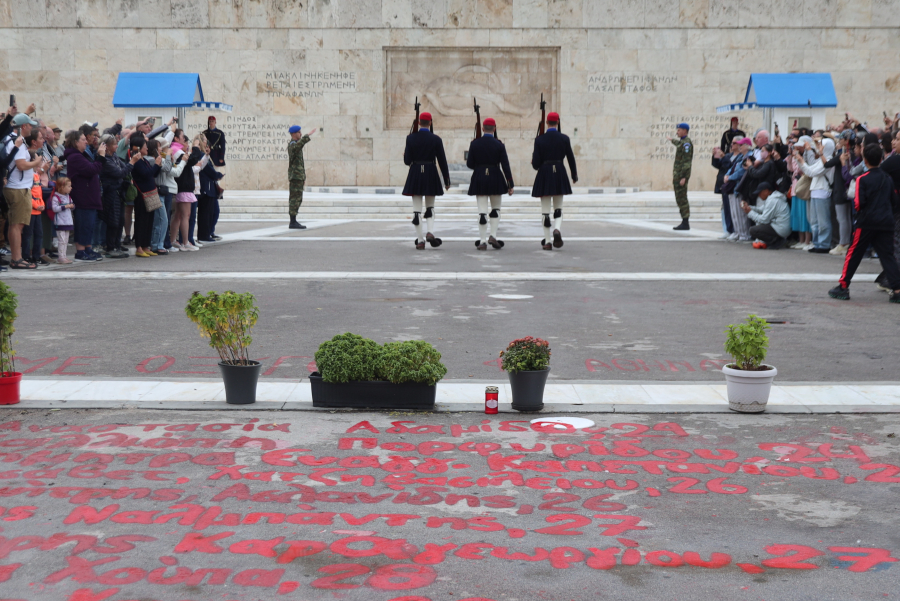

The amendment, which has been attached to a broader bill by the Ministry of Infrastructure and Transport on the establishment of the Civil Aviation Service, was signed by seven ministers and submitted to Parliament earlier this week. Prime Minister Kyriakos Mitsotakis is expected to address lawmakers during Tuesday’s session.
Under the proposed legislation, responsibility for maintaining public order around the monument will remain with the Ministry for Citizen Protection, while the Ministry of National Defense will take over duties related to the maintenance, care, and promotion of the site.
The text introduces strict prohibitions on the use of the area directly in front of the monument, located on Vasilissis Amalias Avenue, across from Syntagma Square. It bans any occupation or use of the space for purposes other than visiting the monument or highlighting its symbolic importance. Any alteration of the site is forbidden, as is the organization of public outdoor gatherings, including spontaneous or emergency demonstrations, as defined by Greek law.
Violations of these provisions will be punishable by up to one year in prison or a financial penalty, unless a harsher sentence applies under other legislation.
The government argues that the restrictions are necessary to protect a site of exceptional national and historical significance, describing the monument as a sacred space dedicated to the memory of Greece’s fallen soldiers. Officials maintain that the measure does not limit the constitutional right to assembly, but clarifies its application to ensure respect for national symbols and public order.
According to the amendment’s explanatory note, the restricted area represents less than one-fifth of Syntagma Square, meaning public gatherings will continue to be allowed in the remaining sections. The text cites the Greek Constitution, the European Convention on Human Rights, and the EU Charter of Fundamental Rights, asserting that the measure complies with the principle of proportionality and serves legitimate public purposes.
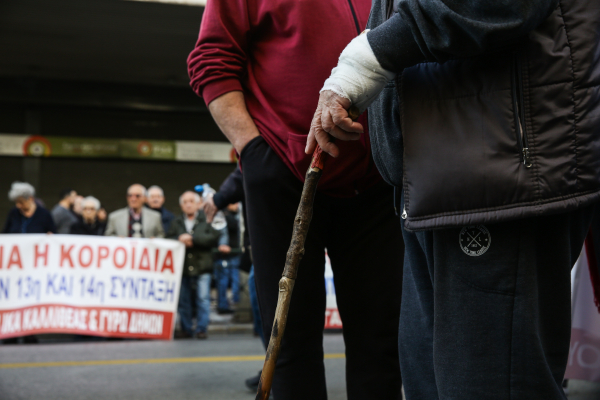
The proposal, however, has drawn sharp criticism from the opposition. The PASOK party accused the government of attempting to shift the political agenda and sow division, while SYRIZA condemned the move as an act of political retribution, claiming it aims to silence public expression related to the Tempi rail disaster.
If passed, the amendment will give the Ministry of National Defense authority to carry out all necessary measures for the upkeep and promotion of the monument, either directly or through third-party contracts, while the Hellenic Police will remain responsible for maintaining order and preventing unauthorized activities.
The government insists the legislation’s purpose is to preserve the dignity and solemnity of one of Greece’s most symbolically important landmarks, which honors the unknown soldiers who died in the nation’s wars.