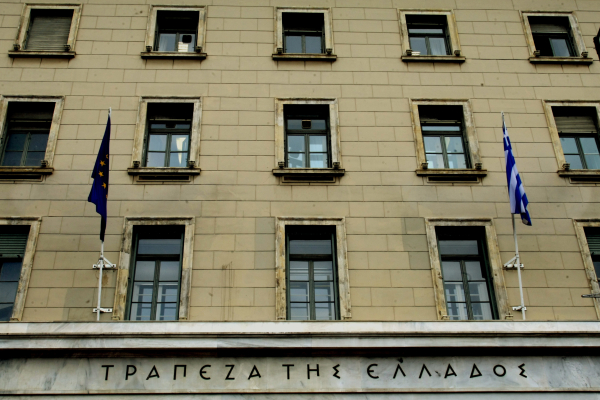
Greece’s flagship bank clean-up scheme, known as “Hercules,” is drawing renewed scrutiny as concerns mount over its cost to the state budget. The program, launched to help lenders shed billions in bad loans that had weighed on the financial system since the debt crisis, is now at the center of heated debate in Athens, with policymakers and bankers gathering on Tuesday at the Bank of Greece to assess its future.
Figures from the Public Debt Management Agencyshow that the government’s outstanding guarantees under Hercules rose to €17.95 billion at the end of June 2025, up from €17.33 billion six months earlier. In the first half of the year alone, the state extended an additional €1.125 billion in guarantees. No guarantee calls have been paid out so far, nor have any returns been recorded, while revenues from fees amounted to just €140.4 million. That imbalance is fueling doubts about whether the scheme can remain financially sustainable.
The bulk of the guarantees are concentrated in Greece’s four systemic banks, underlining the risks to the state should the program falter. Piraeus Bank holds the largest share with €5.52 billion tied to its Sunrise and Phoenix projects. Alpha Bank follows closely with €5.29 billion through securitizations including Galaxy, Cosmos, and the newer Gaia transactions. Eurobank accounts for €3.13 billion via its Cairo, Mexico, and Leon Capital deals, while National Bank of Greece has €2.8 billion from its Frontier portfolio. Attica Bank, a smaller lender, has also tapped the scheme for €1.2 billion. Together, Piraeus and Alpha make up nearly half of the Hercules portfolio.
The review comes at a sensitive moment. Revenues from property auctions, expected to play a central role in recovering bad debts, remain below the targets set in servicers’ business plans. Delays in court proceedings have compounded the problem, raising the risk that the state will eventually have to honor some of the guarantees.
A fresh legal challenge could make matters worse. Greece’s Supreme Court is due to rule on how default interest should be calculated for loans protected under the Katseli law, which was designed to shield over-indebted households. If the court sides with borrowers and restricts interest charges to missed installments only, the hit to Hercules could reach €1.5 billion. About €7.5 billion in loans, affecting 140,000 borrowers, carry default interest, while the broader Katseli framework covers some €12.5 billion in debt held by roughly 200,000 borrowers.
Another issue on the table is what to do with the large stock of real estate already repossessed by banks and loan servicers. The government is keen to channel these properties back into the housing market, hoping to ease supply shortages and tackle Greece’s growing affordability problem. Servicers, however, point to slow-moving procedures, restrictive transfer rules, and unresolved zoning issues as major barriers to putting this real estate to use.