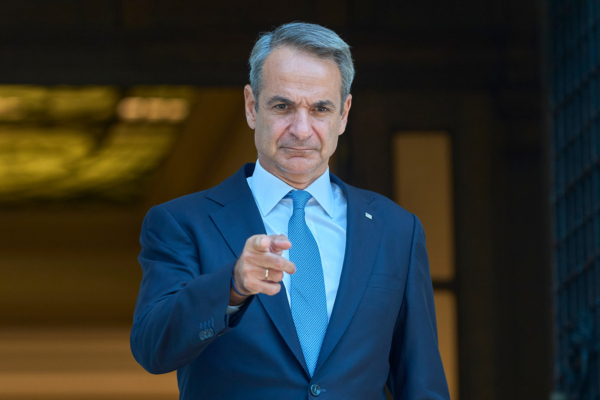
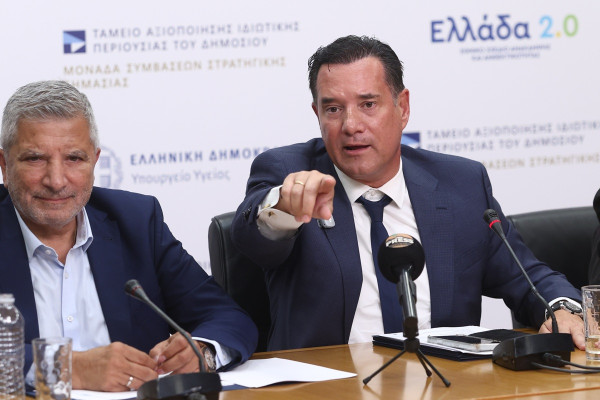
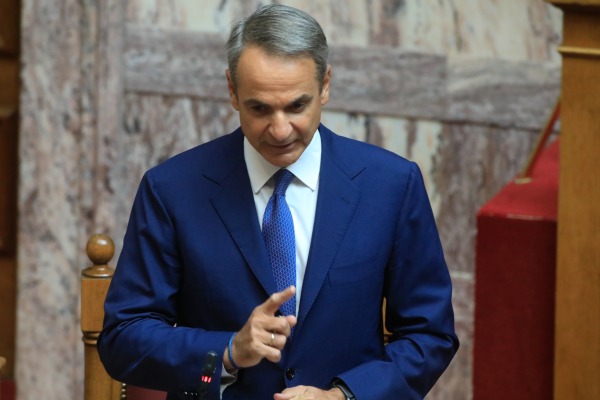
In a wide-ranging television interview with Greece’s SKAI network, Prime Minister Kyriakos Mitsotakis refused to accept personal or political responsibility for the unfolding subsidy scandal involving OPEKEPE, Greece’s payments and control agency for EU agricultural funds. Instead, he leaned heavily on the government’s long-standing narrative that the issue stems from deep-rooted, systemic failures that span decades and involve multiple political parties.
While acknowledging once again that his government failed to resolve the longstanding problems in the subsidy system, Mitsotakis limited his admission to what he described as a "heavy word"—a reference to his earlier statement that "we failed." He dismissed calls for a criminal investigation into two former ministers, Makis Voridis and Lefteris Avgenakis, despite a request from the European Public Prosecutor. "We do not see criminal liability among our ministers," he said, reiterating that while the state bore some responsibility, it did not extend to criminal wrongdoing within his cabinet.
The Prime Minister admitted that issues with subsidy verification had been known for a long time, and that his administration had attempted to address them through various measures, though without the desired success. The government’s response now includes dissolving OPEKEPE and integrating it into Greece’s Independent Authority for Public Revenue. “Everyone knows the party is over,” Mitsotakis said, referring to what he described as years of mismanagement and exploitation of EU funds.
He described the problem as structural and cultural, tracing it back over 40 years, during which generations of Greek farmers and livestock breeders, he argued, had become dependent on EU subsidies. This dependency, he claimed, gave rise to corrupt networks and entrenched interests. He emphasized that accountability must be shared, and rejected the notion that only members of his conservative New Democracy party were implicated, asking rhetorically, “Does anyone seriously believe that PASOK or SYRIZA didn’t have people involved in this too?”
Mitsotakis supported a parliamentary inquiry into the scandal but firmly opposed initiating a formal criminal investigation, urging political parties to participate constructively in the parliamentary process. “We do not see criminal responsibility,” he repeated, adding that justice and audit mechanisms would do their part in recovering misused funds. “We will be judged on our actions over time,” he said. “We’ll start with those who were dancing in the center of the stage—not the ones on the sidelines.”
In the same interview, the Prime Minister touched on foreign policy, confirming that he will meet Turkish President Recep Tayyip Erdoğan “in due time” and stating his intent to raise key bilateral issues. He drew a firm line on Greek sovereignty, saying that Athens will not discuss matters relating to its territorial integrity. “There is no issue of Greek islands being disputed. Such claims by Turkey do not exist in reality,” he said.
Mitsotakis defended Greece’s active foreign policy, acknowledging that it has stirred reactions, but argued that it is necessary for the country’s strategic interests. He spoke about plans for an undersea electricity cable linking Greece and Cyprus, declaring that the project will go ahead regardless of objections from third countries. The cable, he said, does not require approval from any coastal state and will proceed once outstanding matters with Cyprus are resolved and geopolitical conditions are favorable. He criticized Turkey for attempting to block what he called a European project while simultaneously seeking closer ties with the EU, warning that Ankara cannot have it both ways.
On defense and European cooperation, Mitsotakis was categorical: as long as Turkey maintains its threat of war (casus belli) over Greek territorial waters and raises claims over so-called “grey zones,” Greece will block its participation in European defense programs like SAFE. He challenged Turkey to demonstrate that it is not a destabilizing force in the region, and that it respects international law and its neighbors' sovereignty.
Turning to Libya, Mitsotakis said Greece has chosen to maintain open lines of communication with both rival administrations in the country. He said talks on delimiting maritime zones are likely to begin soon and criticized the 2019 Turkey-Libya maritime agreement as both illegal and irrational. The deal, he claimed, was the result of Turkish pressure on Tripoli and has no legal standing, as evidenced by multinational companies like Chevron choosing to deal directly with Athens instead.
On domestic political fronts, the Prime Minister addressed speculation surrounding former Prime Minister Antonis Samaras, who has openly criticized the government’s foreign policy. Mitsotakis said Samaras no longer belongs to New Democracy and expressed regret over the rift. He rejected the idea of political arithmetic dominating his agenda ahead of the next elections, slated for spring 2027, saying his government’s focus is on bold reforms, many of which may not bear fruit until a potential third term.
He also directed sharp criticism at opposition leaders Alexis Tsipras and Nikos Androulakis. Tsipras, he said, has been absent from parliamentary debates and bears political responsibility for past economic turmoil. He accused the former prime minister of deceiving the Greek public in 2015, leading the country into an unnecessary third bailout, and failing to offer credible opposition since 2019. “If he had, SYRIZA wouldn’t have dropped from 32% to 3%,” he added.