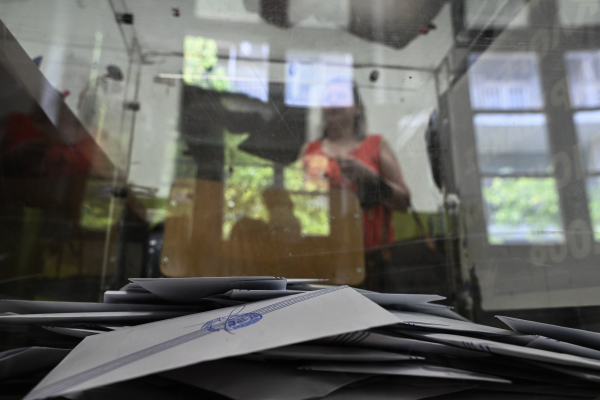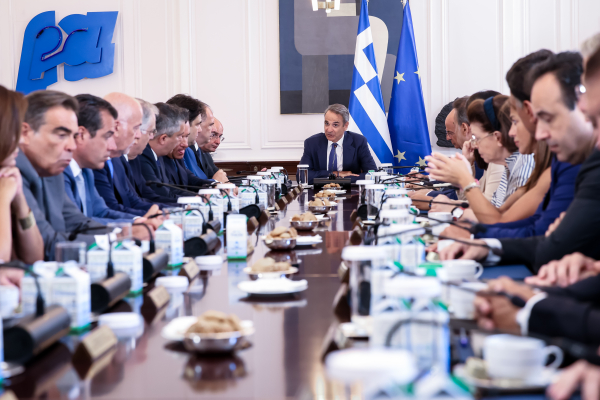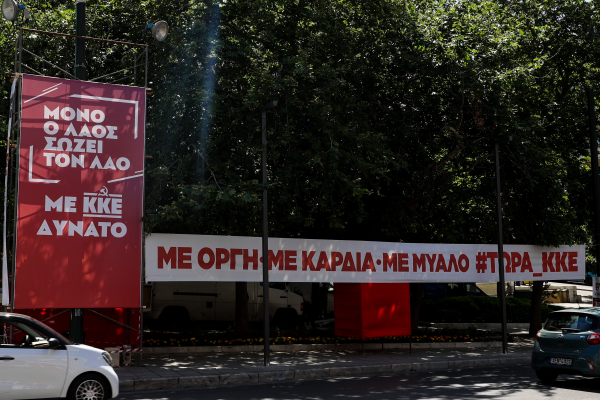


Yet, instead of reinforcing its position, the ruling New Democracy party has suffered a significant drop in popularity — falling from 41% in the 2023 national elections to just 28.1% in the 2024 European elections. Now, in a last-ditch effort to recover lost ground, the government is preparing to announce a fresh €2 billion package at the Thessaloniki International Fair (TIF), Greece’s most prominent annual policy showcase.
The planned measures are expected to include targeted tax cuts, adjustments to income tax brackets, further reductions in social security contributions, and changes to the so-called "living standards" criteria used to assess household finances. Additionally, the government aims to introduce a mix of incentives and disincentives related to property usage, in a bid to address the country’s growing housing crisis.
While the €2 billion package matches the scale of last year’s support program, it remains significantly smaller than the €2.955 billion in fiscal interventions budgeted for 2025. Nonetheless, the administration hopes these new announcements will serve as a political reset, allowing Prime Minister Kyriakos Mitsotakis to deliver policy pledges capable of boosting New Democracy’s standing.
Crucially, the government has managed to carve out additional fiscal space thanks to a recent decision by the EU’s Ecofin Council. Greece was granted permission to activate a so-called “escape clause” that exempts certain defense expenditures from the EU’s strict budgetary rules. This exemption allows for up to 1.5% of GDP in extra defense spending to be excluded from deficit calculations — in Greece’s case, amounting to roughly €500 million. Significantly, the government also secured a favorable adjustment to the baseline year used for calculating defense costs. While other EU member states must use 2021 as a benchmark, Greece will be allowed to use 2024 — a critical change, given that Greek defense spending had already surged in the earlier year, which would have otherwise limited its flexibility.
This new €500 million window adds to approximately €1 billion in fiscal space the government had already generated through spending restraint and higher tax revenues. The latter were driven in part by increased digital transactions and a crackdown on tax evasion. In total, this gives the government €2 billion to work with — money it hopes can stabilize its political fortunes.
Still, the key question remains whether this amount will be enough to reverse the current trajectory. The €1.84 billion in support measures delivered in 2024 failed to prevent the sharp fall in voter support, and the nearly €3 billion allocated in the 2025 budget has yet to move the needle in public opinion. After six years in power, New Democracy is suffering from fatigue, compounded by a series of scandals involving public money that have damaged its credibility.
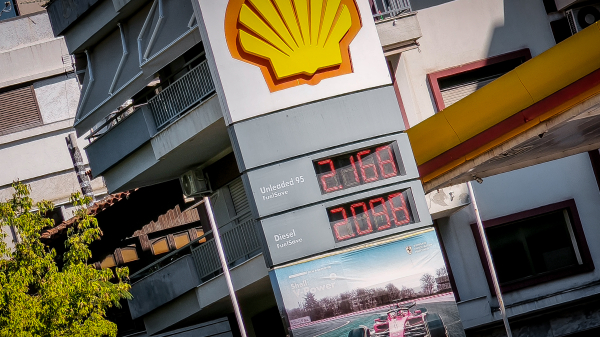
While some aspects of the government’s economic policy have been effective — particularly in areas like digital finance and fiscal discipline — they have not translated into broad-based relief for struggling households. Inflation remains high, wages are stagnant, and many citizens continue to feel economically insecure. Surveys consistently show that the benefits of growth are not being shared evenly, with only select groups seeing real gains.
This points to a deeper problem: the government’s economic strategy has concentrated benefits in narrow segments of society, leaving the broader population largely untouched. In this context, the upcoming €2 billion package, while politically significant, may not be enough to meaningfully alter public sentiment — or the government's downward trend in the polls.