The Greek government is facing one of its deepest crises in recent years, as a major corruption scandal linked to the country’s agricultural subsidy agency, OPEKEPE, continues to unfold. At the center of the controversy is Prime Minister Kyriakos Mitsotakis, whose Sunday social media post was widely seen as an implicit admission of failure—paired, paradoxically, with provocative attempts to deflect blame.
Mitsotakis wrote as his government reeled from the resignation of Minister Makis Voridis and three deputy ministers, amid revelations of widespread misuse of EU agricultural subsidies. Despite the gravity of the situation and a significant financial penalty now facing Greek taxpayers, the prime minister stuck to a strategy of denial. He distanced himself from the scandal, portraying it as the result of entrenched bureaucratic dysfunction rather than political misconduct. At the same time, he vowed to confront what he called the "deep state," a phrase critics say he’s using to absolve his administration of direct responsibility.
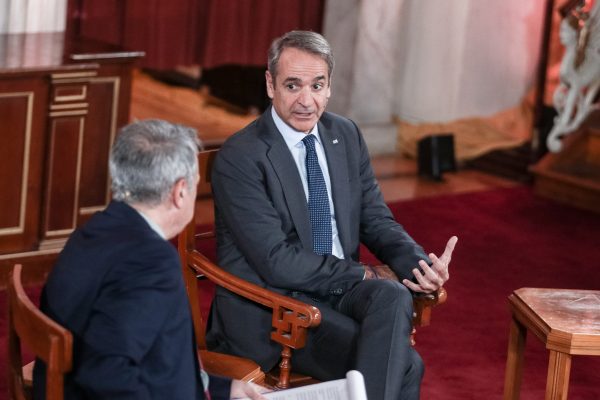
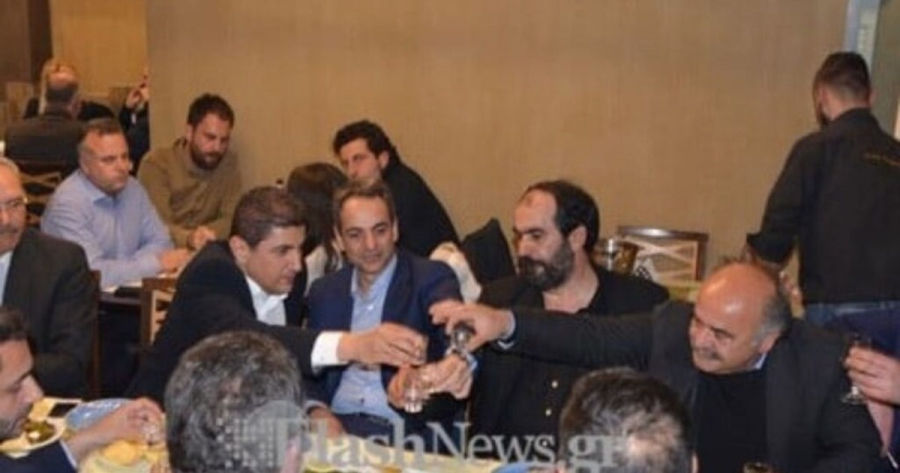
However, this attempt to shift the narrative has sparked outrage across the political spectrum. The backlash intensified on Sunday when a 2019 video surfaced, published by the newspaper Documento, showing Mitsotakis at a party event seated alongside key figures now implicated in the scandal. Among them were Giorgos Xylouris, nicknamed “Frapé,” a longtime party fixer in Crete, and Andreas Stratakis, known as “The Butcher,” a former advisor in the Ministry of Rural Development and a close associate of Voridis. Stratakis had served on the board of a state agency overseeing subsidy declarations, which is now under investigation for systemic abuse.
While the video does not serve as direct evidence of wrongdoing, opposition leaders argue that it highlights how deeply embedded the accused individuals are in the ruling party’s inner circles. PASOK, one of Greece’s main opposition parties, described Mitsotakis's response as a “masterclass in hypocrisy,” accusing him of enabling a culture of corruption while publicly playing the role of a reformer. The party stated that the prime minister’s media apparatus is actively shielding the same mechanisms of rot that now threaten to engulf his government.
The left-wing SYRIZA party went further, branding the OPEKEPE scandal a “Mitsotakis scandal.” It claimed that the prime minister not only knew about the corrupt networks within the subsidy agency but was personally associated with several of the key players. The party pointed to the same 2019 footage as evidence of Mitsotakis’s proximity to the scandal’s main protagonists and noted that several former ministers, including Voridis and
Lefteris Avgenakis, round out what it described as a tangled web of political, party, and even familial ties linked directly to the Prime Minister’s office. According to transcripts published in the newspaper Avgi, pressure was placed on current Agriculture Minister Kostas Tsiaras to limit inspections—raising questions about whose interests were being protected at the highest levels.
Communist Party leader Dimitris Koutsoumbas also joined the chorus of criticism, calling the scandal "foul" and condemning what he saw as an orchestrated attempt to “wash away the stench” through a wave of political resignations and expressions of ignorance. He called for a full investigation into potential criminal liability for both political figures and bureaucrats and stressed the need for illegally obtained funds to be returned. Koutsoumbas also highlighted the role of European Union policies that he said open the door to such abuses, describing a system that burdens small farmers while enabling politically connected figures to exploit loopholes for personal gain.
Within the ruling New Democracy party, reactions range from quiet concern to outright alarm. Some MPs have privately acknowledged that the situation has created both a moral and political crisis for the government. The atmosphere within the party is tense, and many were seen scrambling to review the European Public Prosecutor’s case file, reportedly shocked by the scale and detail of the backroom deals, favoritism, and misuse of public resources it revealed.
The government attempted to contain the damage with a wave of resignations—including those of Deputy Ministers Dionysis Stamenitis, Christos Boukoros, and Tasos Chatzivasileiou, as well as General Secretary Giorgos Stratakos—but these moves have failed to quell public outrage. Some ruling party lawmakers are already warning that the government’s credibility is at stake and that the crisis may have long-term consequences.
As political instability deepens, speculation is mounting over whether Mitsotakis may be forced to call early elections, possibly as soon as this autumn. For many, the scandal is not just another misstep but a reflection of deeper problems within the administration that cannot be dismissed as systemic flaws or administrative oversight.
With calls growing for a full parliamentary inquiry—and the possibility of criminal investigations into former ministers looming—this summer is shaping up to be a pivotal period for Greek politics. Whether the Mitsotakis government can weather the storm or will be swept away by it remains to be seen. But what is increasingly clear is that the OPEKEPE scandal has shaken the foundations of a government already under pressure and cast a long shadow over its promises of transparency and reform.