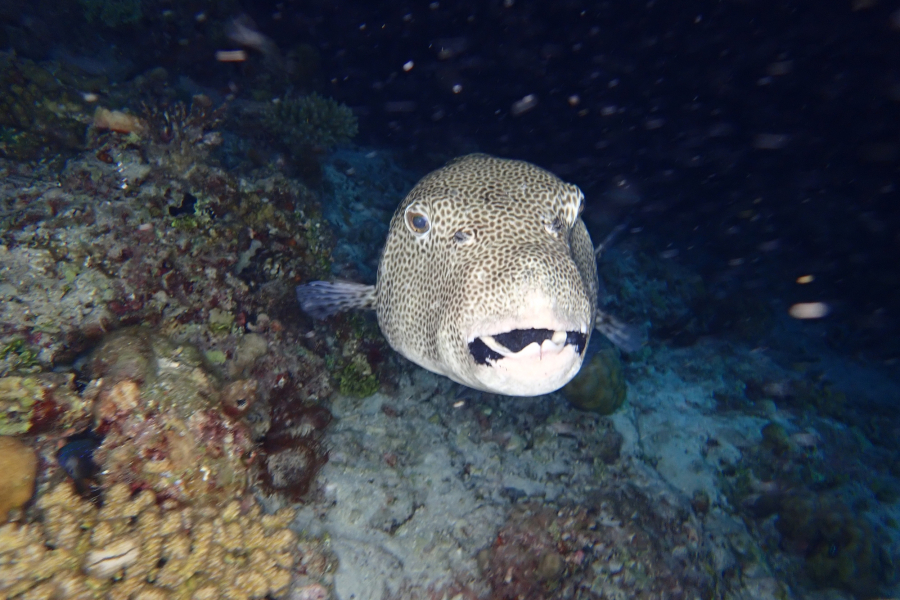
Greece is offering fishermen cash rewards to catch one of the Mediterranean’s most troublesome invaders: a poisonous pufferfish that is spreading through its waters, threatening native marine species and disrupting coastal fishing.
The government has approved a €1.5 million ($1.6 million) program that will pay professional fishermen for every kilogram of invasive silver-cheeked toadfish, locally known as lagocephalus, they catch and deliver for destruction.
The initiative will initially focus on Crete and the southern Aegean islands, where authorities say the species has established its largest populations in Greek waters.
ΔΙΑΒΑΣΤΕ ΕΠΙΣΗΣ



Originally native to the Indo-Pacific region, the fish has spread into the Mediterranean through the Suez Canal, becoming a growing concern for coastal communities. Its expansion has been linked to declining native fish populations and damage to fishing operations.
Unlike commercially valuable catches, the pufferfish cannot be sold for consumption. It contains tetrodotoxin, a potent neurotoxin that can cause fatal poisoning, making its removal a public-health concern as well as an environmental priority.
Under the program, fishermen will target the species, particularly breeding populations, in an effort to slow its reproduction and further expansion.
Catches must be delivered to designated landing sites, where authorities will weigh and certify the quantities before arranging their safe disposal. Payments will be based on verified catches, although the government has yet to specify the compensation rate per kilogram.
The program will be administered by the regional governments of Crete and the South Aegean, with financing provided through Greece’s 2021-2027 fisheries program, co-funded by the European Union.
Scientists will monitor the operation to assess whether sustained fishing pressure can meaningfully reduce pufferfish populations and help restore the balance of local marine ecosystems.
The initiative, which can run through December 2029, highlights a broader challenge facing Mediterranean countries as warming waters and invasive species increasingly reshape marine ecosystems and threaten traditional fishing livelihoods.