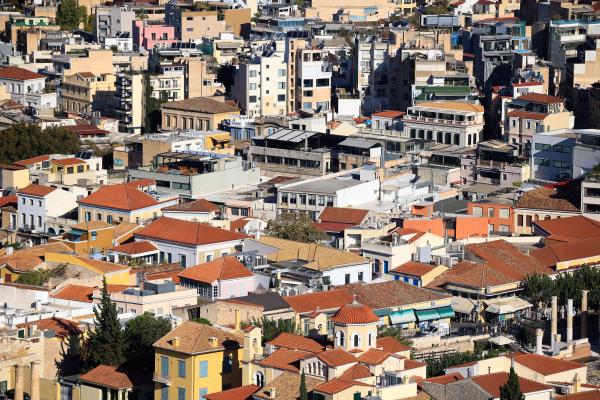

For years, buying a plot of land on a Greek island or near a popular tourist destination was seen as a relatively straightforward investment. Now, many owners are discovering that land they purchased or inherited with the expectation of building on it may no longer qualify for construction permits. Hundreds of thousands of property owners across Greece have faced uncertainty for four years as stricter interpretations of planning regulations have called into question the development rights of land outside officially designated urban-planning zones.
Under Greece's longstanding rules, plots measuring at least 4,000 square meters - roughly one acre - were generally considered eligible for development, subject to other conditions. But size alone is no longer sufficient. The central obstacle is road access. To qualify for a building permit, a property must generally front a legally recognized public road. Many rural roads, including those used for decades, lack that formal designation.
The consequences extend beyond homeowners hoping to build vacation properties. Investors, developers and families holding inherited land face difficulties selling, transferring or using their properties as collateral for bank loans. Land previously marketed as buildable can lose substantial value when construction rights become uncertain, potentially affecting real-estate activity in Greece's tourism-dependent regions. Adding to the confusion, local planning authorities have applied the rules inconsistently. Some approve permits that other offices reject under similar circumstances. Even approved permits can face legal challenges and possible annulment.
ΔΙΑΒΑΣΤΕ ΕΠΙΣΗΣ



The Greek government is working on a regulatory framework to clarify which roads qualify as public, a crucial step toward resolving the dispute. According to the government's timetable, studies mapping the road network have been completed and are undergoing review.
A draft presidential decree establishing recognition criteria is expected to be submitted for examination by the end of 2026. But the decree won't necessarily restore development rights immediately. Broader local and regional planning reforms must also advance, and no definitive timetable for resolving the uncertainty has been established. The issue is politically sensitive, particularly ahead of Greece's next national elections, as policymakers weigh property rights against longstanding concerns about uncontrolled construction and environmental protection.