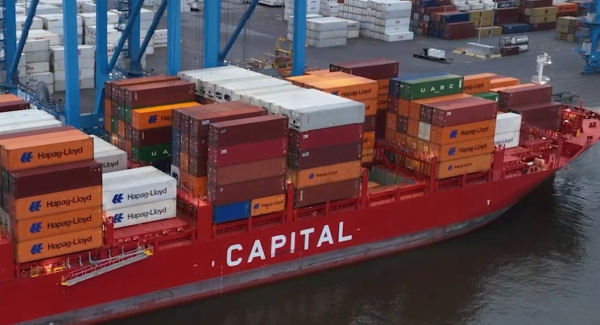
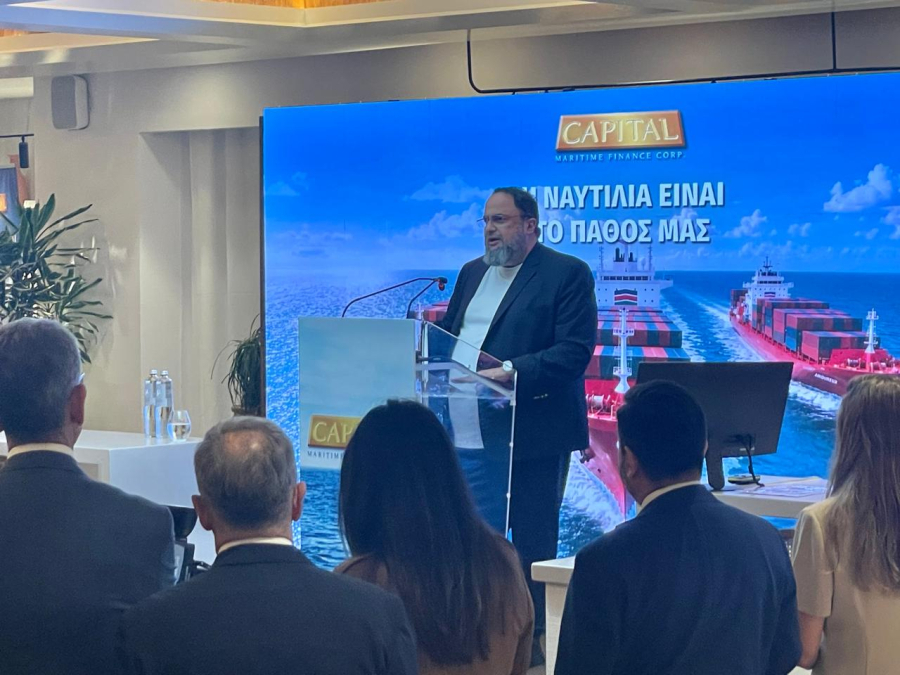
Capital Maritime Finance, a shipping company backed by Greek billionaire Evangelos Marinakis, attracted €1.08 billion ($1.25 billion) in investor orders for its initial public offering, more than four times its original €250 million target, in a striking display of retail investor enthusiasm.
The strong demand prompted the company to increase the size of the offering to €300 million, marking a milestone for Greece’s capital markets. Capital Maritime Finance became the first shipping company to conduct an IPO exclusively through a primary listing on Euronext Athens.
Nearly 14,000 active investor accounts participated in the offering, according to people familiar with the underwriting process. That represents roughly 47% of the 29,605 active accounts on the Greek stock market, underscoring the unusually broad participation.
ΔΙΑΒΑΣΤΕ ΕΠΙΣΗΣ



The surge in demand reflects several forces shaping investor behavior, from the search for dividend income to the psychological pull of a popular investment opportunity.
Shipping companies have traditionally appealed to investors seeking substantial dividend payouts, although earnings and distributions can fluctuate sharply with freight rates and global trade conditions.
Interest in the sector has also been reinforced by the market presence of other prominent Greek shipping companies, including Polys Hajioannou’s Safe Bulkers and Petros Pappas’s Star Bulk Carriers.
But analysts of investor behavior point to another potential factor: fear of missing out, commonly known as FOMO. When an offering attracts intense demand, investors may rush to participate rather than risk being left behind.
In Marinakis’s case, an additional influence may have come from outside financial markets.
The shipping magnate also owns Olympiacos, one of Greece’s most popular soccer clubs. Some supporters of the team reportedly participated in the offering partly because of their confidence in Marinakis, illustrating how personal loyalties can spill over into financial decisions.
Behavioral economists describe this phenomenon as familiarity bias—the tendency to favor investments associated with recognizable companies or individuals, even without a thorough assessment of their financial fundamentals.
Such emotional connections don't necessarily make an investment unsound. They can, however, influence how investors assess risk and opportunity.
For Capital Maritime Finance, the offering’s success demonstrates the ability of a familiar corporate name to mobilize domestic capital.
Whether that enthusiasm translates into attractive long-term returns will depend less on investor sentiment than on the company’s financial performance and the often-volatile economics of global shipping.