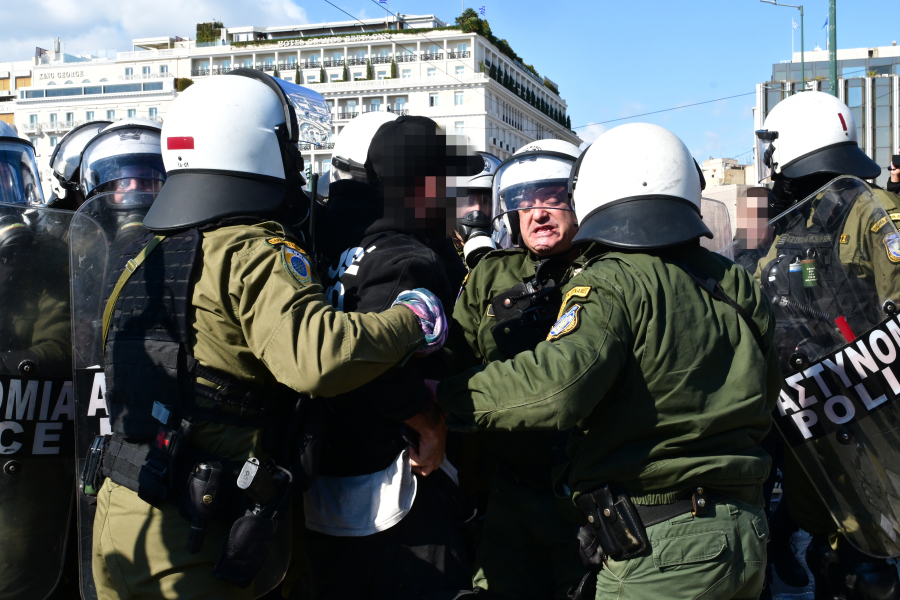
Greek police have routinely used unnecessary and excessive force against peaceful protesters, photojournalists and reporters, causing serious injuries and psychological trauma, according to a new Amnesty International report released Thursday.
The rights organization is calling on Greek authorities to ban the use of stun grenades in crowd-control operations, arguing that current policing practices have created a climate in which exercising the right to protest carries significant risks.
The report, titled “Protest Is Not a Battlefield: Patterns of Unlawful Police Use of Force and Impunity,” draws on a two-year investigation involving more than 100 interviews with demonstrators, journalists, lawyers and other witnesses, alongside extensive analysis of video footage from protests across the country.
ΔΙΑΒΑΣΤΕ ΕΠΙΣΗΣ

Amnesty says it identified a persistent pattern of unlawful police conduct, including the deployment of stun grenades directly at protesters and media workers, baton charges against demonstrators, misuse of riot-control equipment, and arbitrary detentions.
“The right to peaceful assembly in Greece is being seriously undermined both in law and in practice,” said Kondylia Gogou, Amnesty International’s Europe researcher. “Peaceful protesters are facing arbitrary deprivation of liberty, criminalization and unlawful use of force at the hands of police.”
Among the cases highlighted is that of veteran photojournalist Marios Lolos, who suffered hearing loss and a head injury after being struck by a stun grenade while covering demonstrations marking the anniversary of the Tempi rail disaster in January 2025. Amnesty said verified video footage supports claims that the projectile was intentionally directed toward him.
The report also documents incidents involving student protesters, journalists and legal observers, many of whom alleged arbitrary detention, degrading searches and denial of basic rights while in police custody.
Beyond allegations of excessive force, Amnesty argues that structural shortcomings in Greece’s accountability mechanisms have allowed abuses to persist. The organization points to ineffective disciplinary investigations, difficulties identifying officers involved in misconduct, and chronic resource shortages within the country’s police oversight system.
The findings come amid growing scrutiny of Greece’s protest legislation. Amnesty contends that existing laws governing public demonstrations fall short of international human rights standards and criticizes recent measures that further restrict public gatherings, including a 2025 provision limiting demonstrations in parts of Athens’ central Syntagma Square.
According to figures cited in the report, Greek prosecutors investigated 181 cases involving alleged human rights violations and other serious offenses by law enforcement officials between 2019 and November 2025, resulting in just seven convictions. Of 60 torture-related allegations examined during the same period, only four cases proceeded to trial and one led to a conviction.
Amnesty is urging the Greek government to overhaul protest policing, strengthen accountability mechanisms and prohibit the use of military-style devices such as stun grenades during demonstrations.
“Military-type devices have no place in the policing of protests,” Gogou said. “Not in Greece, and not anywhere else in the world.”