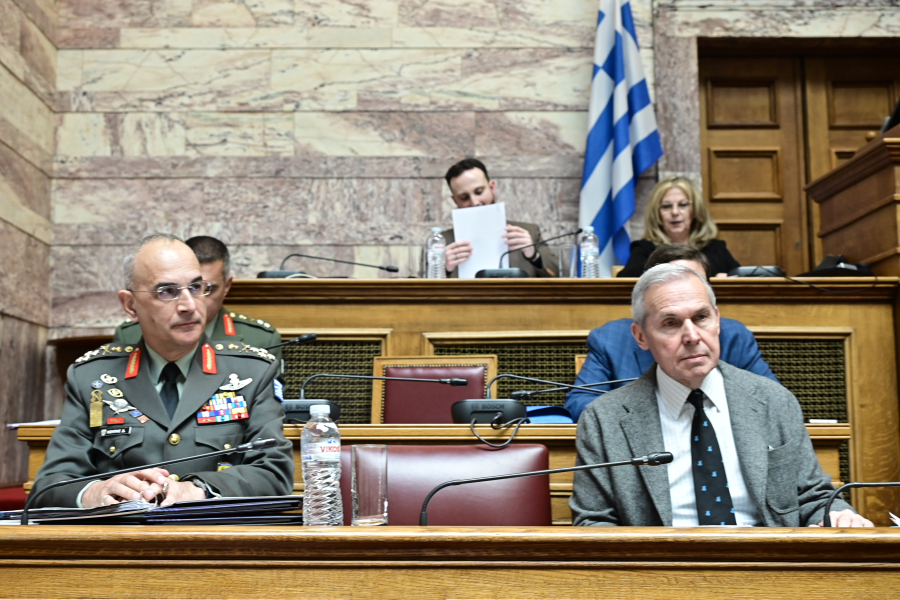

Serious questions are being raised by opposition parties in Greece over a proposal to procure new air-defense systems that was approved yesterday by the Hellenic Parliament’s Special Standing Committee on Armaments Programs. Critics argue that the procedure effectively amounts to a direct award — a proxy contracting arrangement — rather than a government-to-government agreement, while the justification for the proposed cost has not been sufficiently documented.
According to opposition figures and sources familiar with the matter, the dossier submitted to parliament for the program known as “Achilles’ Shield” was incomplete. The project refers to the multi-layered air and missile defense system Greece plans to develop as part of its broader military modernization framework, known as “Agenda 2030”. However, key information that would allow political parties to assess the cost of the program was reportedly missing from the documentation.
Among other issues, the proposal did not specify the number of launchers, missiles or supporting systems included in the package. As a result, critics say it is difficult to determine whether the proposed price is reasonable. Observers following the issue note that the wording of the proposal avoided detailed technical and financial specifications, which in turn makes meaningful parliamentary scrutiny more difficult.
Questions have also been raised about the procurement procedure itself. Sources note that other European countries, including Slovakia, have opted to hold international tenders for comparable air-defense programs. They also point out that the European air-defense initiative in which Greece participates is based on a different architecture from the “dome-style” model that Greece now appears to be considering.
Further doubts relate to the structure of the program, as Greece is reportedly examining the acquisition of systems from three different companies — Israel’s Rafael, Israel Aerospace Industries (IAI), and the U.S. defense contractor Raytheon — to cover different layers of air defense. According to critics, a more coherent system might have been designed without relying on multiple suppliers and technologies, which could increase both costs and logistical complexity.
At the same time, some are questioning assurances by Greece’s defense minister, Nikos Dendias, that the Greek defense industry will participate in the program at a level of 25 percent. Critics argue that no binding agreement currently guarantees that level of involvement, noting that a memorandum of understanding alone does not ensure that such commitments will ultimately be implemented.
Additional concerns have also been raised regarding how the proposal originated within the armed forces. Although responsibility for air defense operations in Greece lies with the Hellenic Air Force, sources say the proposal appears to have been submitted by the Army without the Air Force’s co-signature, a development that has reportedly caused unease among defense officials.
Despite these concerns, the parliamentary committee approved the €4 billion defense procurement package by majority vote, with support from the governing party. Opposition parties adopted different positions on individual elements of the program during the vote.
PASOK – Movement for Change and SYRIZA – Progressive Alliance abstained on the Achilles’ Shield program, voted against the procurement of missiles, and supported the remaining defense programs. Greek Solution abstained on the Shield program, voted against the acquisition of F-35 Lightning II fighter jets and C-27J Spartan transport aircraft, and supported the other procurements. The Niki party abstained on both the Shield and the F-35s while voting in favor of the remaining programs.
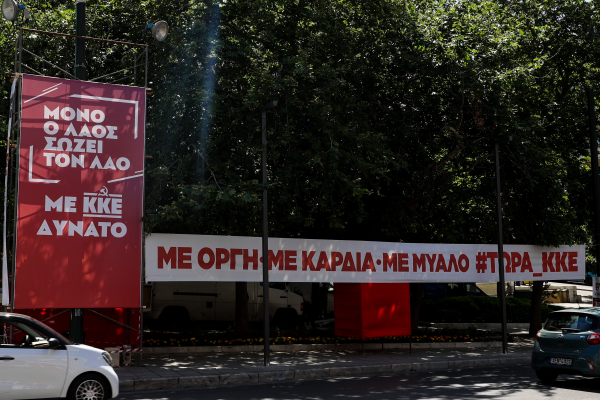
The Communist Party of Greece (KKE) and Course of Freedom voted against the entire package, while the New Left party did not attend the session.
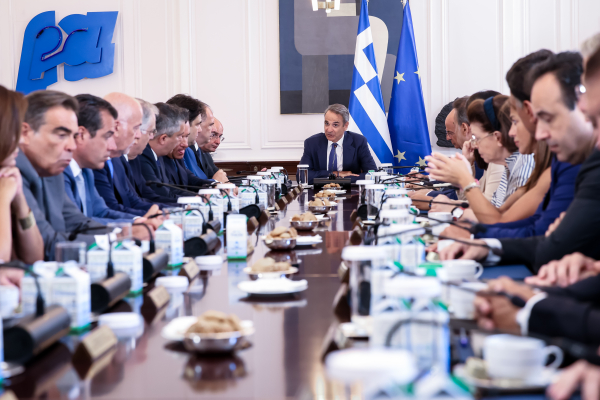
Following the committee’s positive recommendation, the final decision on whether the programs will proceed is expected to be taken next week by the Government Council for Foreign Affairs and Defence, the cabinet body responsible for Greece’s major defense and security decisions.