
According to a recent Metron Analysis poll presented on Greek television channel MEGA on Thursday, a clear majority of citizens are unhappy with the government of Prime Minister Kyriakos Mitsotakis and his New Democracy party and express a desire for political change. Yet the broader political landscape remains fluid and unsettled, with voters seemingly waiting for new political formations to emerge. The survey suggests that Greece is still in the midst of a transition toward a political configuration whose defining features have yet to take shape.
Public sentiment about the country’s direction remains overwhelmingly pessimistic. Sixty-eight per cent of respondents believe Greece is heading in the wrong direction, while just 27 per cent think it is on the right track. This bleak outlook extends to personal circumstances: only 14 per cent say they are better off than before, while the rest report being either worse off or unchanged. Despite government claims of economic improvement, 52 per cent of those surveyed say they enjoyed greater financial comfort in 2019, a finding that reinforces the view that income increases have failed to keep pace with rising living costs. Unsurprisingly, the cost-of-living crisis tops the list of public concerns, followed by the economy more broadly, institutional dysfunction and corruption.
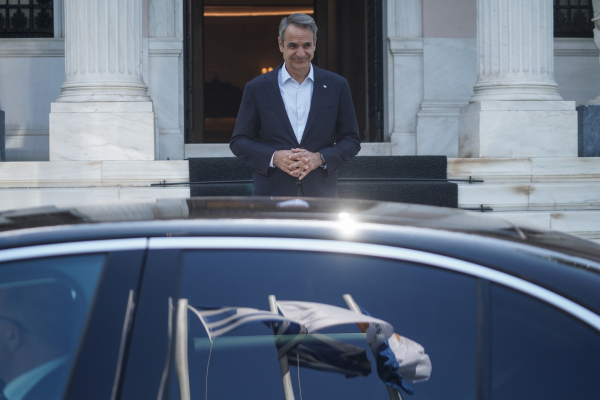
The poll delivers a harsh verdict on political leadership. The government receives negative ratings from 70 per cent of respondents, while the prime minister himself records similarly high disapproval. The main opposition party, PASOK, fares little better, with persistently negative evaluations that also extend to its leader, Nikos Androulakis. When asked who is most suitable to serve as prime minister, the most common answer remains “no one”, highlighting a deeper crisis of trust in the political system as a whole.
Views on migration reveal both nuance and division. While many Greeks acknowledge migration as a long-standing feature of human history, most believe migration policy should be decided primarily by national governments rather than international bodies. Attitudes vary sharply along ideological lines, with left-leaning voters more inclined to frame migration as a human-rights issue. Overall, however, a majority view recent population movements in Greece negatively and are highly critical of the migration policies pursued over the past three decades.
On foreign affairs, public opinion is also marked by scepticism. Three-quarters of respondents hold a negative view of US President Donald Trump, and Greeks are almost evenly split on whether relations between the United States and the European Union will remain cooperative or drift apart, reflecting broader geopolitical uncertainty.
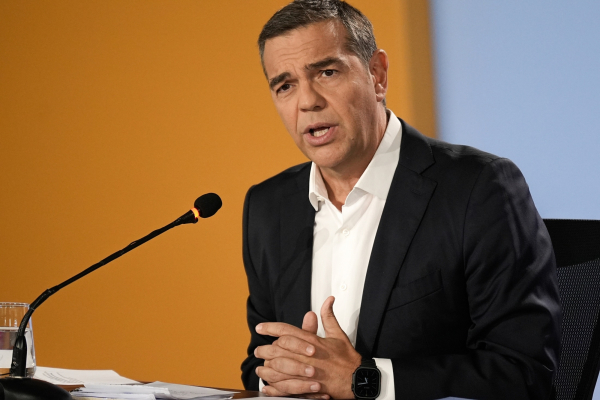
Electoral dynamics remain volatile. New Democracy continues to lead in voting intention but with support well below the level required for an outright majority. PASOK, smaller right-wing and left-wing parties, and a large bloc of undecided voters all compete in a fragmented field. The survey also explores hypothetical scenarios involving new parties, including those potentially led by former prime minister Alexis Tsipras or other prominent figures, suggesting that significant portions of the electorate remain open to new political vehicles.
Perhaps most telling is a pervasive sense of exclusion. More than half of respondents say they feel “outside the walls” of society, a sentiment strongest among working-class groups and small business owners. This feeling of insecurity cuts across political lines but underscores the broader social unease shaping Greek politics today. Taken together, the findings point to a country waiting—uneasily—for a new political equilibrium to emerge.