Despite a marked rise in revenues in the final quarter, this improvement is not expected to be reflected in a comparable increase in EBITDA operating profits, as rising costs placed considerable pressure on profitability margins.
A decisive factor behind the weaker bottom-line performance was the increase in fees paid to third parties, related to Euronext’s proposal to acquire the Athens Stock Exchange. These expenses had a direct and negative impact on net profit. With the publication of the latest figures, it has become evident that the so-called “Euronext effect” emerged earlier than expected, already making itself felt in the fourth quarter of 2025.
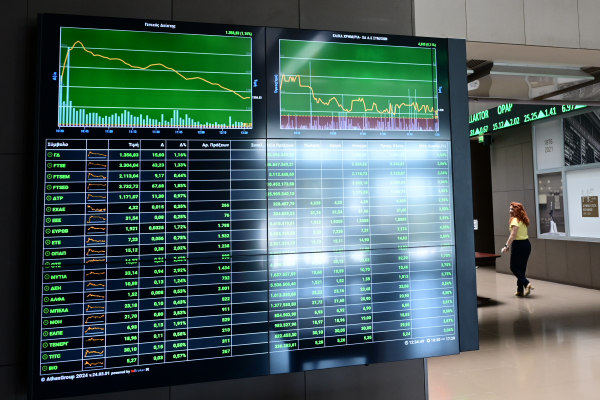
This outcome stands in contrast to a year of notably strong market conditions. Average daily trading value surged by 44% year on year to €243 million, market turnover accelerated by two percentage points to 43%, and total market capitalisation rose by 37% to €142 billion. At the same time, the derivatives market maintained solid momentum, with activity up 29% on an annual basis and average daily volumes reaching nearly 80,000 contracts.
Against this backdrop, ATHEX’s failure to convert highly favourable market conditions into peak profitability, due largely to extraordinary factors, raises questions about its ability to fully leverage future opportunities in the new phase shaped by its prospective integration into the Euronext group. These are questions that Euronext itself will be expected to address in the coming period.