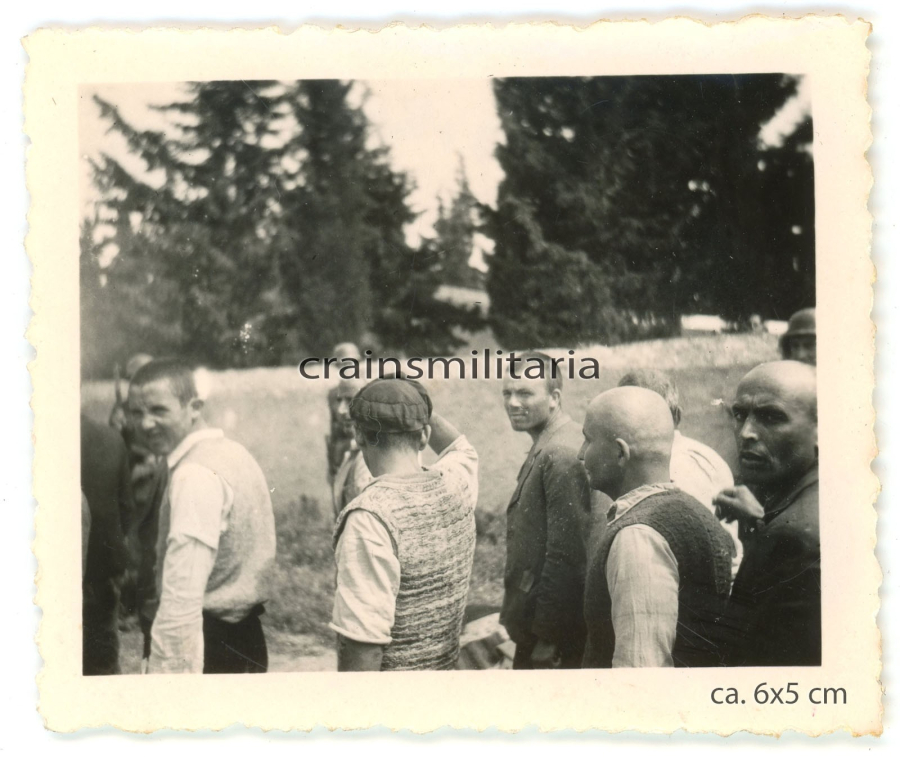

The executions took place on May 1, 1944, at the Kaisariani Shooting Range, near Athens. The victims—most of them communists imprisoned by the occupation authorities—were transported from the Haidari detention camp and killed in reprisal for resistance actions against German forces. The massacre is considered one of the most emblematic atrocities of the German occupation of Greece during World War II.
The photographs, which show the men shortly before their execution, surfaced after appearing in an online auction on eBay, offered by a seller based in Belgium. According to the auction description, the images were found in an album attributed to a German officer who served during the occupation and was stationed in Malakasa, north of Athens. The identity of the photographer has not been established.
The images became widely known after being shared by the historical research page Greece at WWII Archives, prompting a strong public response. Historians and political figures have stressed that the photographs constitute the only known visual documentation of the Kaisariani executions.
Their release has prompted calls for the Greek state to intervene and acquire the material. The Communist Party of Greece said the photographs are historical documents of exceptional value that should not be treated as commercial items. Former prime minister Alexis Tsipras and other political figures have similarly urged that the images be preserved in public institutions, arguing that they form part of Greece’s national historical record.
The emergence of the photographs has also revived discussion about how wartime documentation should be handled, particularly when linked to mass executions and war crimes. Critics of the auction say such material should be safeguarded in archives or museums rather than sold on the open market.
The issue has also highlighted political divisions in Greece, with some parties criticised for remaining silent on the discovery. Commentators argue that the images challenge simplified narratives of patriotism by depicting prisoners who faced execution with composure and dignity.