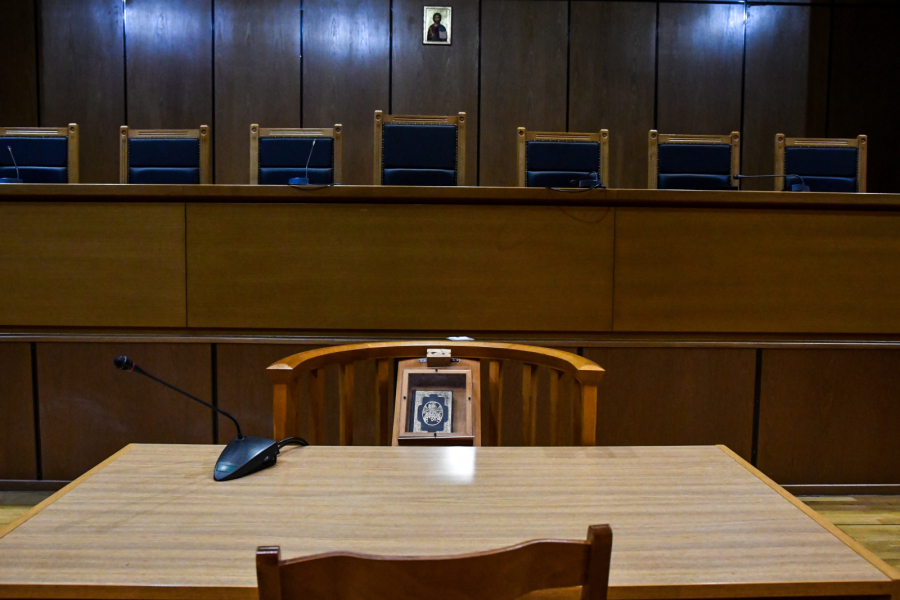

Five months after the launch of a landmark trial examining the use of the Predator spyware for illegal phone surveillance in Greece, the proceedings have reached their final stage, with a court ruling scheduled for February 26. The decision will be issued by the presiding judge of the Single-Member Misdemeanor Court of Athens, bringing to a close a protracted judicial process that exposed previously undisclosed aspects of a covert wiretapping operation.
The evidentiary proceedings formally ended after the completion of closing arguments by the prosecution and the defense. Over the course of the trial, new information emerged about the use of illegal surveillance technology, prompting renewed debate about privacy, accountability and the protection of democratic institutions in Greece.
Presiding judge Nikos Askianakis is expected to announce his verdict on four businessmen charged with misdemeanor-level offenses. The defendants—Giannis Lavranos, Felix Bitzios, Tal Dilian and Sara Hamou—largely avoided appearing in court during more than 40 hearings and declined to testify. They are accused of illegally interfering with systems containing personal data, violating the confidentiality of telephone communications and private conversations, and unlawfully accessing information systems. According to the indictment, these acts were carried out jointly, repeatedly, and in both completed and attempted forms.
The prosecutor in the case, Dimitris Pavlidis, urged the court to find all four defendants guilty for their alleged involvement in illegal surveillance conducted through the Predator spyware. He also requested that some of the charges be treated as multiple separate offenses rather than as continuing acts, a legal reclassification that could lead to tougher sentences if accepted by the court.
In his closing remarks, Pavlidis underscored that the use of such spyware is illegal under Greek law and constitutes a serious breach of personal data protection. He warned that its deployment poses a direct threat to democratic governance, as it concentrates dangerous powers in the hands of individuals who should not possess them. He stressed that it is beyond dispute that the Predator software was active within Greek territory, adding that any potential use of such tools by state authorities should serve as a warning signal for institutional vigilance.
The prosecutor also outlined the complex web of companies and individuals allegedly involved in the Predator operation. He pointed out that if the acts under investigation had occurred at a later point in time, the case would not have been tried as a misdemeanor. Due to legislative changes introduced in 2019, the offense of violating the secrecy of communications was downgraded from a felony to a misdemeanor, allowing the defendants to benefit from a more lenient legal framework—despite the scale and seriousness of the case, as reflected in the volume of evidence and the number of witnesses heard during the trial.