
Greece is moving forward with plans to acquire an integrated air and missile defense system known as the “Achilles’ Shield,” which will rely on artificial intelligence–driven software to detect, classify, and neutralize aerial threats in real time. The system, currently under advanced discussion with Israel, is designed to automatically select the most effective interception method without requiring human intervention, significantly reducing reaction time in the face of incoming threats.
The AI-based software, developed in Israel, will be connected to the full spectrum of the Shield’s defensive capabilities, including ballistic missile defense, air defense, and counter-drone systems. Once a threat is identified-whether a missile, aircraft, or unmanned aerial vehicle- the software will instantly determine which layer of defense is best suited to engage it. This automated decision-making process is intended not only to improve operational effectiveness but also to ensure the efficient use of resources, avoiding the deployment of expensive interceptor missiles against low-cost drones or other inexpensive targets.
Beyond its immediate operational benefits, the Achilles’ Shield represents a broader technological shift for the Greek Armed Forces, which are seeking to integrate advanced artificial intelligence into their command-and-control architecture. By unifying Greece’s air defense assets under a single AI-enabled framework, the system is expected to enhance the overall performance of the country’s National Operations Center and provide a more coherent response to complex, multi-layered threats.
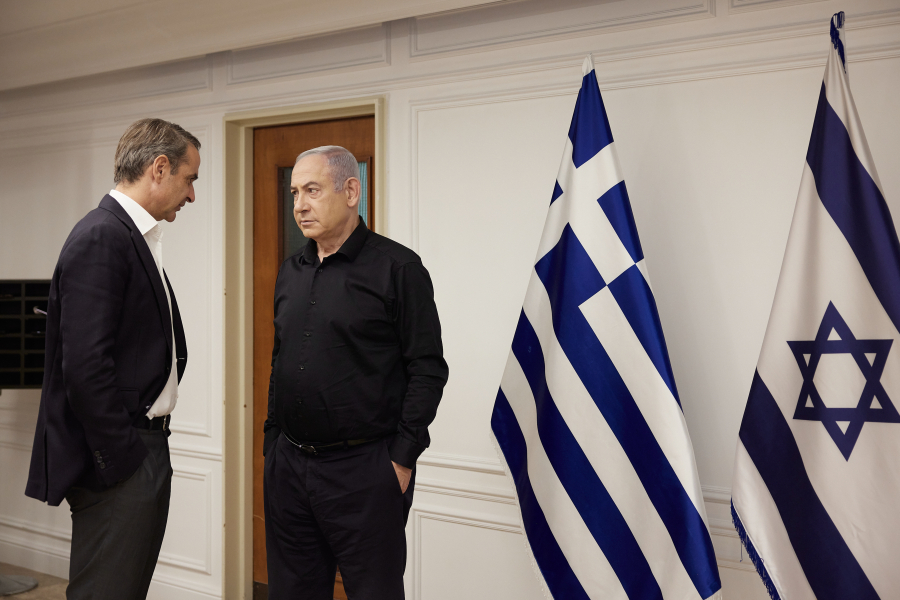
Negotiations between Athens and Jerusalem have been underway for an extended period, in part because the software at the core of the system is owned not by a private defense contractor but by Israel’s Ministry of Defense. Discussions began at the highest political level, involving Greek Prime Minister Kyriakos Mitsotakis and Israeli Prime Minister Benjamin Netanyahu, and continued through meetings between the two countries’ defense ministers. The talks have now entered a purely technical phase and are expected to conclude in the near future.
The Achilles’ Shield will combine both existing and newly acquired systems. Greece already operates U.S.-made Patriot air defense systems, as well as anti-drone capabilities deployed to protect islands and critical infrastructure on the mainland. These will be supplemented by Israeli-developed short-range air defense systems intended to replace older, Russian-origin platforms that have faced long-standing maintenance and support challenges. Athens is also in discussions to procure additional Israeli systems capable of intercepting medium- and long-range missile threats, drawing on technologies that form the backbone of Israel’s own multilayered air defense network.
In parallel, Greece plans to integrate Israeli-made precision rocket artillery systems into its broader air and missile defense architecture. These acquisitions are proceeding independently of any potential upgrades to existing U.S.-supplied rocket launcher systems already in Greek service.
For Athens, the decision to pursue the Achilles’ Shield goes beyond strengthening its defensive capabilities. It is also seen as a concrete expression of Israel’s commitment to transferring advanced technologies, particularly in artificial intelligence, an area at the center of global strategic competition. At the same time, Greece’s defense innovation ecosystem is deepening its ties with Israeli institutions, aiming to absorb expertise and develop domestic capabilities alongside major procurement programs.