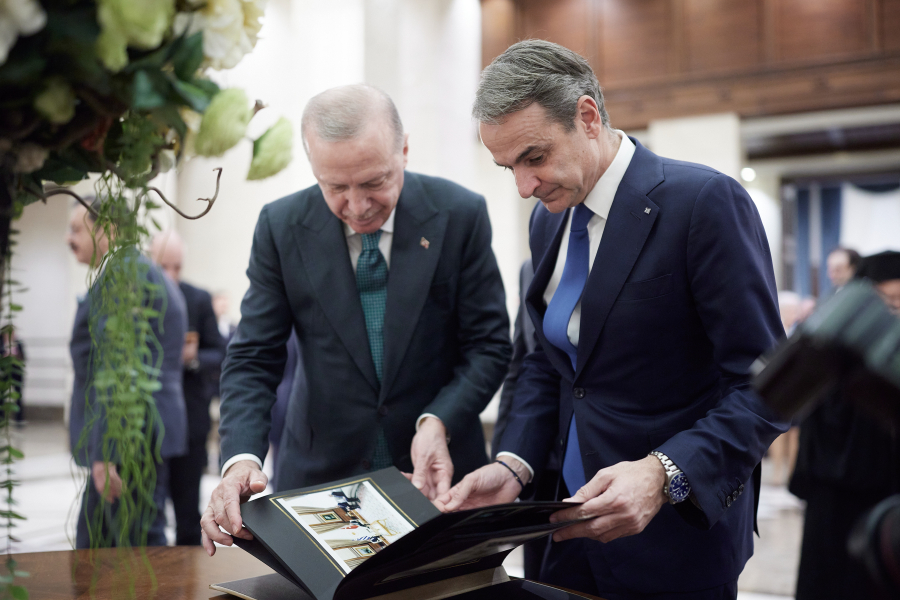

Public statements by the two leaders reflected a familiar pattern in Greek-Turkish relations: improved communication and cooperation in practical areas, alongside persistent disagreement on core political and security issues. While both sides highlighted the importance of dialogue and good neighbourly relations, their positions on sovereignty, minorities and regional disputes remained far apart.
President Erdogan once again raised the issue of Western Thrace, referring to a “Turkish minority” and calling for expanded religious and educational rights. He also expressed clear dissatisfaction with Turkey’s exclusion from European Union defence initiatives, including the SAFE programme, arguing that Ankara’s participation would be “in the common interest” of Europe.
On the Aegean Sea and the Eastern Mediterranean, Erdogan said he had discussed the disputes “with clarity and sincerity” with the Greek prime minister, maintaining that these issues, although “thorny,” were not insoluble if addressed through dialogue and on the basis of international law.
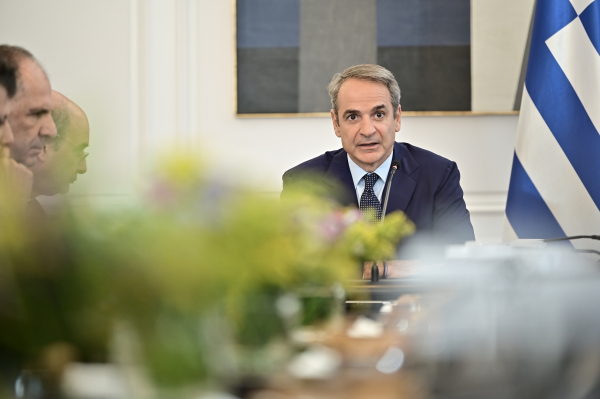
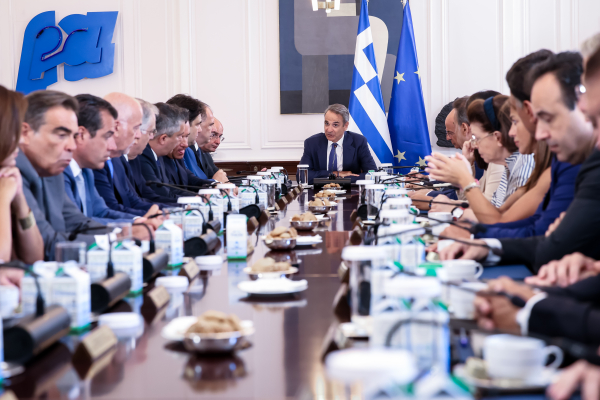
Mitsotakis responded by directly raising the issue of Turkey’s long-standing casus belli against Greece, calling for the removal of all threats—formal and substantive—from bilateral relations. He reiterated that Greece recognises no ethnic Turkish minority in Western Thrace, only a religious Muslim minority, as stipulated by the 1923 Treaty of Lausanne.
The Greek prime minister stressed that Greece considers the delimitation of maritime zones—the continental shelf and Exclusive Economic Zone in the Aegean and Eastern Mediterranean—as the only bilateral dispute that could be referred to an international court under the United Nations Convention on the Law of the Sea. He added that minorities in both countries should function as “bridges of friendship,” not sources of friction.
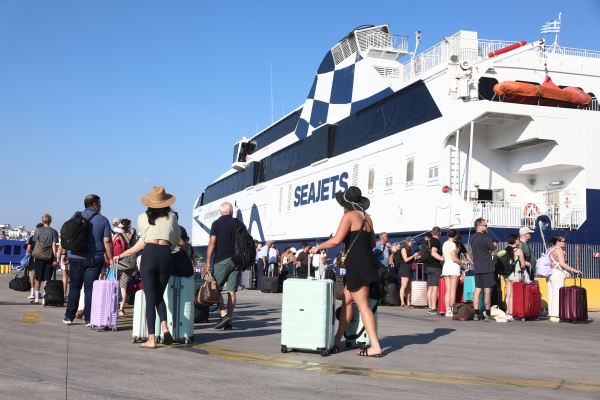
Despite these disagreements, both leaders pointed to areas of tangible progress. They cited a significant reduction in irregular migration flows across the Aegean, expanded bilateral trade with a stated goal of reaching $10 billion annually, increased cross-border investment, and the continuation of a short-term visa scheme allowing Turkish citizens to visit several Greek islands.
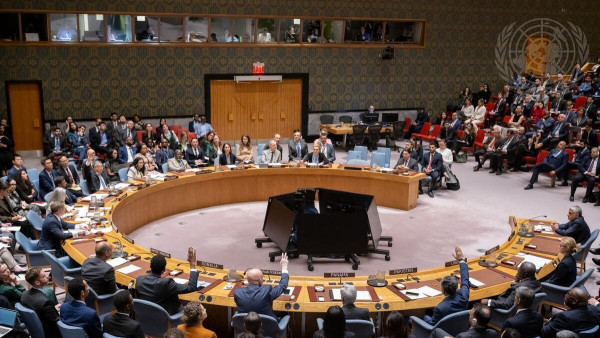
The discussions also extended to broader regional and international developments, including Cyprus, Ukraine, Gaza and Syria. Mitsotakis reaffirmed Greece’s support for a two-state solution to the Israeli-Palestinian conflict, while voicing opposition to settlement expansion and any potential annexation of the West Bank. Both leaders expressed interest in greater coordination on Syria’s stability and eventual reconstruction.
A joint statement reaffirmed the two countries’ commitment to dialogue, confidence-building measures, NATO cooperation and respect for international law. While the meeting underscored a shared desire to keep tensions under control, it also confirmed that the fundamental disputes shaping relations between Greece and Turkey remain unresolved.