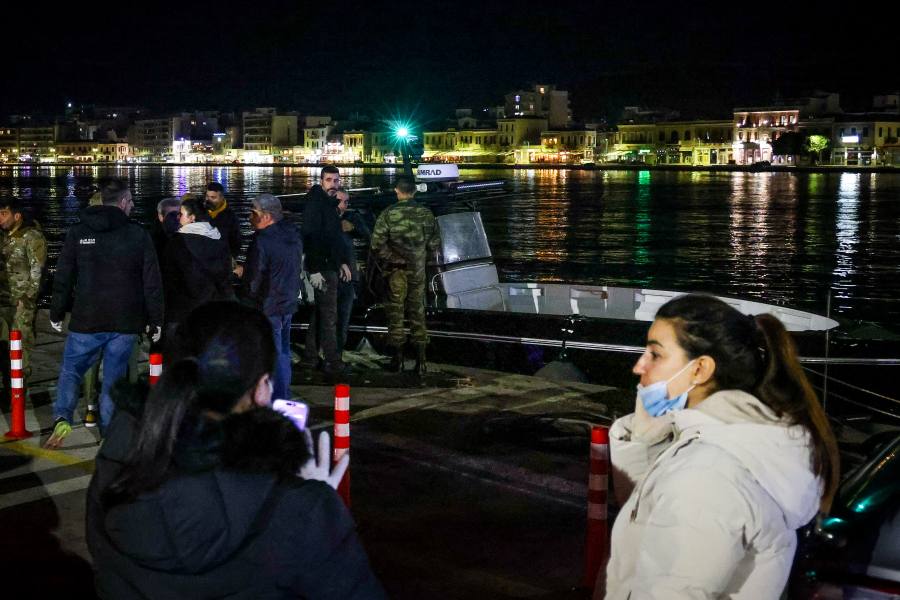

As search operations continue in the Aegean Sea off the Greek island of Chios, authorities are still trying to locate an unknown number of missing people following a deadly shipwreck. At the same time, 22 survivors remain hospitalized on the island. Three of them are in critical condition and are being treated in the intensive care unit, while the others are recovering in standard hospital wards.
The scale of the tragedy is reflected in the testimony of Vangelis Kyrithras, a local lifeguard instructor, who said he helped recover 12 bodies from the sea along with two other individuals. He described finding multiple bodies inside the vessel, noting that many had severely disfigured faces and head injuries. According to his account, the inflatable boat was full of water. “We went into the sea and pulled the bodies out, and they were taken away by a Coast Guard vessel,” he said.
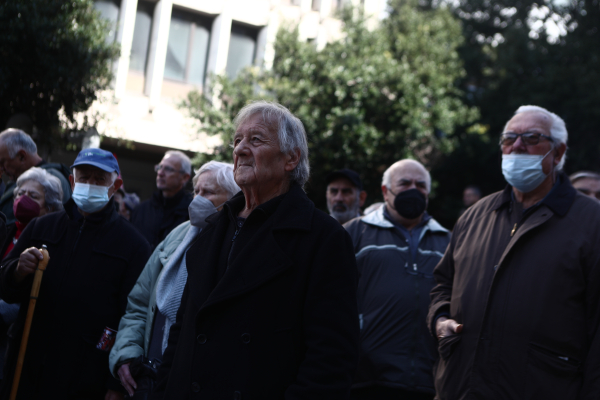
Demonstrators gathered with banners and placards to mourn the dead and to denounce what they described as responsibility borne by the Greek Coast Guard. Some of the messages accused authorities of prioritizing border enforcement over the protection of human life. During the protest, participants released lanterns into the sea in memory of the 15 people who lost their lives off the coast of the village of Mersinidi.
At Chios General Hospital, all 22 injured passengers from the capsized boat remain under medical care. Among them is a Moroccan national identified by survivors as the alleged smuggler, who is being held under guard. Hospital officials said three patients are in critical but stable condition in intensive care, while ten children are being treated in the pediatric ward and two other minors are hospitalized in the surgical unit. A team of forensic specialists is expected to arrive on the island to assist with the identification of the dead and to coordinate the forensic investigation.
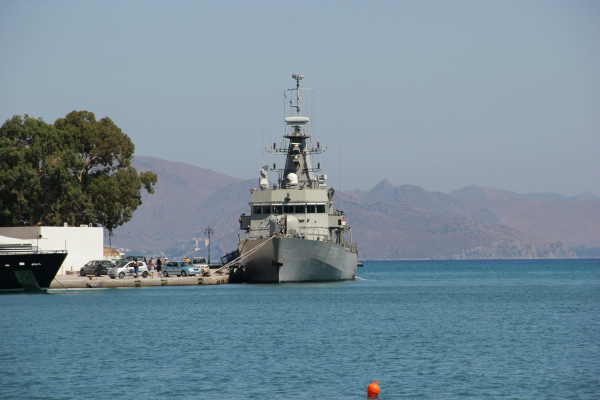
Greek authorities have ordered a sworn administrative inquiry into the circumstances of the shipwreck. Statements are being taken from both the crew of the Coast Guard vessel involved and from survivors. According to an official Coast Guard statement, the speedboat carrying migrants failed to comply with light and sound signals, attempted to change course, and collided with the Coast Guard vessel. The impact caused the speedboat to capsize and sink.
The United Nations High Commissioner for Refugees has stressed that the Chios tragedy is not an isolated incident. In a statement, the agency noted that between 2015 and 2025, at least 3,148 people have died or gone missing in the Aegean Sea. UNHCR emphasized that many of these deaths could have been prevented and called for full transparency and a clear accounting of the facts in maritime rescue operations. While the exact circumstances of the Chios incident have yet to be fully clarified, the agency underscored the need for accountability and stronger measures to protect human life at sea.
UNHCR expressed deep sorrow over the loss of life and extended condolences to the families of the victims, while also voicing support for the survivors and the rescue workers involved. The organization said it is present at the hospital, offering assistance including interpretation services and legal aid where necessary. It reiterated the need for governments to address the root causes that force people into dangerous sea crossings, to provide greater support to countries of first asylum, and to expand safe and legal pathways for those seeking protection.
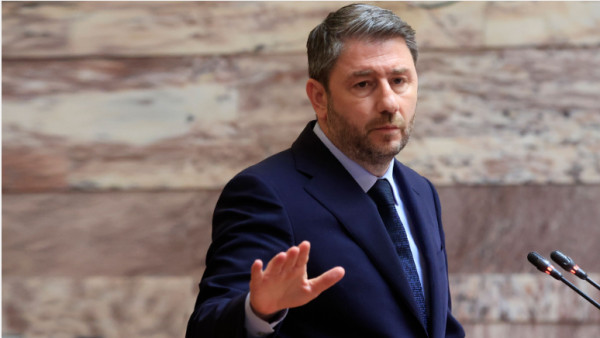
The shipwreck has also triggered a political response in Greece. Former prime minister Alexis Tsipras called for transparency and responsibility in the management of migration and border operations. In a public statement, he said that the Aegean Sea is once again becoming a graveyard for people fleeing desperation in search of safety and a better future. He criticized the government’s initial reaction, arguing that it focused on blaming smugglers before the completion of any investigation. Citing previous maritime disasters, including the Pylos shipwreck, Tsipras accused the current government of pursuing policies of concealment and concluded that there must be no attempt to cover up the truth.