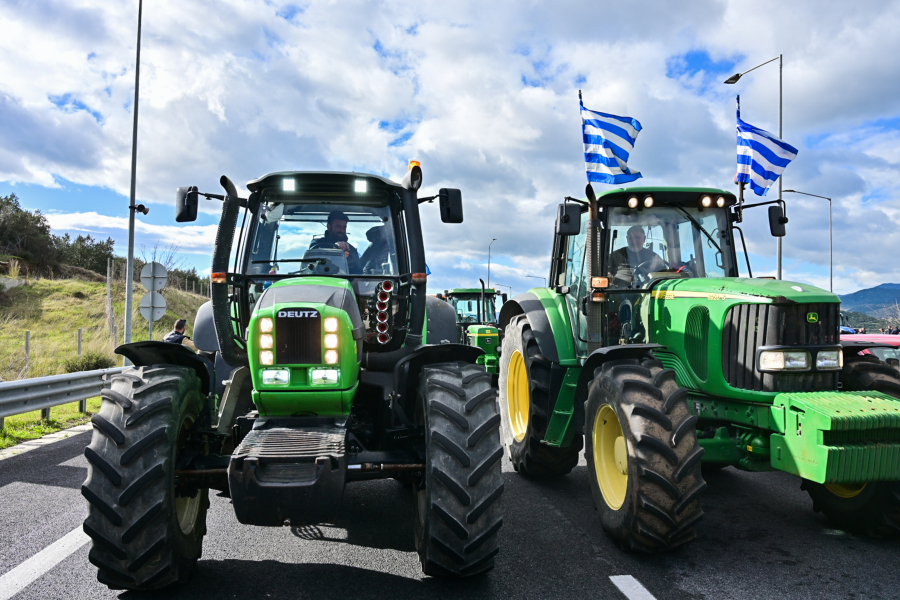

Farmers in Greece have decided to stage a large-scale protest by driving their tractors to Athens on Friday, February 13, following a meeting held on February 4 in Nikaia, near the central city of Larissa. At the same time, demonstrations are expected to take place in other major cities across the country.
According to the news outlet thesspost.gr, farmers say the government has failed to address their most pressing demands, including compensation for lost income and the approval of a vaccine to protect livestock from sheep pox. This comes despite a recent meeting between farmers’ representatives and government officials at the prime minister’s office in Athens. As a result, many in the agricultural sector say they are facing serious financial difficulties.
The decision was taken by members of a nationwide farmers’ coordination committee, who stressed that while the government listened to their concerns, it did not provide concrete solutions. Key issues remain unresolved, particularly financial support for farmers and measures to combat animal diseases, leaving many producers at risk of economic collapse. Just two weeks after ending highway blockades that had disrupted traffic across the country, farmers are now escalating their actions with a planned tractor convoy to the capital, which may also extend to Saturday, February 14.
Further mobilizations are planned in urban centers earlier in the week, with tractor demonstrations expected inside cities on Monday and Tuesday.
Speaking after the meeting, Thanasis Vompiris, president of the Federation of Agricultural Associations of Ilia in western Greece, warned that the crisis in the livestock sector is deepening. He said that sheep pox continues to spread unchecked, leading to shrinking herds and threatening the livelihoods of entire families. He also pointed to the spread of bluetongue disease in several regions, which has wiped out herds without any compensation for farmers. According to Vompiris, the government has yet to approve vaccines for these diseases, citing European Union regulations and the Common Agricultural Policy.
Farmers argue that by relying on EU rules as a justification for inaction, the government is failing to protect domestic agriculture. They say their mobilizations aim to secure the right to remain on their land and ensure their survival, warning that without immediate support, the future of farming in Greece is at serious risk.