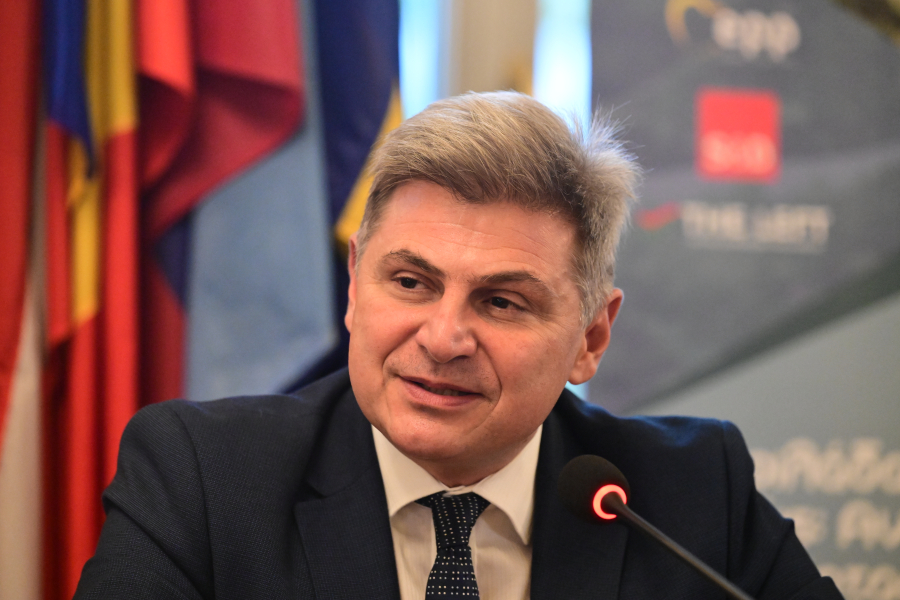

A dispute inside Greece’s main left-wing opposition party has escalated into a wider political controversy, after a Greek Member of the European Parliament refused to surrender his seat following his expulsion from the party over comments related to a prominent figure in a citizens’ justice movement.
Nicolas Farandouris, an MEP elected with Greece’s leftist party SYRIZA, said he will continue his work in the European Parliament despite being expelled on Wednesday by party leader Sokratis Famellos. The decision followed public statements he made expressing support for Maria Karystianou, a doctor who has emerged as one of the most visible figures demanding accountability after Greece’s deadliest rail disaster.
Karystianou is the mother of a young woman who was killed in the 2023 Tempi train crash, a collision that claimed 57 lives and sparked nationwide anger over rail safety failures and state accountability. She has become a leading voice among relatives of the victims, publicly criticising institutional shortcomings, delays in the investigation, and what families describe as a lack of transparency. Although she holds no political office and is not affiliated with any party, her public interventions have resonated widely and turned her into a symbol of the broader demand for justice following the tragedy.
In a video posted on social media, Farandouris said he would continue his parliamentary duties without disruption, arguing that his mandate comes from voters rather than from the party that nominated him. He said he answers only to the citizens who elected him and stressed that his European Parliament seat belongs to them.
Farandouris said he entered politics guided by the principles of justice and transparency, which he described as non-negotiable. He accused SYRIZA of distancing itself from grassroots social movements and of reacting defensively to large-scale citizen mobilisation. He said he would continue to advocate for justice, transparency and equality before the law.
The rupture followed remarks Farandouris made in a television interview in which he acknowledged discussions with Karystianou and said they share common views on issues of justice and institutional accountability. He emphasised that their interaction had taken place in a public and institutional framework, including a December event focused on constitutional responsibility and corruption. Asked whether he would welcome a citizens’ movement evolving into a political initiative, he said such a development would be legitimate.
Those comments triggered a strong reaction from SYRIZA’s leadership, with senior figures urging Farandouris to clarify his position and to rule out any involvement in alternative political initiatives. Some publicly argued that if he intended to pursue a different political path, he should step down from his European Parliament seat.
Tensions intensified after further media appearances in which Farandouris said that, should he ever decide to follow another course, he would announce it formally to both the party and the public. He rejected speculation about his future and said his focus remains on addressing the country’s pressing problems.
Shortly afterward, SYRIZA announced his expulsion and formally requested that he return the European Parliament seat he won under the party’s banner. Farandouris has rejected that demand, framing the dispute as a broader clash between party authority and democratic representation.