
The deal was finalized on Tuesday by Nea Egnatia Odos S.A., a subsidiary of GEK TERNA, which paid a one-off concession fee of €1.275 billion.
The transaction falls under a 35-year concession agreement covering the financing, operation, maintenance and commercial exploitation of the motorway. The Greek State and the Hellenic Corporation of Assets and Participations—the country’s sovereign holding entity—are the public-sector counterparties. According to the authorities, the full proceeds from the concession fee will be directed toward reducing Greece’s public debt, reinforcing state finances at a time when infrastructure investment remains a key pillar of economic policy.
The financial close formally marks the start of the concession by the GEK TERNA–Egis Projects consortium, in which GEK TERNA holds a 90% stake. The motorway, whose construction began in the 1980s, now enters a new phase focused on large-scale modernization. The concessionaire has committed to rehabilitation and heavy maintenance investments totaling €3.8 billion over the life of the contract, with €820 million earmarked for the first five years through 2031. These works are intended to upgrade the road’s technical standards, improve safety and enhance the overall quality of service for users.
Stretching close to 900 kilometers, Egnatia Odos runs across Northern Greece from west to east, linking the port of Igoumenitsa on the Ionian Sea with the Greek–Turkish border. It is the longest motorway currently in operation in Greece and among the longest continuous road axes in Europe. Along its route, it connects 11 cities, four ports and seven airports, playing a central role in domestic and cross-border trade, logistics and tourism. The regions served by the motorway account for more than half of Greece’s agricultural output and over 40% of employment in manufacturing and related industries, underlining its importance to regional economic activity.
Beyond its national role, Egnatia Odos is also a strategic European transport corridor. It forms part of the wider network linking Western and Eastern Europe, serving the Balkans and Southeastern Europe, and incorporates key Pan-European transport corridors that facilitate long-distance freight and passenger flows across borders.
The concession has been financed through a combination of equity from the investor consortium and bank lending provided by Greek financial institutions.
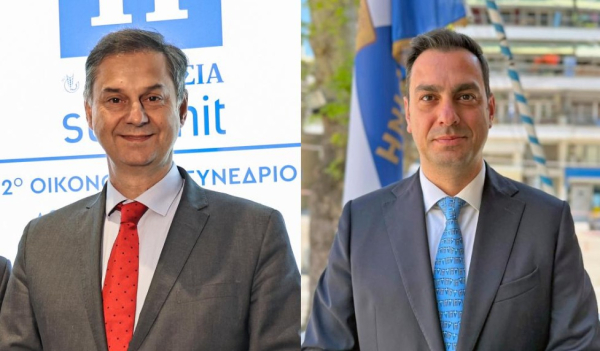
Government officials described the deal as a milestone for Greece’s infrastructure policy. Finance Minister Kyriakos Pierrakakis said the completion of the process activates the concession of the country’s most important road axis, boosting public revenues while securing a long-term investment program that will modernize critical infrastructure. He emphasized that the framework establishes a stable partnership between the public and private sectors, delivering tangible benefits for citizens and the broader economy.
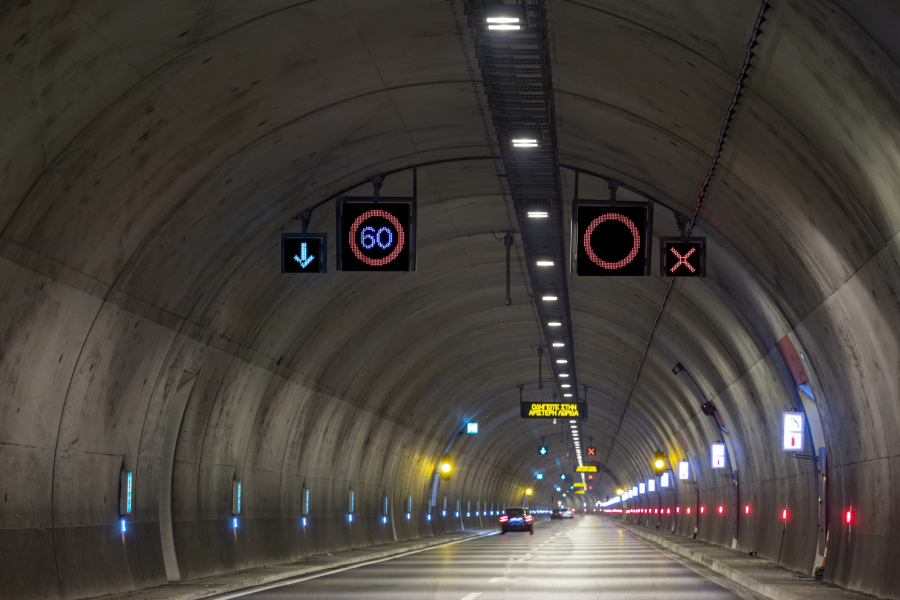
Infrastructure and Transport Minister Christos Dimas noted that the motorway is entering a prolonged period of systematic investment, including extensive works on bridges, tunnels, road surfaces, signage and safety systems, both on the main route and on its vertical links to neighboring countries. Over the 35-year concession period, he said, the planned investments are expected to significantly improve road safety, travel quality and cross-border connectivity, while new service and rest areas will bring the motorway in line with modern European standards.
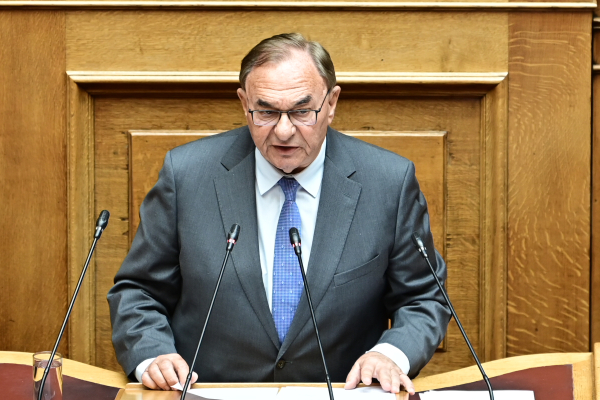
Deputy Infrastructure Minister Nikos Tachiaos described the transition from public management to a concession model as a major structural reform, both because of its contribution to public debt reduction and because it ensures the long-term upgrading of an ageing but strategically vital asset. He stressed that the authorities will closely monitor the transition to ensure measurable improvements in safety and service quality for users.
From the perspective of the state holding fund, Deputy CEO Panagiotis Stampoulidis said the project represents infrastructure of national importance, combining a high financial return for the state with long-term economic benefits. He added that the modernization of Egnatia Odos is expected to strengthen the competitiveness of key sectors such as tourism and logistics, while enhancing the development prospects of Northern Greece and the country as a whole.