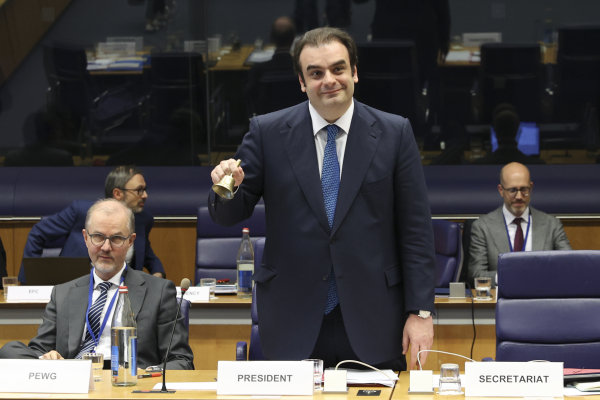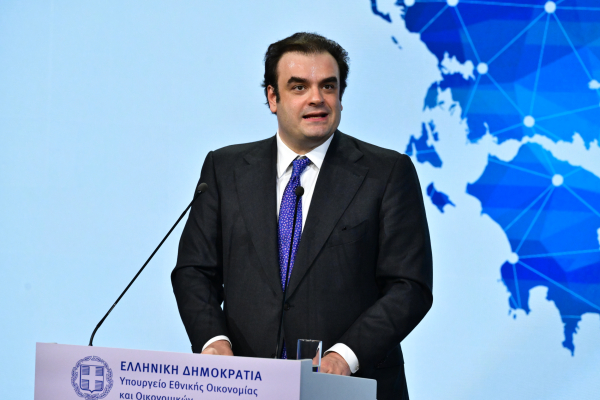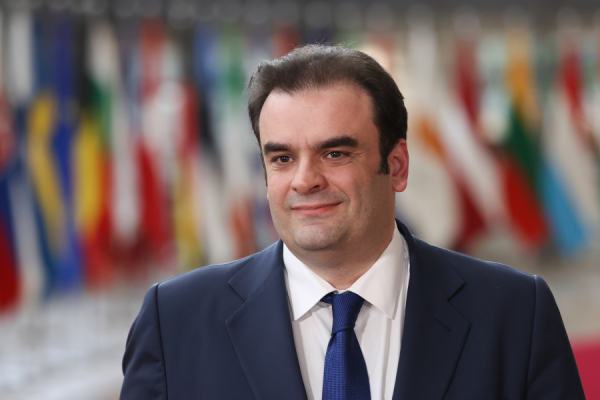
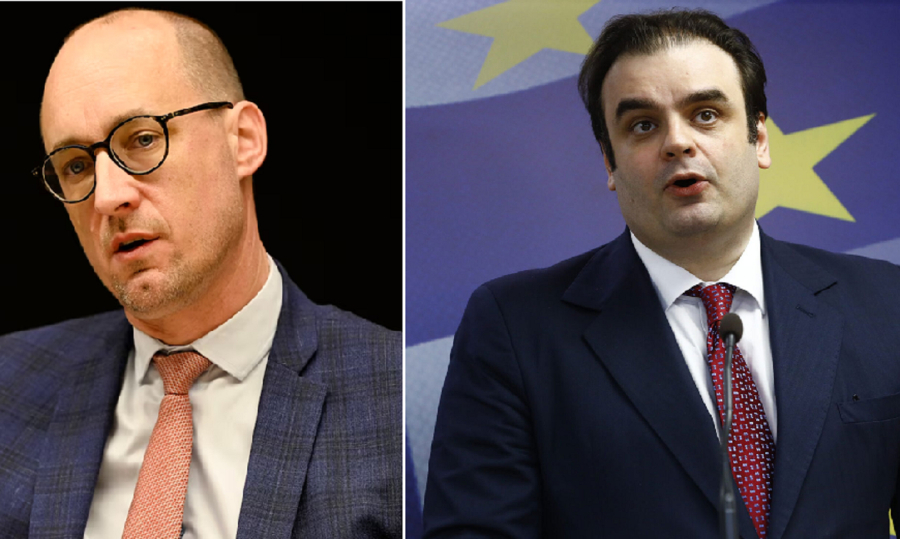

In just four days, the eurozone will learn the outcome of a closely watched contest between Greece and Belgium for the presidency of the Eurogroup. Kyriakos Pierrakakis and Vincent Van Peteghem, the two candidates in the running, will appear on Thursday before the 20 finance ministers of the euro area, each seeking a key role in shaping Europe’s economic policy over the next three years. Their race unfolds at a time marked by geopolitical tensions, fiscal uncertainty, and renewed debate over the deepening of Economic Union.
This unexpected dual candidacy emerged after the sudden resignation of Ireland’s Pascal Donohoe, who is moving to the World Bank. Within days, the Greek and Belgian contenders emerged as the main competitors, as potential candidates from Spain and Portugal withdrew. Although the race appears evenly balanced, it has been politically charged by Belgium’s stance on the use of frozen Russian assets to help finance support for Ukraine. Brussels’ refusal to back the proposal has frustrated a number of EU member states, complicating Van Peteghem’s path to the presidency.
Pierrakakis, meanwhile, benefits from Greece’s significantly improved standing in Europe. The country is now increasingly viewed as a state that has overcome its crisis years, stabilized its public finances, and advanced rapidly in digital governance. Within EU institutions, Greece is no longer perceived as a source of anxiety but rather as an example of reform—an image that bolsters Pierrakakis’ candidacy despite his relatively short tenure of only nine months.
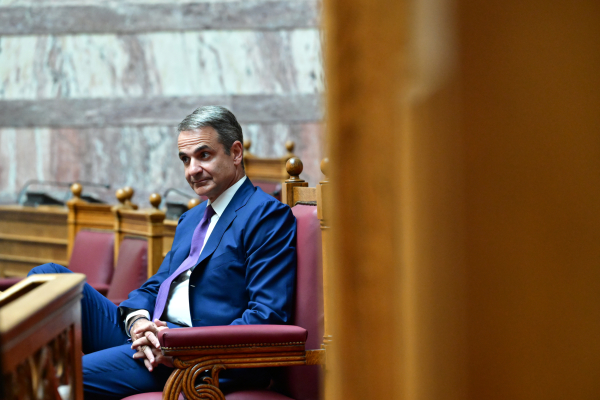
Athens has been highly active in the lead-up to the vote. Prime Minister Kyriakos Mitsotakis and Foreign Minister Giorgos Gerapetritis have reached out to European leaders, while Pierrakakis has met personally with all of his counterparts. Belgium has mounted an equally vigorous campaign, leaving the final result wide open.
The Eurogroup presidency is a position of considerable influence, given its role in shaping the eurozone’s economic agenda. A victory for Pierrakakis would also carry symbolic weight, marking Greece’s full return to the heart of European decision-making—barely a decade after the country came close to exiting the euro.