
Greece has emerged as an unlikely frontrunner in investment growth, posting one of the strongest performances in the European Union for the third quarter of 2025. The latest data from Greece’s statistical authority, ELSTAT, shows that gross fixed capital formation surged by 12.8 percent compared with the previous year, while quarterly growth reached 3.5 percent—figures that underline the robust momentum currently driving the country’s economy.
These results stand in sharp contrast to the rest of Europe. Eurostat reports that investments across the Eurozone grew by just 0.9 percent quarter-on-quarter, and by 1.1 percent across the EU, with annual growth hovering between 2 and 3 percent. In relative terms, Greece is investing at a pace up to five times faster than the European average.
But despite the impressive headline numbers, economists caution that such growth may not be sustainable. Much of the surge is powered by the European Union’s Recovery and Resilience Facility, whose disbursements will wind down by 2026. The looming end of this funding cycle has raised concerns about what might follow once this temporary source of capital dries up. Compounding these worries is Greece’s chronically low savings rate, which limits the capacity for private investment to grow independently of foreign or EU-backed financing.
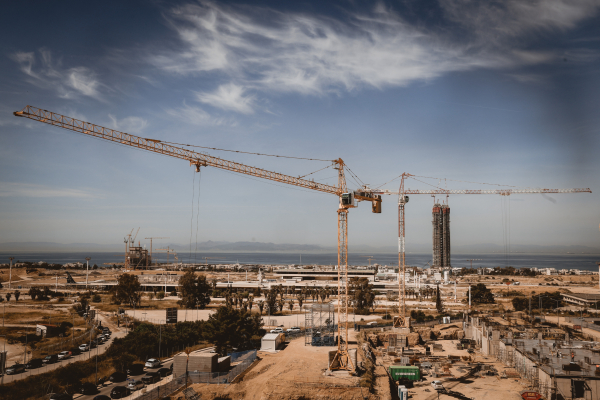
The current investment boom is concentrated heavily in construction and infrastructure, sectors that, while important, do not necessarily strengthen the country’s long-term competitiveness. Far less investment is flowing toward high value-added industries such as technology, research, and innovation. At the same time, exports are growing at a sluggish 1.7 percent annually, a sign that Greece’s productive base remains narrow and is not yet equipped to fully leverage the inflow of capital. Structural weaknesses—including a slow judicial system, persistent bureaucracy, and an unstable tax framework—continue to weigh on investor confidence, particularly among foreign companies assessing Greece as a potential destination.
The broader challenge for Greece is to convert this short-term investment momentum into lasting economic transformation. To do so, the country would need to channel more resources into innovation, outward-looking sectors, and privately driven projects that create long-term value. For now, however, government policy does not appear to be steering decisively in that direction.