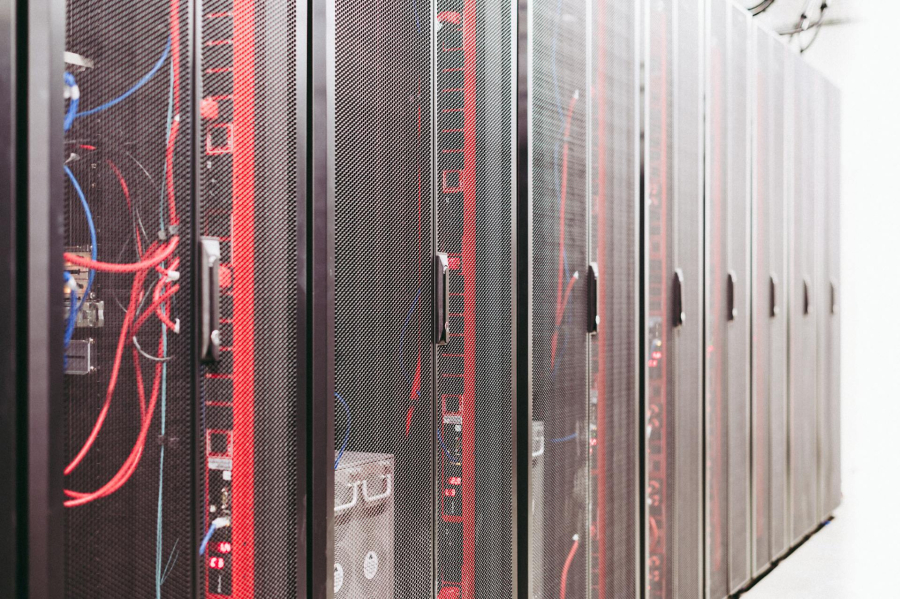

The worldwide explosion of Artificial Intelligence (AI) is transforming the foundations of the global economy, driving unprecedented demand for energy, data, and advanced digital infrastructure. As AI systems expand and cloud services become ubiquitous, data centers have emerged as some of the fastest-growing electricity consumers anywhere in the world. They now function as the backbone of AI models, digital platforms, and the broader computational ecosystem. In this rapidly shifting environment, Greece is positioning itself to avoid being left behind. Building robust computing infrastructure and participating actively in the new digital economy are becoming essential not only for the country's technological progress, but also for its long-term competitiveness, its ability to attract international investment, and the creation of skilled, future-focused jobs.
One of the clearest signs of this shift comes from Greece’s Public Power Corporation (PPC), which is reshaping its strategy for the AI era. The company is moving beyond its traditional role as the nation’s primary electricity producer and distributor and is now planning the development of a network of interconnected data centers across Greece, Romania, and Italy. These facilities are designed to operate like “digital power units,” drawing on green energy resources and relocating computing workloads depending on the availability of renewable power. This approach enhances sustainability, reduces operational costs, and increases Greece’s attractiveness as a destination for global digital and technological investment. For the Greek economy, the implications are significant: entry into a booming global market worth billions, modernization of national infrastructure, and the possibility of becoming a critical data and technology hub in Southeastern Europe.
This strategic direction becomes even more compelling when viewed against the backdrop of the global AI race. Around the world, governments and corporations are investing heavily in massive computational capabilities. Data centers are expanding so rapidly that their energy consumption rivals that of small cities. Tech giants such as Amazon, Microsoft, and Google are among the world’s largest buyers of renewable energy, influencing where new solar and wind farms are built simply by the scale of their computing needs. Meanwhile, countries like France and China are channeling tens and even hundreds of billions of euros into AI and semiconductor capacity, while the United States imposes stringent restrictions aimed at controlling the global supply of high-end chips.
Yet this competition extends far beyond software and algorithms. It encompasses critical raw materials—including gallium, germanium, copper, and rare earth elements—that are vital for manufacturing chips and advanced computing systems. With much of the global production concentrated in China, recent export restrictions have triggered international concerns and driven prices upward. At the same time, the vast quantities of water and electricity required to cool data centers are becoming contentious issues in regions such as the United States, Spain, and Singapore, where citizens and policymakers are demanding greater transparency and stricter environmental safeguards.
In this landscape of geopolitical tension, resource competition, and technological acceleration, Greece’s effort to anchor itself in the emerging AI-driven economy reflects both an economic imperative and a strategic opportunity.