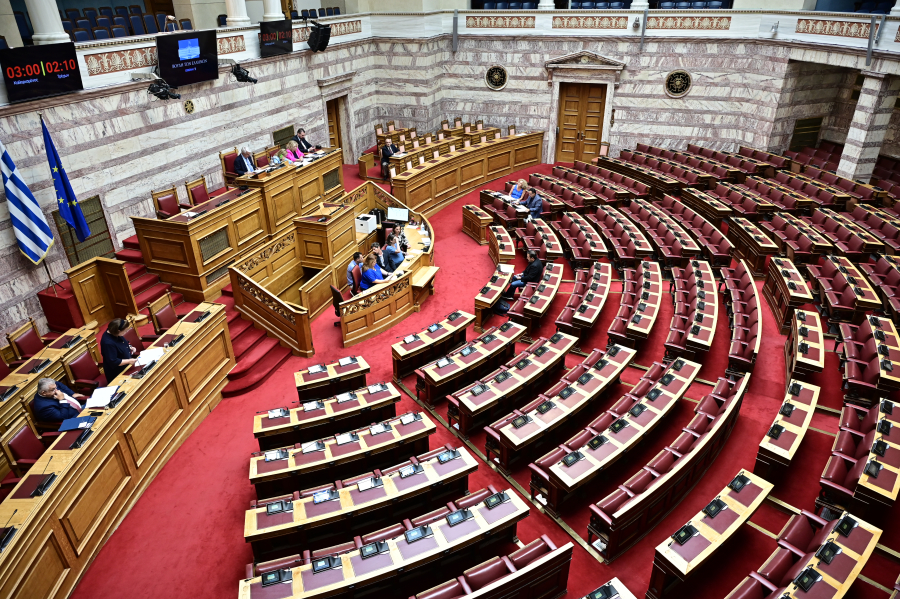

The findings suggest that most Greeks expect a hung parliament and are largely unconcerned by that prospect, even as the country’s political parties remain reluctant to discuss coalition options.
The poll, conducted by Prorata, reflects a political landscape that has been fragmented for months. The governing New Democracy party maintains a clear lead over all competitors but remains far from achieving a majority on its own. Meanwhile, no opposition party has demonstrated the strength or political momentum needed to challenge the government’s dominance.
Despite the likelihood of a fractured outcome, political parties continue to avoid serious discussion of cooperation. The government repeatedly presents itself as the only stable governing option, while opposition parties focus more on expressing dissatisfaction with the status quo than on preparing for shared governance. As a result, coalition scenarios remain largely theoretical within the political class.
Voters, however, appear less anxious than the political rhetoric might suggest. According to the survey, the majority of respondents are not worried at all about the possibility that no government will emerge from the elections. Only a minority express concern about such an outcome, and most of those are already aligned with the ruling party.
Levels of worry differ sharply across party lines. Supporters of New Democracy are significantly more anxious about a potential deadlock, while voters of PASOK and SYRIZA show far less concern. The data indicates that much of the electorate assumes that, even without a majority, some form of solution will emerge — whether through a coalition agreement or a return to the polls. It also suggests that many voters fear an undesirable government more than a temporary period of political uncertainty.
Analysts observing the results point to a broader contradiction in public sentiment. Many voters believe the government has reached the end of its cycle, yet the same voters do not view any other party as a convincing alternative. The survey reflects a wider erosion of trust in the political and party system, reminiscent of the anti-establishment mood that emerged during Greece’s turbulent years of 2011 and 2012. Although today’s economic conditions differ, financial pressure through declining purchasing power continues to fuel frustration.
When respondents were asked about preferred governing combinations, none of the proposed coalition arrangements attracted substantial support. A potential PASOK-led alliance with center-left partners received modest backing, as did a New Democracy-led coalition with parties on the right. A partnership between New Democracy and PASOK received even less support. The largest share of respondents rejected all proposed scenarios entirely, highlighting a deeper skepticism toward the options currently available.
Preferences within party electorates underline the difficulty of forming a stable coalition. New Democracy voters are split between leaning toward PASOK or toward smaller right-leaning parties. SYRIZA supporters strongly favor cooperation with the New Left and PASOK. PASOK’s base is divided, with significant portions favoring alignment with either SYRIZA or New Democracy. These divisions reflect the broader fluidity and uncertainty across the political spectrum.
The survey indicates that any viable governing formula is likely to require participation from at least one of the two largest parties — New Democracy or PASOK. This structural reality is expected to remain constant as Greece moves toward the next election.
At the same time, only New Democracy appears to be pursuing a comprehensive strategy to consolidate its electorate, particularly on its right flank. Whether this strategy succeeds may depend on how widespread the public’s desire for political change becomes. In the absence of a strong alternative, political figures outside the current leadership are attempting to position themselves as fresh options.