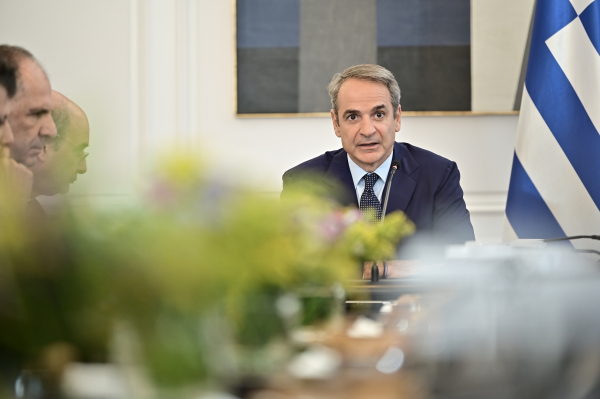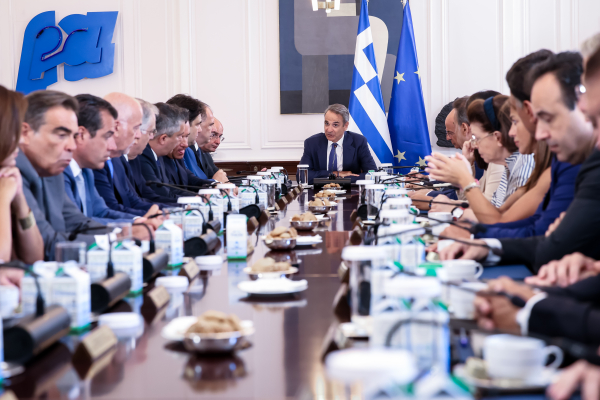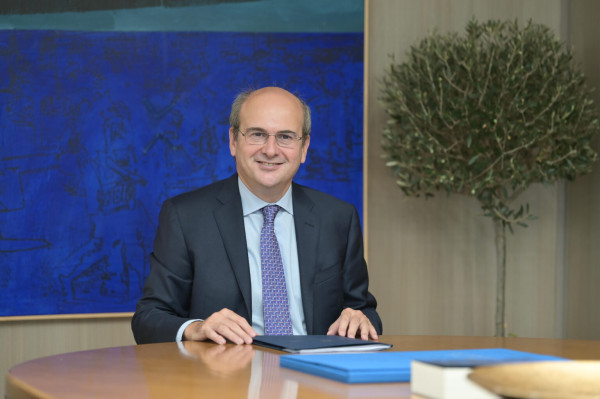
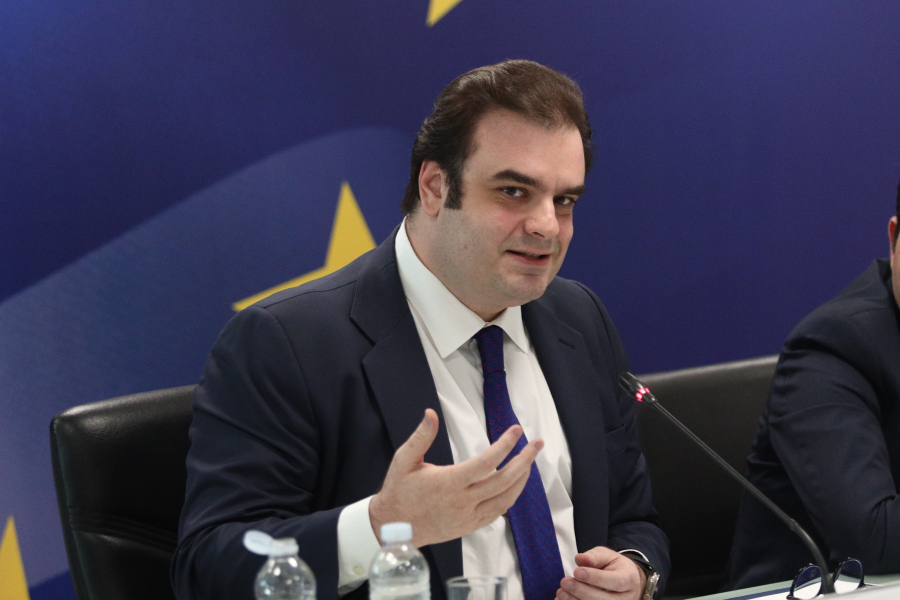

At the presentation of Greece’s 2026 draft budget on Thursday, Finance Minister Kyriakos Pierrakakis described the country’s sharp reduction in public debt as “the achievement of a generation,” a phrase he used to underline the scale of Greece’s fiscal turnaround after fifteen years of crises. Speaking at a press briefing, he stressed that the steady easing of the debt burden is far more than an accounting milestone; it reflects a collective effort that has led the country into a new phase of economic normalisation.
According to the budget’s projections, Greece’s General Government debt is expected to decline to €362.8 billion, or 145.9 percent of GDP, by the end of 2025, down from €364.97 billion (154.2 percent of GDP) this year. In 2026, debt is forecast to fall further to €359.3 billion, corresponding to 138.2 percent of GDP. This marks the sixth consecutive year in which Greece has recorded the steepest debt reduction in the European Union, with the debt-to-GDP ratio projected to fall below the 140 percent threshold for the first time since 2010.
Pierrakakis was also asked about the possibility of running for the presidency of the Eurogroup, a role soon to be vacated by Ireland’s Paschal Donohoe. While he avoided any commitments, he acknowledged that such a prospect is “extremely honourable” for Greece and indicative of the credibility the country has rebuilt. He spoke warmly of Donohoe, calling him “a friend of Greece,” and noted the central role the Eurogroup plays in shaping Europe’s economic direction. Still, he cautioned that any discussion about a potential candidacy is premature, as consultations would first take place among EU leaders and within the European People’s Party.
Deputy Minister Thanasis Petralias explained that Greece’s fiscal space for 2026 is already fully allocated, though room for additional measures is expected to expand to around €900 million in 2027. The government projects a primary surplus of 3.7 percent of GDP in 2025 and 2.8 percent in 2026, while the overall balance is estimated at 0.6 percent and -0.2 percent respectively. The budget report also foresees an acceleration of economic growth in 2026, with GDP expected to rise by 2.4 percent—marking the sixth consecutive year of growth above 2 percent and signalling what the government sees as a stable recovery supported by a stronger productive base.
The draft budget consolidates the government’s recently announced tax and social policy measures, with an emphasis on easing the burden on the middle class, families, and young people. It includes changes to Greece’s income tax scale, the phased abolition of longstanding pension disparities known as the “personal difference,” wage increases for several categories of public-sector workers, and measures to cut property taxes in small settlements from 2027. The package also introduces tax incentives for strategic investments, benefits for large families and young workers, and further reductions in imputed living-expense criteria that have long been criticised as outdated.
Pensioners are set to receive increases based on inflation and growth, with a significant share of the raise no longer offset by the personal difference starting in 2026. That mechanism will disappear completely in 2027. Public-sector wages will also rise from April 2026. In housing policy, the government plans rent-containment measures, incentives to bring vacant homes onto the rental market, an extension of VAT suspension on new construction, tighter rules for short-term rentals in Athens, and a new framework to expand social housing.
On the investment front, the government is increasing the national component of the Public Investment Programme by €500 million and expanding access to financing tools such as InvestEU and TEPIX III. New super-deductions aim to encourage investment in strategic sectors including defence, automotive manufacturing, and aerospace. Altogether, measures to stimulate investment exceed €1.7 billion.
Additional initiatives range from abolishing a 10 percent levy on pay-TV subscriptions to increasing conscript allowances, supporting new mothers who are self-employed, launching a Pharmaceutical Innovation Fund, and granting income-tax exemptions to charitable institutions. The overall cost of all interventions is projected at €3.04 billion in 2025, rising to €5.94 billion in 2026 and €7.94 billion in 2027.
Pierrakakis concluded that the 2026 budget seeks to maintain Greece’s hard-won economic stability while opening a new phase of social support and growth. Despite persistent global uncertainties, he argued, the Greek economy now faces a landscape rich with new opportunities.