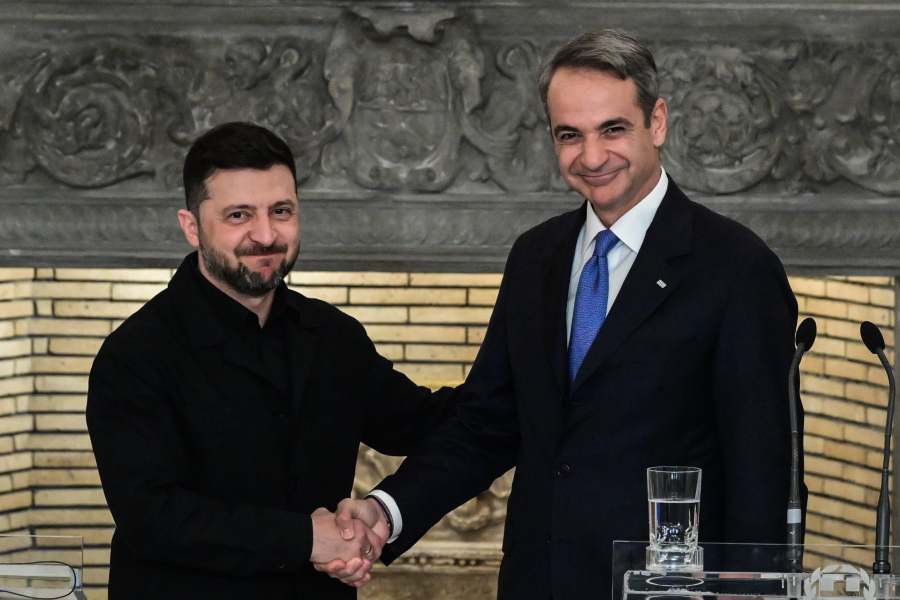

This is why the document is framed as a “Declaration of Intent” rather than a binding agreement.
Turning this declaration into a functioning supply route for the Ukrainian market requires a sequence of operational, technical, and commercial steps that remain insufficiently prepared. The broader landscape complicates matters: Atlantic–See LNG Trade platform — the newly established DEPA Commercial–AKTOR joint venture —, long-term contractual commitments with the U.S. supplier Venture Global, the need to secure an LNG carrier fleet, and the not-yet-fully-developed “Vertical Corridor” that links the LNG infrastructure of Greece, Bulgaria, Romania, Moldova, and Ukraine. Taken together, these factors reveal how difficult it will be to move from political announcement to real-world execution.
Atlantic–See LNG Trade, the commercial vehicle meant to handle deliveries of U.S. LNG to Ukraine, is still in its infancy—it was founded only 13 days ago. The long-term Venture Global contracts do not begin until 2030, while the Naftogaz agreement concerns the winter of 2025–2026. This timing mismatch means the required gas volumes would need to be sourced on the spot or short-term market. Doing so introduces significant commercial risk, as it requires reliable shipping capacity, secured regasification slots, and ample financing—none of which are yet firmly in place.
Compounding the challenge is the fact that the company’s planned proprietary fleet of four LNG carriers—central to ensuring sustainable and cost-controlled operations—will not be available any time soon, given that constructing such vessels typically takes 30 to 36 months. To meet the needs of the 2025–2026 winter period, the company would therefore have to rely on short-term charters or partnerships with existing fleets, increasing costs and narrowing profit margins.
Operational hurdles also remain. Routing LNG northward requires seamless technical coordination among the gas transmission operators of Greece, Bulgaria, Romania, Moldova, and Ukraine. While cooperation is progressing, parts of the interconnecting network still do not operate with the stability or capacity needed for peak winter demand. Greece, in particular, would have to manage higher flows through its LNG terminals at Revithoussa and Alexandroupoli during a period when Balkan demand remains volatile, increasing the risk of bottlenecks in the region.
Taken as a whole, these constraints suggest that the DEPA Commercial–Naftogaz “Declaration of Intent” may, for the foreseeable future, remain largely aspirational rather than an actionable plan for gas deliveries to Ukraine.