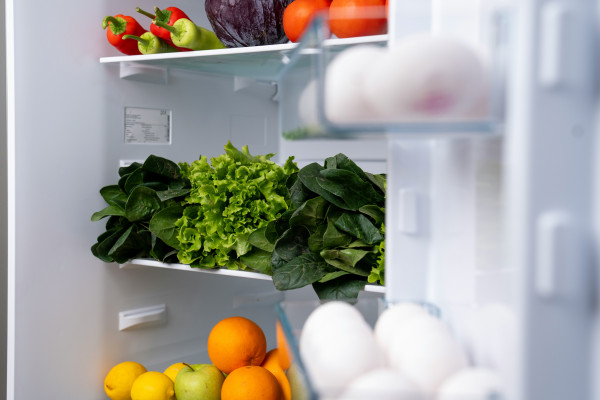


Consumers in Greece are paying increasingly high prices for fruit, vegetables and meat — a clear sign that the country has lost the battle at the supermarket shelf. At the same time, farmers and livestock breeders say their incomes are shrinking, while domestic agricultural production has fallen by as much as 50 percent. This reveals an even deeper problem: Greece is losing the battle in the fields as well. Illegal relabelling of imported livestock and even apples as Greek, fragmented farmland, an ageing rural population and chronically weak cooperatives all contribute to the soaring prices of basic foods.
The decline in production, combined with greater reliance on imports, has left the country vulnerable to disruptions in global supply chains. Whether caused by wars or extreme weather — the latter expected to intensify due to climate change — such disruptions directly affect the Greek market. When the war in Ukraine broke out in 2022, for example, Greece suddenly faced the threat of flour shortages, prompting supermarkets to impose purchase limits. Only a few decades earlier, before joining the European Economic Community, Greece grew far more soft wheat, which is used to make bread flour. Today, however, domestic production covers only a fraction of national needs, forcing the country to import more than a million tonnes each year. Durum wheat, used primarily for pasta, is abundant, but that does little to address the shortage of bread-making flour.
Beef prices have also surged, rising by around 50 percent in just one year. Premium cuts now sell for up to €20 per kilo at local butcher shops. Greece has never been fully self-sufficient in beef, but in the 1980s, domestic production met more than half of demand. Over the past decade alone, production has fallen by 30 percent. As a result, the country now imports large volumes of beef, mainly from France, Germany and the Netherlands.
Yet Greece’s food inflation cannot be explained solely by reduced production or reliance on imports. What makes the situation more puzzling is the frequent appearance of double-digit price increases even for fruits and vegetables that are in season and grown domestically. The country consistently records a trade surplus in fresh and frozen produce, exporting more fruit and vegetables than it imports. Still, imports of such goods have more than doubled over the past ten years, partly because of increased demand driven by tourism, but also due to declining Greek output.
While it is natural for Greece to import tropical fruits, the domestic market has become saturated with Egyptian potatoes, Austrian onions, Turkish tomatoes, Egyptian oranges and apples from North Macedonia. These products often arrive at lower wholesale prices than Greek ones. However, once they are illegally “Greek-labelled,” their retail prices rise significantly, ultimately burdening the consumer. Meanwhile, much of Greece’s own high-quality produce is exported, where producers secure better prices and more reliable payment terms than those typically offered by large Greek supermarket chains — creating a striking paradox in which both Greek consumers and Greek farmers lose out.
Compounding the problem are cases where imported produce is re-exported as Greek, without meeting phytosanitary standards. Such practices harm consumer interests, undermine legitimate farmers and damage the reputation of Greek agricultural products abroad.
The result is a dysfunctional system in which the Greek market is filled with imported produce — from Egyptian potatoes to Turkish tomatoes — while domestic farmers struggle and consumers pay some of the highest prices in Europe. In 2024 alone, Greece imported roughly 117,500 tonnes of fresh and frozen beef, mainly from France and, to a lesser extent, from Germany and the Netherlands. It is a paradox emblematic of a broader failure: losing the battle both at the supermarket shelf and in the field.