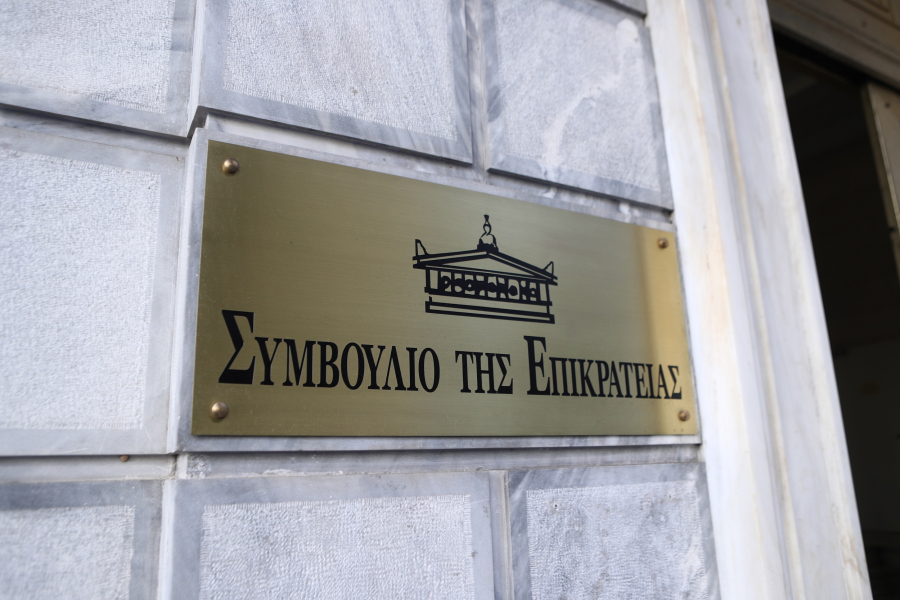
A few months after Greece’s Council of State issued a landmark ruling in favor of PASOK leader Nikos Androulakis over the wiretapping scandal - finding that he should have been informed of the national-security grounds used to justify surveillance of his phone - the country’s top administrative judges are once again confronting the same affair. This time, the case concerns investigative journalist Thanasis Koukakis, who was monitored by the National Intelligence Service (EYP) and whose phone was also infected with Predator, the spyware marketed by the company Intellexa.
On Friday, the Council of State heard Koukakis’ petition to be granted access to the reasons behind the decision to lift the confidentiality of his communications. During the hearing, presided over by judge Michalis Pikramenos, the court’s rapporteur revealed a striking development: EYP informed the court that it could not locate the agency’s 2020 surveillance requests - documents that led prosecutors to authorize the monitoring of Koukakis’ phone. According to EYP, these requests «were not found in the searches conducted by the current leadership and are therefore not in its possession».
The discussion repeatedly returned to the court’s previous ruling in the Androulakis case, which held that a blanket ban on notifying individuals that they had been subjected to surveillance - even after the measure has ended and even when national security concerns no longer apply - violates Greece’s constitution and European privacy protections. The judges concluded in that earlier decision that such a prohibition constitutes a disproportionate infringement on the inviolability of communications.
Adding further weight to the unfolding scandal, new testimony emerged the same day before an Athens court hearing a separate case involving Predator spyware. A former EYP officer, who is herself among the alleged victims of unlawful surveillance between 2019 and 2021, testified that attempts were made to compromise her phone not only through deceptive text messages but even via Signal, an encrypted messaging application widely considered one of the most secure. She described seven unsuccessful attempts to lure her into clicking a malicious link. When she ignored them, a similar message was eventually sent to her through Signal. «They were waiting for a human mistake», she said, explaining the persistence of the attempts.
The witness, who had previously worked in counterintelligence, served at the Turkish Consulate, and later became a regional EYP director, suggested that the surveillance attempt may have been connected to legal actions she had undertaken both personally and professionally. Her testimony came in a trial involving four individuals associated with Intellexa and the Predator spyware: Yiannis Lavranos, Felix Bitzios, Tal Dilian, and Sara Hamou.
The dual proceedings - one before Greece’s highest administrative court, the other in a criminal courtroom - underscore how the country’s spyware and wiretapping scandal continues to reverberate, raising questions about accountability, state surveillance, and the security of even the most trusted encrypted technologies.