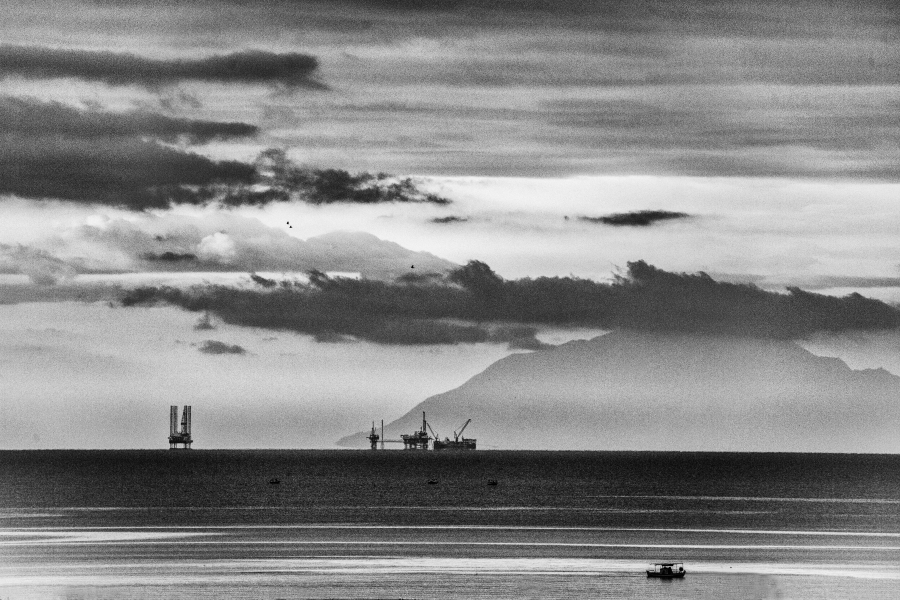
A draft bill from Greece’s Environment and Energy Ministry on the capture, use, transport and storage of CO₂, currently under public consultation, effectively clears the way for the geological storage project in the Prinos field off Kavala. For the first time, Greece is introducing a comprehensive regulatory framework that fills a long-standing institutional gap which had delayed the licensing and financing of such projects.
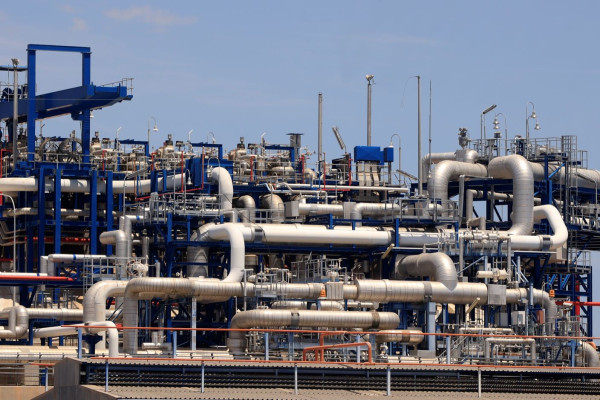
The new rules are particularly significant for EnEarth, a subsidiary of Energean, which aims to build the country’s first large-scale CO₂ storage hub. The bill outlines the entire licensing process, sets out the required technical studies, defines monitoring responsibilities and establishes the operational rulebook for a storage facility. It also appoints the Hellenic Hydrocarbons and Energy Resources Management Company (EDEYEP) as the authority responsible for supervising every stage—from exploration through to the operation of the infrastructure.
For EnEarth, this legal framework is crucial. The company has already completed exploration of the site, applied for a storage permit and is now formally positioned to claim the operating rights. The bill even grants priority to the entity that conducted the initial exploration—in this case EnEarth—provided it meets the necessary technical and financial conditions.
The legislation also unlocks access to European financing. The European Union only funds CO₂ storage infrastructure in countries that have adopted complete rules on safety, monitoring and operations. By meeting these criteria, the Prinos project can now seek inclusion in EU support programs—an essential step for a development valued at more than €1 billion, which cannot advance without substantial European funding.
Beyond the storage site itself, the bill establishes the regulatory framework for transporting CO₂ from other industries, sets the principles for pricing storage services and guarantees third-party access to the infrastructure. The intention is to ensure that the Prinos facility becomes an open industrial hub rather than a closed, proprietary system.
At the same time, the bill reflects a model of economic intervention that will feel familiar to observers of Greece’s recent past. Despite its environmental purpose, the legislation embeds mechanisms that amount to another form of state-dependent capitalism. Three key articles create avenues for state support not only for CO₂-emitting industries but also for the companies that will build and operate the storage networks. The result is a system in which the government assumes significant parts of the financial risk.
One provision allows the state to compensate polluting industries when carbon prices in the European market fall. If the price drops, the government covers part of the difference to ensure companies maintain their CO₂-capture investments. In practice, when the market signals that the green transition is uneconomic, the state intervenes to keep the business model afloat. Should carbon prices rise again, a clawback mechanism theoretically returns money to the state, though such mechanisms have historically functioned slowly and unevenly.
A similar approach applies to the companies that will build transport pipelines and storage infrastructure. The state can fill financing gaps in these projects—even when the facilities are privately operated. The bill includes a clawback here as well, but the conditions for triggering it remain vague, raising the possibility of substantial public subsidies for investments that would otherwise fall under normal private-sector risk.
The picture is completed by the creation of a Special CCS Account, into which public funds, fines, fees and clawback proceeds will flow. This account will finance subsidies to industries, support for storage infrastructure and even the operating expenses of the regulatory authority.