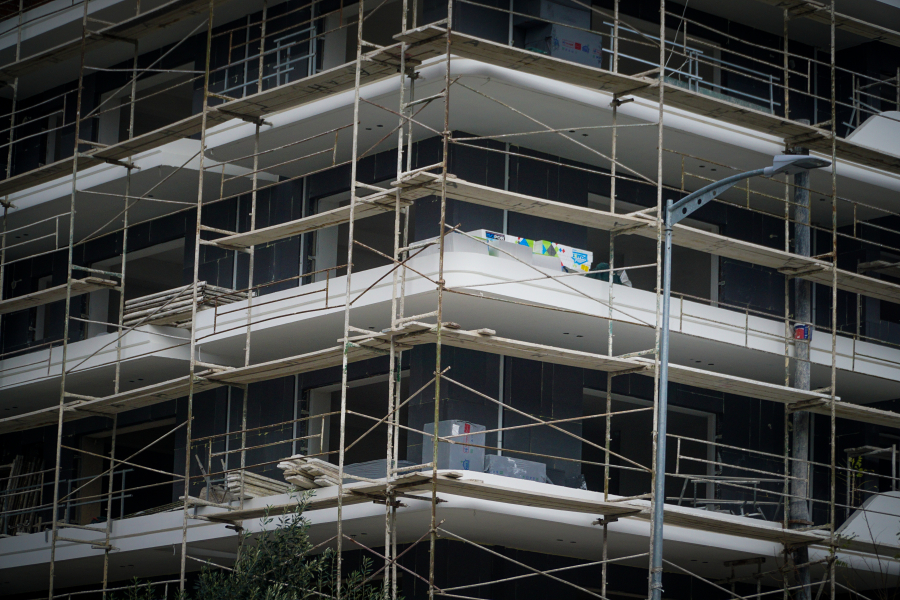

The problem intensified late last year when the country’s highest administrative court struck down key development incentives contained in the New Building Regulation, effectively freezing permit approvals for several months until the government introduced a new framework.
Fresh data from Greece’s statistics authority show the impact clearly. Between January and July, authorities issued just 20,946 permits for new homes nationwide—a drop of 26.6 percent compared with the same period a year earlier. Even in Attica, the country’s largest urban region, permits fell by 15.5 percent. This slowdown compounds a long-term decline: from 2011 to 2021, Greece built far fewer new homes than in the decade before the financial crisis.
Yet even as supply lags, a significant share of the country’s existing housing stock lies unused. Out of Greece’s 6.6 million homes, 2.28 million are recorded as vacant, with more than half a million located in Greater Athens. Research from the Athens University of Economics and Business indicates that four in ten homes built after 2011 are still sitting idle, while the vast majority of vacant properties—86 percent—were constructed before 2000 and often require upgrades.
The government has rolled out various measures in recent years to stimulate construction and bring dormant properties back to market, but their effect has been limited. Officials are now preparing a new set of incentives aimed especially at small property owners. The main proposal involves lowering taxes on rental income up to €12,000 to encourage owners to lease currently closed homes. They are also considering extending a three-year tax exemption for newly leased properties that have not been on the market. Additional plans include subsidies for renovations and further support for renters.
A more forceful measure is due early next year: banks and loan servicers that keep properties unused in their portfolios will face a doubled property tax. Once detailed rules are issued, Greece’s revenue authority will identify vacant assets held by financial institutions and impose the higher levy.