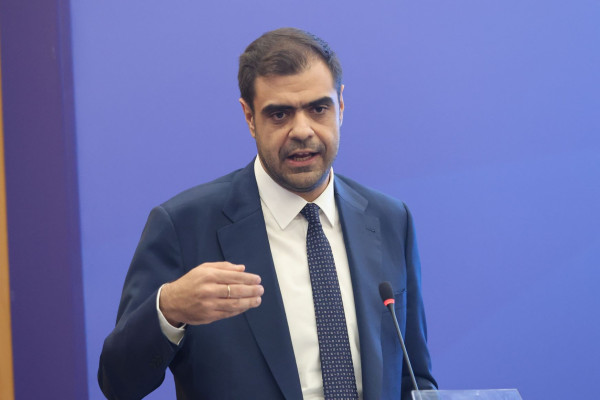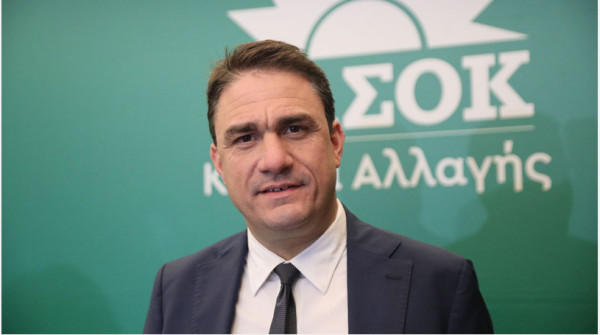

Greece’s Ministry of National Economy and Finance Kyriakos Pierrakakis has made clearing overdue public sector debts to individuals and businesses a top priority, calling the persistent backlog a chronic problem that drains market liquidity and undermines confidence in the state.
Since taking office in March, the ministry’s leadership has treated the issue as urgent. A task force has been established to analyze the causes of payment delays, and a new digital platform—developed with the General Secretariat for Information Systems—now allows citizens and companies to submit invoices electronically to public bodies.
According to the ministry, a comprehensive analysis of data will by early 2026 provide a clear picture of which entities are responsible for overdue payments, the size of their obligations, and the reasons for the delays. Entities that repeatedly fail to meet their obligations will face stricter supervision, and their data will be made public on a regular basis. The ministry says the goal is to strengthen transparency, accountability and consistency in state payments.
Speaking on Tuesday on SKAI television, Finance Minister Kyriakos Pierrakakis said tackling arrears has been a key focus since the start of his tenure. “This has been a major concern for me and my team from the beginning,” he told journalists Dimitris Oikonomou and Akis Pavlopoulos. “We created a technical task force to collect and process data. From my time as Minister of Digital Governance, I learned that what you can’t measure, you can’t reform—or even manage. So now we’re measuring every invoice and tracking every public entity.”
Despite these efforts, Greece’s public sector arrears rose again in August, reaching €3.88 billion from €3.54 billion in July, according to the ministry’s General Government Bulletin. The €341 million increase was mainly driven by delayed tax refunds, which rose by €196 million to €928 million.
Hospitals remain the weakest link, with unpaid obligations climbing to €1.63 billion in August from €1.5 billion in July. The National Organization for Healthcare Services (EOPYY) also saw arrears increase to €305 million from €271 million. Total overdue liabilities of social security funds rose to €651 million, while local government debts reached €251 million.
Pierrakakis said the government will soon publish detailed information on overdue payments. “The public will know exactly which state body is delaying payments—and why,” he said.