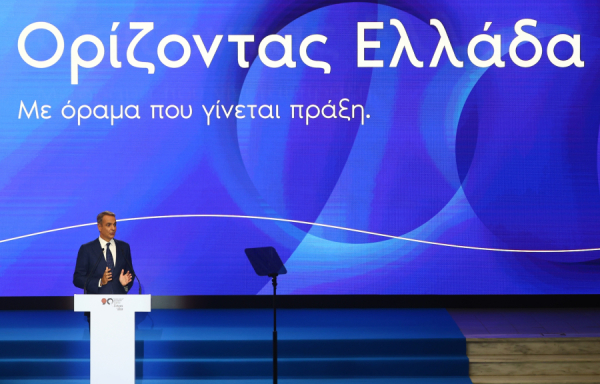
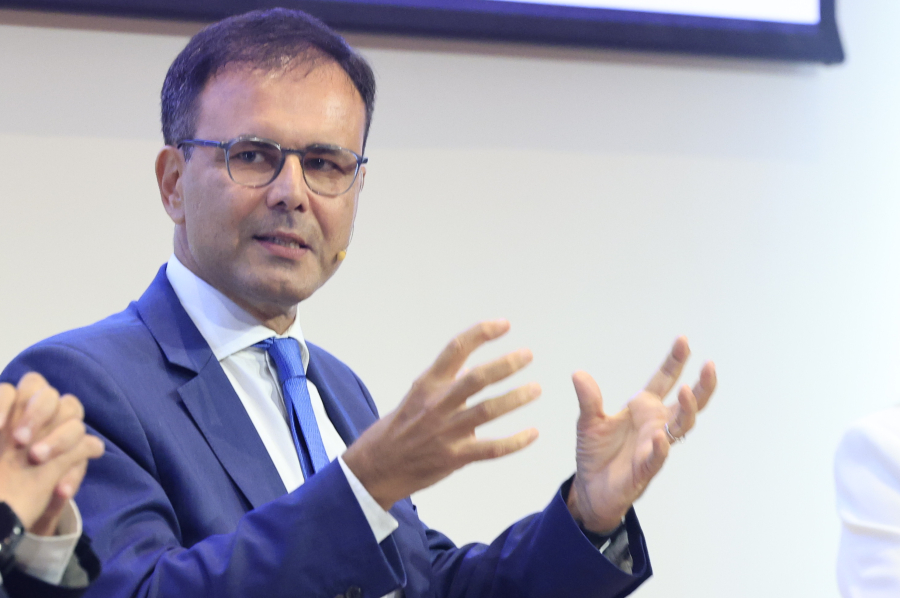

Alexis Patelis, former Chief Economic Adviser to Prime Minister Kyriakos Mitsotakis, unveiled his new book The Great Return: Greece’s Road to Credibility at the Onassis Foundation Amphitheatre of the National Gallery.
The event was attended by Prime Minister Mitsotakis himself, former President of the Republic Katerina Sakellaropoulou, former caretaker Prime Minister Panagiotis Pikrammenos, Deputy Prime Minister Kostis Hatzidakis, numerous ministers, lawmakers, and leading business executives.
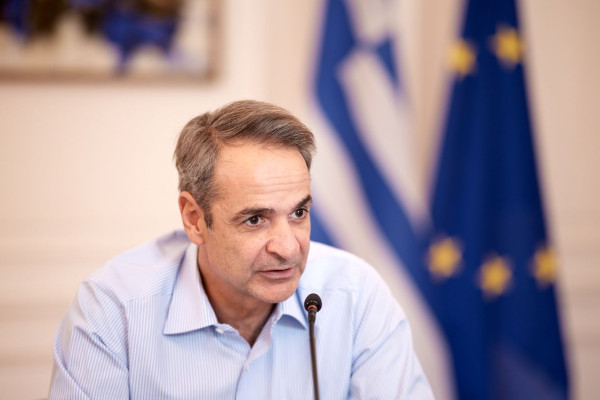
In his address, Mitsotakis praised Patelis as “one of the silent protagonists of Greece’s economic recovery,” crediting him with playing a key role in restoring the country’s reputation after a decade of turmoil. “Everything we achieved, we achieved through planning, hard work, and persistence,” the Prime Minister said, emphasizing that Greece’s transformation since 2019 was not accidental but the result of collective effort and consistent policy.
Asked whether Greece could face similar crises again, Mitsotakis expressed full confidence in the Greek people. “As I trusted them in 2023, when they reaffirmed our government’s work through their vote,
I continue to trust their judgment. Citizens see, evaluate, compare, and remember,” he remarked. Describing the event as “warm, beautiful, and moving,” he added that the book vividly captures Greece’s path to rebuilding trust through a series of unprecedented challenges—from the pandemic and energy shock to inflation and natural disasters. “It reminds us where we started, where we are now, and where we want to go,” he said, calling the book “a valuable reflection on the country’s resilience and future challenges.”
The audience of more than 300 people included central bankers, senior government officials, and business leaders. Among them was Bank of Greece Governor Yannis Stournaras, who described The Great Return as “a testament to strategy—how, after a decade of deep crisis, Greece regained its credibility, its voice, and its place in Europe and the world.” He called it an important contribution to the study of Greece’s modern economic history, noting that it “shows how real economic policy is built on trust, not declarations.”
Columnist and author Rea Vitali focused on the book’s tone and accessibility, describing Patelis’ writing as “cinematic, sharp, and disarmingly humorous.” She said the book “helps citizens understand the country’s economic journey, making complex ideas engaging and clear.”
Marialena Athanasopoulou, Deputy Head of Economic Risk Analysis at the European Stability Mechanism, identified three pillars of Greece’s recovery highlighted in the book: political stability, fiscal discipline combined with reforms, and the credibility of the officials representing the country abroad.
Journalist Makis Provatas, who moderated the discussion, described the work as “a reference point for how economic history should be written—rigorous, yet accessible to a broad audience.”
Closing the evening, Patelis said the book tells “the story of Greece’s comeback.” Reflecting on his years in government, he shared a personal moment from March 2024 in Montreal, when a Greek-
Canadian woman thanked him, saying, “You made me proud again to be Greek.” For Patelis, that moment symbolized what the book represents. “True patriotism,” he said, “is not about slogans or nostalgia. It is about helping your country become stronger through your actions.”