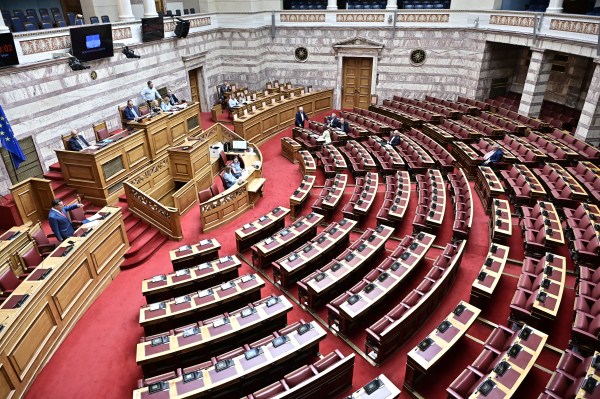

The Holy Synod of the Hierarchy of the Church of Greece convened in Athens on Wednesday, October 8, 2025, under the presidency of Archbishop Ieronymos of Athens and All Greece. During its second regular session, the Synod focused on one of the most pressing issues of the modern age: the rise of artificial intelligence and its implications for humanity and faith.
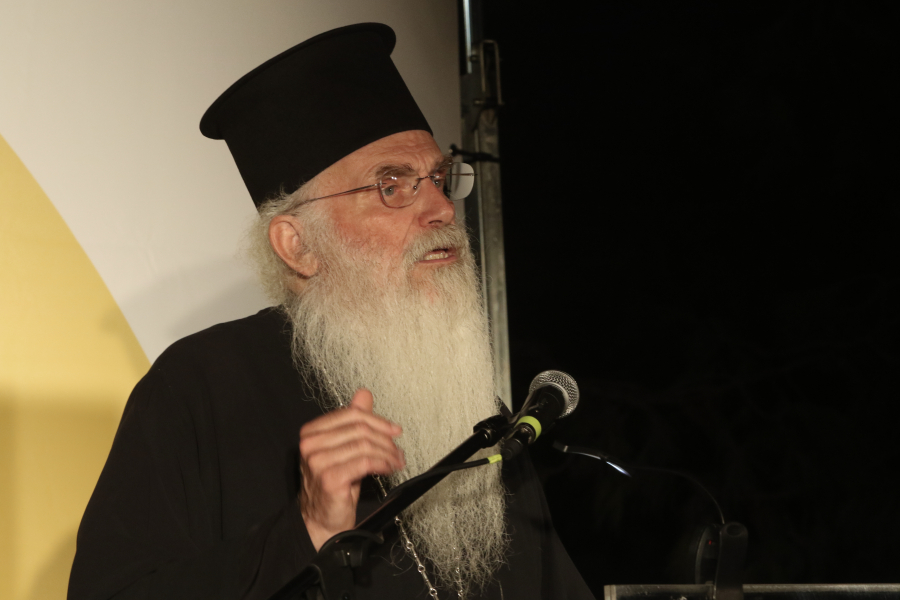
A central feature of the session was an address by Metropolitan Nikolaos of Mesogaia and Lavreotiki, titled “Artificial Intelligence: The Church before the Emerging New Anthropology.” His presentation explored how rapid technological developments are reshaping human identity and how the Church should respond to this profound cultural and philosophical shift.
Metropolitan Nikolaos described artificial intelligence as a defining phenomenon of the era, one that may pose the greatest challenge the Church has ever faced—greater, he said, even than persecution or heresy. While heresies of the past did not deny God’s existence, he warned, the contemporary deification of technology effectively replaces the human mind with machine reasoning and erases God from the human horizon. “The Being ceases to exist, is ignored, and deleted as non-being,” he said. “The human being, created in the image and likeness of God, may soon be incomprehensible to the new, technologically defined person.”
Addressing the Synod, he emphasized that the Church must neither succumb to fear nor indulge in conspiracy thinking about artificial intelligence, but instead seek to understand it deeply—recognizing both its potential and its dangers. He urged the Church to engage with technology responsibly, using it to improve its organization, social outreach, and communication, particularly by empowering younger generations who possess the necessary knowledge and experience.
Metropolitan Nikolaos also called on the Church to develop what he described as its own “algorithm”—a system of moral discernment shaped by Christian teaching and committed to good. He underlined the need for Orthodox theology to be expressed in accessible, contemporary language, while preserving the mystery and sacramentality that define the Church’s spiritual life. Prayer, he reminded his audience, remains the Church’s true voice, a source of illumination and strength in an age of digital noise.
The Metropolitan cautioned that the Church does not exist to reverse technological progress, however troubling its consequences might appear. Rather, its mission is to bear witness to faith, truth, and the enduring hope of the Kingdom of God within history.
Concluding his address, Metropolitan Nikolaos said that the Church’s witness must be credible—its life must correspond to its teaching and the Gospel. “Only then,” he declared, “will the distinctiveness of our message inspire faith and conviction. The renewed human being, transformed by divine grace, is incomparably greater than the product of this emerging new anthropology. Otherwise, artificial intelligence will dominate the world—and even us. Its god will seem more real and more persuasive than ours.”