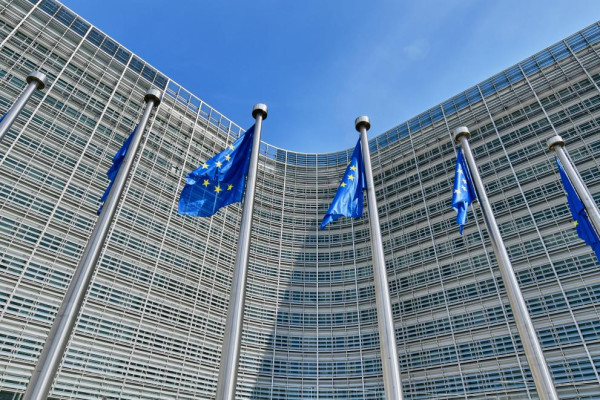
Across Europe, the cost of water is rising as governments race to secure supplies for the future. The modernization of water infrastructure has become a continental priority, with countries investing heavily in new pipelines, networks, desalination plants, and water reuse technologies. These investments are deemed essential as the climate crisis and increasingly extreme weather put mounting pressure on Europe’s water reserves.
The new European water strategy, outlined in “Water Vision 2023” by Water Europe, the EU’s official body for innovation and research on water management, seeks to fundamentally transform how societies use, protect, and value this resource. Under this strategy, water is no longer regarded merely as a commodity priced according to consumption, but as a natural asset with genuine economic, social, and environmental value.
By 2030, Europe aims to enter what policymakers describe as a “smart water era,” in which prices reflect the full cost of the resource — from maintaining infrastructure and protecting sources to mitigating environmental impact and ensuring resilience against drought. The higher bills appearing in several European countries are therefore part of a broader effort to guarantee that water remains clean, available, and sustainable for the generations to come.
This approach is founded on three key principles: security, sustainability, and resilience. It envisions the creation of infrastructure able to withstand extreme weather, the use of multiple sources such as surface water, groundwater, recycled and desalinated supplies, and the deployment of intelligent systems that monitor consumption and leaks in real time. At the same time, European policymakers emphasize that water must remain affordable and accessible, recognizing it as a fundamental human right. This shift in thinking is already shaping national water policies, including in Greece, where the first signs of a water crisis are becoming impossible to ignore.
In Greece, the problem has moved from potential to actual crisis. The region of Attica, home to Athens, is approaching a critical threshold as water reserves in its reservoirs fall sharply. The Mornos reservoir, which provides most of the capital’s water, has lost about 70 percent of its capacity over the past two years. If the current drought continues, experts warn that the metropolitan area could face severe shortages within just two years.
The Greek government has responded by advancing three major projects aimed at reinforcing the national water supply: new groundwater drilling in Boeotia, the construction of a desalination plant in Thisvi, and a large-scale plan to transfer water from Lake Kremasta to the Evinos River. These initiatives, considered vital to preventing water scarcity, are estimated to cost around €700 million and will take years to complete. The Kremasta project, the most ambitious of the three, is not expected to be operational before 2028 or 2029. Meanwhile, the government is also exploring the use of underground reserves in Mavrosouvala and Kopaida.
Progress, however, has been slowed by administrative hurdles. A proposal to establish a unified national water authority has been suspended after resistance from local municipalities. This has highlighted a deeper issue: Greece must adapt the European vision for water management to its own specific needs and governance structure.
The upcoming National Water Plan, expected to be unveiled by the end of October, is meant to provide that direction. It will need to combine investment in infrastructure with fair pricing, efficient management, and policies that promote conservation. Greece faces the dual challenge of modernizing its networks — many of which lose significant amounts of water through leakage — and fostering a new public mindset that treats water as a scarce, valuable resource rather than an unlimited one.
The country’s future water security will depend on how quickly and effectively these reforms are implemented. As Europe collectively transitions toward smarter, more sustainable management of its water resources, Greece stands at a crossroads. The transformation will not be easy or cheap, but the real question, as many experts now argue, is not whether water will be affordable — but whether it will be available at all.