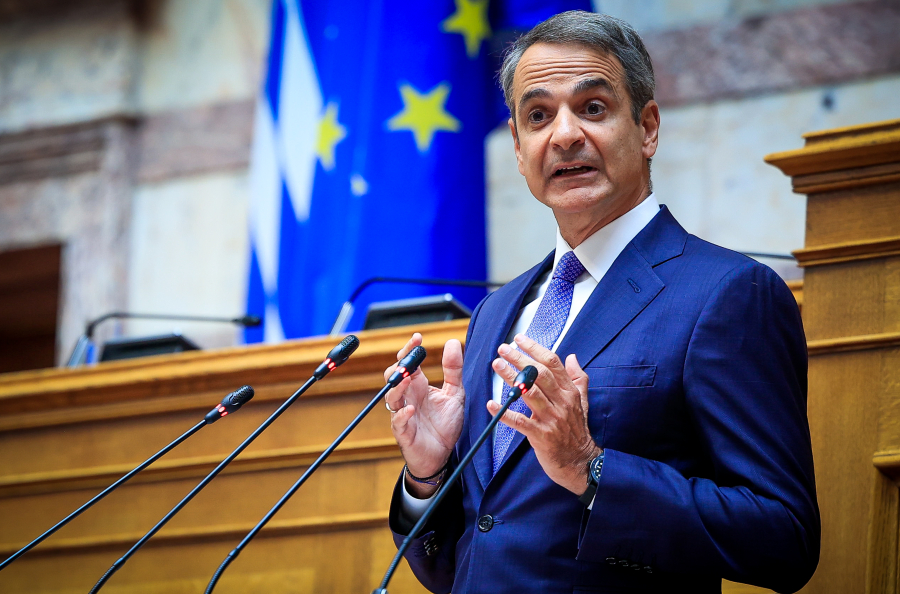

Greek Prime Minister Kyriakos Mitsotakis urged his counterparts not to overlook the continent’s southern borders while reinforcing the east. He linked the security debate to lessons from Ukraine, warning that Europe must not fall behind in defense technology and innovation. He highlighted Greece’s own initiatives, including the creation of the Hellenic Defense Innovation Center.
Danish Prime Minister Mette Frederiksen, hosting the gathering, struck a stark note: “We are in the most difficult and dangerous situation since World War II – not since the Cold War,” she told leaders as they arrived. The meeting came days after hybrid attacks on European airports and Russian airspace violations from the Baltics to Romania.
One key focus was a European Commission plan to provide €140 billion in loans to Ukraine, backed by frozen Russian central bank assets held in Brussels. The proposal has gained traction since Donald Trump’s decision to halt direct U.S. aid, forcing Europe to bear more of the burden. Frederiksen said Russia “must pay a heavy price” for its aggression, while German Chancellor Friedrich Merz also endorsed the idea, reversing earlier German hesitation.
Yet France, Belgium, and Luxembourg raised legal concerns. President Emmanuel Macron stressed the need to uphold international law to keep Europe a reliable financial hub. Moscow denounced the plan as “illegal theft,” with Kremlin spokesman Dmitry Peskov warning of prosecutions.
Defense strategy also divided leaders. Commission President Ursula von der Leyen’s proposal for a European “Drone Wall” along the bloc’s borders drew skepticism from France and Germany, which favor early-warning systems, long-range strike capabilities, and air defense. Poland and the Baltic states, closer to Russia, voiced strong support. Italy’s Giorgia Meloni and Greece’s Mitsotakis warned that Europe must not neglect threats from the south.
Away from defense, European Council President António Costa floated changing EU rules to bypass Hungary’s veto on Ukraine’s membership talks. But the idea met resistance from France, the Netherlands, and Greece, wary of giving up their own veto powers.