
What was once a distant projection has become an undeniable reality, reflected in Eurostat’s latest figures. The old-age dependency ratio — measuring the share of people over 65 compared to those of working age — has climbed steadily and sharply over the past two decades, reshaping the social and economic fabric of the continent.
In 2004, the ratio stood at 26.8 percent, meaning there were roughly four working-age citizens for every retiree. By January 1, 2024, the figure had surged to 37 percent, leaving fewer than three workers for each person over 65. The shift is the product of long-term forces: persistently low birth rates, rising life expectancy, and diminished migration flows. Together, they have created a demographic landscape that poses fundamental challenges for Europe’s economies and welfare systems.
The impact is far from uniform. In places such as the French overseas territories of Mayotte and Guyane, or metropolitan Copenhagen, the share of elderly residents remains relatively low. At the opposite extreme lie regions like Veurne in Belgium, Alto Tâmega e Barroso in northern Portugal, and Evrytania in central Greece, where more than 70 percent of the working-age population is matched by those over 65. Such figures underscore the disproportionate burden carried by rural and remote areas, where urban migration and the outward flow of younger generations have hollowed out local populations.
Across the EU as a whole, Eurostat identified 139 regions where the old-age dependency ratio now exceeds 50 percent. Many of these are in Germany and France, but Italy, Finland, Portugal, Bulgaria, Greece, and Spain also record strikingly high numbers. The pattern confirms ageing as a Europe-wide challenge, though its severity differs depending on each country’s social, economic, and geographic conditions.
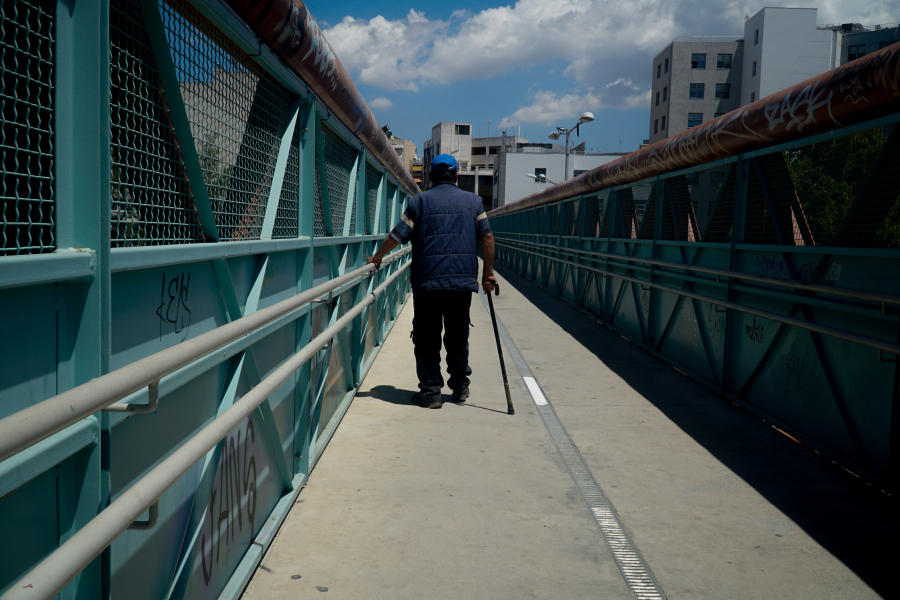
Greece illustrates the pressures particularly vividly. The country currently counts more than 2.5 million pensioners, with over three-quarters drawing old-age benefits. More than 62 percent of recipients are over the age of 71, and more than a quarter are past 81. The highest pensions are collected by those aged 61 to 70, typically beneficiaries with full contribution histories, while older retirees often receive smaller amounts, linked to entitlements secured decades earlier.
The financial strain is evident. In July 2025, Greece’s monthly pension bill exceeded €2.74 billion, covering nearly 4.7 million payments across main pensions, supplementary benefits, and dividends. The majority were old-age pensions, and almost half of all main benefits fell between €500 and €1,000. That range highlights both the modest level of average pension income and its critical role as the primary — and often sole — means of survival for millions of households.