
A leaked draft of the Defence Readiness Roadmap 2030, due to be discussed at the informal European Council in Copenhagen and presented to EU leaders in October, lays out a vision of a “Europe ready by 2030”—capable of deterring and responding to threats without relying solely on outside powers.
The document argues that Europe faces a shifting geopolitical environment: authoritarian states challenge international law, traditional allies shift their focus to other regions, and technology is transforming the nature of warfare. In response, the EU is called to invest massively, swiftly, and collectively in defence, drawing on its economic and technological strength.
The roadmap prioritises closing gaps in key military capabilities to secure full-spectrum defence on land, sea, air, cyberspace and outer space. Air and missile defence, artillery, drones and counter-drone systems, cyber resilience and strategic enablers are highlighted as urgent needs. Member states are urged to form “capability coalitions,” pool resources and pursue joint procurement, reducing costs and ensuring interoperability.
Four flagship programmes are proposed as pan-European shields against common threats. Chief among them is the “European Drone Wall,” a multilayered network to detect and neutralise drones while also developing offensive unmanned systems. The “Eastern Flank Watch” aims to strengthen EU defences on its eastern borders against hybrid threats, drone incursions and challenges in the Baltic and Black Seas. Complementary initiatives include a continent-wide air defence umbrella and a space shield to protect satellites and critical infrastructure.
A strong emphasis is placed on Europe’s defence industry. The Commission stresses that Europe cannot rely on external suppliers for ammunition and equipment, a lesson underscored by the war in Ukraine. Strengthening production lines, supporting innovation in fields such as artificial intelligence, and reducing dependence on rival-controlled raw materials are central goals. A new financing framework foresees more than €130 billion for defence and space, while additional tools will channel billions more into joint procurement. Ukraine is described as a “steel hedgehog” that must be made impregnable to invaders, with multi-year funding, partnerships between Ukrainian and European industries, and a dedicated “Drone Alliance” drawing on Kyiv’s battlefield expertise.
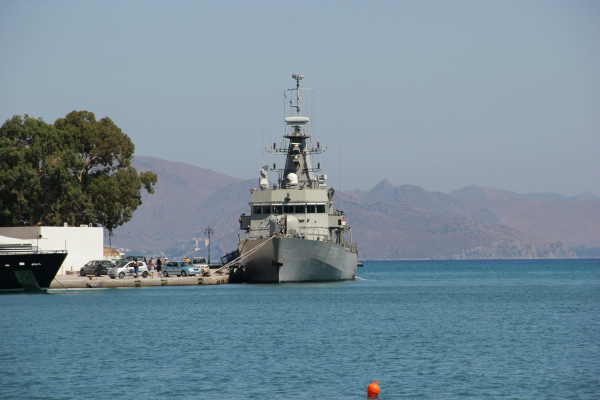
For Greece, the strategy presents both opportunities and challenges. Athens has long argued for a stronger European security presence in the Eastern Mediterranean, and participation in projects such as the drone shield or space defence could bolster its ability to safeguard extensive air and maritime borders in the face of persistent tensions with Turkey. The plan also opens new possibilities for Greece’s defence industry, offering access to European supply chains in sectors like drones, naval systems, cyber defence and artificial intelligence.
Yet the financial dimension looms large. Greece already spends more than 2% of GDP on defence, and the roadmap implies further investment at a time of fiscal restraint. European financing tools could help offset some costs, but much will depend on whether Greek industry seizes the chance to participate in joint ventures. Active involvement could mean jobs, investment and technological growth. Passive reliance on imports, however, risks leaving Athens to foot the bill while others reap the rewards.