
Farmers in Greece are growing increasingly anxious as the prospect of suspended European Union subsidies looms. The crisis centers on OPEKEPE, the Greek agency responsible for managing agricultural payments, which is under intense scrutiny from Brussels following a string of irregularities.
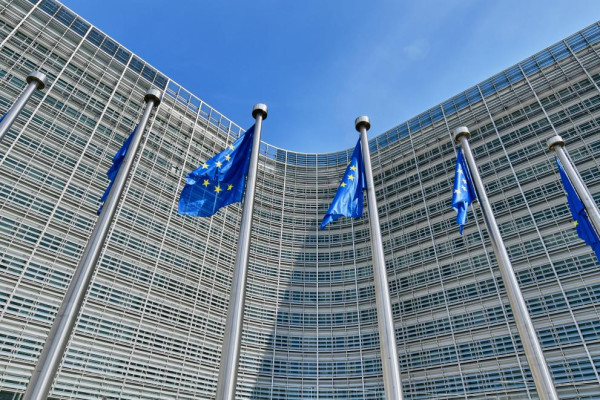
The European Commission has set a firm deadline of October 2 for Athens to present a credible and comprehensive action plan. According to the Commission’s Directorate-General for Agriculture and Rural Development,
Greece’s current proposal fails to address serious deficiencies and does not comply with EU law. Unless the government fully implements the agreed reforms, Brussels has warned it could suspend monthly and interim payments, effectively freezing support for the country’s farmers.
The Greek government insists the funds are not at risk. Agriculture Minister Kostas Tsiaras has argued that the issue lies in updating the action plan, which he says is already being incorporated into the agency’s restructuring.
Still, privately, officials acknowledge the scale of the challenge, with one describing it as “like climbing a mountain.” The government has tasked Deputy Prime Minister Kostis Hatzidakis with coordinating the recovery effort alongside Tsiaras, OPEKEPE, and the Independent Authority for Public Revenue.
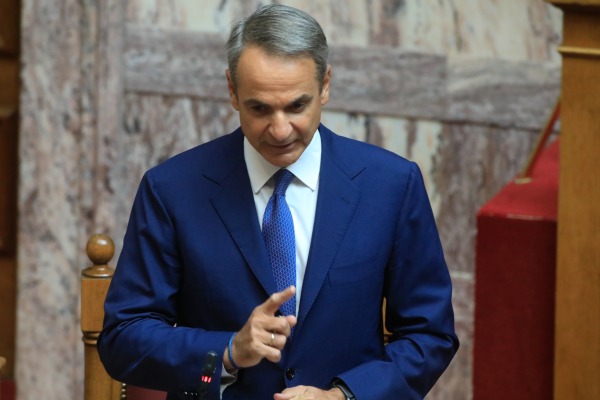
At the heart of the dispute are gaps in oversight. Brussels has criticized the Greek proposals as vague, demanding specific measures to improve livestock traceability and ensure the reliability of farm data. Without these guarantees, the Commission has signaled that subsidy disbursements cannot continue. Tsiaras himself admitted in Parliament that “payments cannot proceed without thorough and cross-checked audits,” warning that unless corrective actions are taken, European funds could indeed be jeopardized.
Some payments already underway—such as €63 million in de minimis aid for animal feed and compensation for flood damage in Thessaly—are expected to be completed. But other subsidies are conditional on the rapid completion of audits, with officials at OPEKEPE and AADE, Greece’s tax authority, working under heavy pressure to meet EU standards.
One of the most contentious reforms involves the introduction of a mandatory Property Identification Number (ATAK) in subsidy applications, designed to prove that claimants genuinely control the land for which they seek aid.
This year marks the first time AADE will carry out cross-checks using ATAK numbers, tax IDs, property declarations, and the national land registry. Of the 6.7 million land parcels declared for 2025, around 6.4 percent were submitted with invalid ATAK numbers, while another 4 percent—mainly in northern Greece—lacked them entirely. Those farmers will be notified individually to resolve the issue.
In a letter to European Agriculture Commissioner Christoph Hansen, OPEKEPE’s new president Giannis Kavvadas outlined proposals to resolve the ATAK problem. Testifying before Parliament, he admitted that since taking office only weeks ago, his priority has been to fully grasp the agency’s shortcomings and ensure that legitimate payments are made on time.
For farmers on the ground, however, time is running out. Without swift compliance, Greece risks not only financial penalties but also the suspension of vital subsidies—an outcome that could hit the agricultural sector hard at a moment when it can least afford it.