

While Germany is moving ahead with a multi-billion-euro package to shield its heavy industry from soaring energy costs, Greece remains in the stage of consultations and proposals. Berlin has pledged up to €4 billion over three years, coupled with broader tax cuts and €26 billion in reductions to network fees, measures that deliver immediate relief and predictability to industrial consumers.
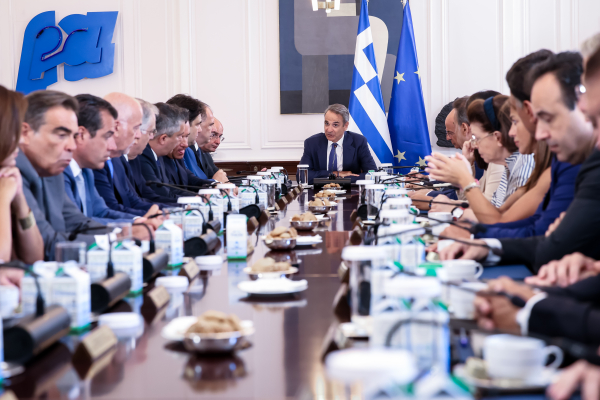
Athens, by contrast, has only recently initiated high-level talks between government officials and industry leaders, with ideas such as SEV’s “Energy Industrial Reset” still under review. The Greek plan would stabilize electricity prices for three years at levels well below the wholesale market, but until it is adopted, energy-intensive industries remain exposed to volatility. The slower pace highlights the gap between Greece’s response to energy challenges and the swifter action taken by Europe’s largest economy.
Greek officials stress that progress has already been made, citing cuts to corporate taxation and social security contributions, simplified licensing rules, and targeted efforts to curb energy costs. Even so, both government and industry acknowledge that more needs to be done, and further negotiations are planned.
SEV, working with Grant Thornton, has submitted its proposal under the banner “Energy Release 2.0,” formally titled Energy Industrial Reset. The plan foresees annual spending of €250–260 million over three years to guarantee stable power prices for Greece’s roughly 60 energy-intensive industries, which together consume about 7.4 terawatt hours of electricity each year. If adopted, the scheme would fix electricity costs at €50–60 per megawatt-hour, far below the current wholesale price of around €90/MWh.