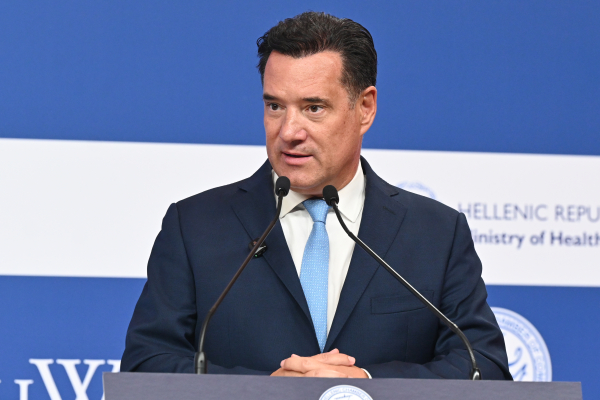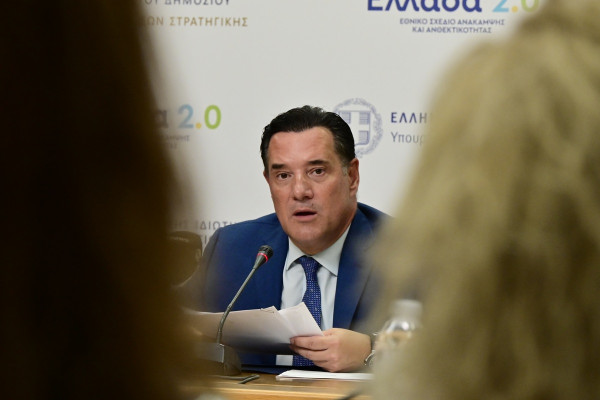


Greek Prime Minister Kyriakos Mitsotakis has said his government is weighing a ban on social media use for children under the age of 16, following Australia’s example. Speaking in New York at a conference on child protection in the digital age organized by the Australian government, Mitsotakis acknowledged that enforcement would be challenging but insisted that “difficulty is not an excuse.” He noted that he had already sought advice from his Australian counterpart on how Greece might adopt similar measures.
Mitsotakis said the idea was partly inspired by Jonathan Haidt’s book The Anxious Generation, which he read over the summer on the recommendation of his wife. The book, he explained, describes the harmful psychological effects of social media on young people. “As I read about the impact of social media on our children, I felt as if I were inside these stories,” he said. “We do not yet know the full consequences of this use, but we are certain things are not going well. As leaders, we must act. Parents need help—it cannot be their responsibility alone.”
In recent years, Greece has already moved to tighten rules around digital access for children. Mobile phones have been banned in schools, which Mitsotakis described as “a huge shift in the school experience.” The government has also launched a tool, parentcontrol.gr, through its gov.gr portal. The service links children’s personal data with social media platforms so that parents can confirm whether their child is old enough to use them. Mitsotakis called this “the first step” toward helping parents protect their children online.
The prime minister argued that public demand for such measures is strong, citing widespread feedback from parents. “We have received countless appeals from parents urging us to do something about social media,” he said. “As responsible leaders, we have a duty to act.” He warned of the dangers of children forming digital friendships that could expose them to harmful or destructive behavior.
Mitsotakis also issued a pointed message to technology companies, saying governments must not only work with parents but also hold platforms accountable. “These firms already have more than enough money,” he said. “They do not need to make more by exploiting our children.”