
The divergence between official tax assessments and actual market prices remains significant—on average around 30 percent—while in high-demand locations such as Athens, popular islands, and major urban centers, the gap is even wider.
The result is that both taxation and property transactions continue to be based on outdated and artificial figures that bear little resemblance to true market conditions.
This misalignment cuts both ways.
Property owners and buyers gain a short-term reprieve, paying lower taxes and fees than they would under revised values. But it also entrenches inequality, as state policy lags behind the realities of the market and transparency in transactions is undermined. Economists warn that when the revision eventually takes place, it will be highly consequential.
Aligning tax-assessed values with commercial ones is expected to push up Greece’s annual property tax (ENFIA), increase transfer duties, and raise costs tied to brokerage, notarial work, and land registry procedures. For households and buyers already struggling with affordability, the burden could intensify a housing crisis that has become a pressing social issue.
The postponement offers the government some political breathing space in the short term, but experts caution it merely defers an inevitable shock. And if the gap between official and commercial prices grows further in the coming years, the eventual adjustment could prove even more painful.
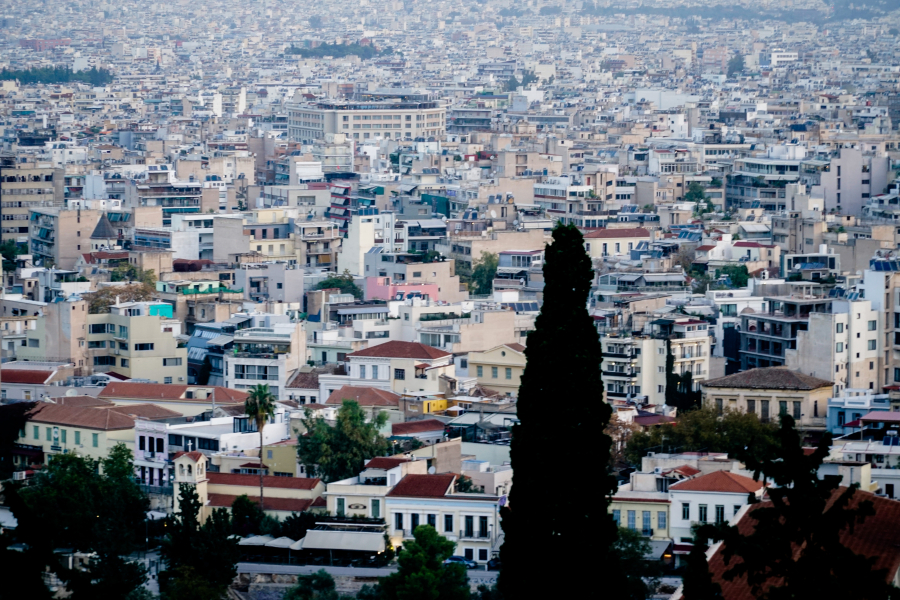
The extent of the discrepancies varies by region. In Attica, where Athens is located, tax-assessed values stood at €411 billion in 2025, but the estimated market value of real estate exceeded €534 billion—a difference of €123 billion. Prices in central Athens, Eastern Attica, and the affluent southern suburbs such as Glyfada, Voula, and Vouliagmeni have soared, driven by strong demand from both Greek and foreign investors.
A similar pattern is seen on the country’s most sought-after islands. In the South Aegean—which includes Mykonos, Santorini, Paros, and Rhodes—tax-assessed values total €25.8 billion, while commercial values are estimated above €33.5 billion.
Crete shows the same divergence, with official values at €42.2 billion compared with an estimated market value of nearly €55 billion. Thessaloniki and the wider Central Macedonia region reveal a comparable gap, with official assessments of €101.9 billion falling well short of commercial estimates above €132 billion.
By contrast, in less dynamic markets such as Central Greece, Epirus, and Western Macedonia, the discrepancies are smaller. In Central Greece, for instance, the official property value of €22.8 billion compares to a market estimate of €29.6 billion, underscoring how the distortions are most severe in Greece’s largest cities and most touristic regions.