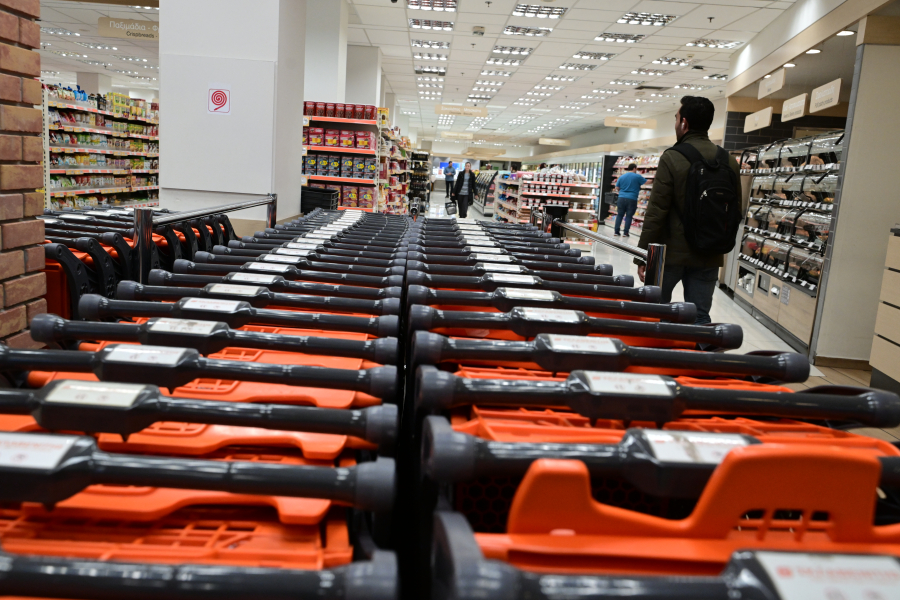

Data from market research firm Circana, published by Euro2day, show that sales of fast-moving consumer goods rose by 6.6 percent compared with the same period a year earlier, reaching €7.95 billion from €7.46 billion. The increase amounts to nearly half a billion euros in additional turnover, which has fed directly into government coffers through higher VAT intake.
Food purchases dominated the market, accounting for more than 82 percent of supermarket turnover. Health and beauty products represented just over 8 percent, while household goods made up 7.3 percent. This spending pattern meant that most of the additional outlay by Greek households went toward items subject to the reduced VAT rate of 13 percent, rather than the standard 24 percent applied to other categories.
On this basis, Greece’s tax authorities are estimated to have collected an extra €71 million in VAT during the January–July period. Around €53 million of that came from food consumption, €9.6 million from personal care products, and €8.6 million from household goods. Growth was particularly strong in Crete, on the islands, and in major cities, with summer tourism acting as a powerful boost to retail activity and, by extension, to state revenues.
The trend is notable given that inflation has eased but household purchasing power has yet to recover meaningfully. Even under pressure, consumers have kept supermarket spending as a non-negotiable priority, ensuring a reliable flow of tax income.
If the momentum continues through the second half of the year, Greece could see annual VAT revenues from supermarket sales rise by more than €120 million. For a government still navigating the fiscal pressures of recent years, this represents not only a welcome buffer for the state budget but also a reminder of how central supermarket consumption has become to both the economy and public finances.