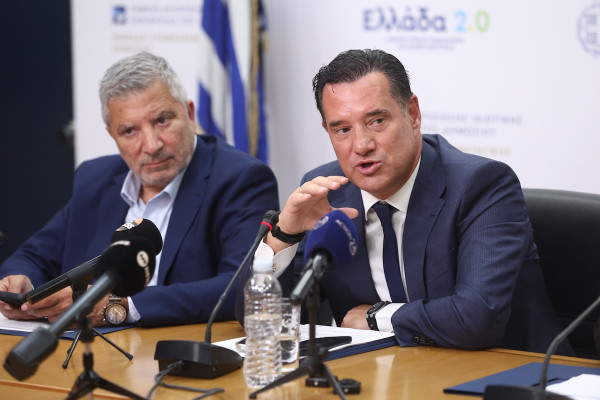

Greece is taking a decisive step toward reshaping its investment landscape with the launch of the Hellenic Innovation and Infrastructure Fund (HIIF). Positioned as a cornerstone of the country’s economic strategy, the fund aims to attract international capital and mobilize projects that will determine the direction of the Greek economy in the years ahead.
HIIF is part of the transformation of the Hellenic Corporation of Assets and Participations into a modern Sovereign Wealth Fund. It will operate under independent governance and with strict investment discipline, in line with international best practices. With initial capital of €303 million, the fund aspires to leverage investments of more than €1 billion over time. Its first investment is expected to be announced in the coming months. Unlike traditional financing vehicles, HIIF is structured to act as a minority co-investor, combining public and private funds while ensuring that projects are developed on a commercial basis. The approach is designed not only to generate returns but also to leave a broader developmental footprint on the economy.
The creation of HIIF builds on a wider ecosystem of initiatives. Greece has already established the PHAISTOS Fund, which supports the development of 5G applications, as well as the Hellenic Defense Innovation Center and the PHAROS AI Factory, the country’s first artificial intelligence hub. Together, these initiatives are intended to create a transparent, innovation-driven investment platform that strengthens critical infrastructure while offering global investors confidence in governance and accountability.
The sectors targeted by HIIF reflect the structural shifts shaping the global economy. The fund will channel resources into digital infrastructure to enhance connectivity and expand smart services, while also supporting the green transition through renewable energy and decarbonization projects. Investments in the energy sector aim to position Greece as a regional hub, while additional capital will be directed toward the circular economy, biotechnology, agri-tech, and the blue economy, with projects focused on sustainable shipping and port infrastructure.
Rather than competing with private investors, HIIF is designed to complement the market. It creates space for the state to participate in large-scale investments under conditions of transparency and oversight, while attracting institutional capital seeking stable returns in a relatively low-risk environment. Its strategy balances commercial performance with its role as an economic catalyst, with the potential to make a measurable contribution to GDP growth and to generate thousands of new jobs.